You leave a conversation and think: what just happened? You felt something was off, but you could not name it. You knew someone was not being straight with you, but you had no proof. Everyone else seemed fine with it. Maybe it was just you.
Many people experience this problem at work and in personal relationships. The signals are there. You just do not have the framework to read them.
Social awareness is not about being a “people person.” It is about understanding what is happening between you and others. And like any skill, it can be learned.
Here are three books that helped me go from missing the obvious to finally seeing it.
Quick Comparison
| Book | Best For | Focus |
|---|---|---|
| Awakening to Human Nature | Noticing what others miss | Reading hidden signals in daily interactions |
| How to Know a Person | Understanding people deeply | Seeing and connecting with others |
| Surrounded by Idiots | Adapting communication styles | Understanding different personality types |
1. Awakening to Human Nature by Owen Pierce
You know that feeling when you leave a conversation and think: what just happened? You cannot name it. You just know something was off.
Pierce starts there. Not with theories. With the moments that leave you confused. Mixed signals. Conversations that feel wrong but you cannot explain why. People saying one thing while their behavior says something else.
He does not teach you to be suspicious of everyone. He teaches you to notice what is already there. The patterns people show when they are holding back. The shifts in someone’s behavior that may give you clues that something has changed underneath. The gap between what someone says and what they actually mean.
What I found most useful is the idea of baseline. Most people have patterns in how they communicate and respond. When those patterns change, it is worth paying attention to. You are not trying to be a detective. You are just learning to see what is already in front of you.
This is the book for anyone who has ever walked away from a conversation wondering what they missed.

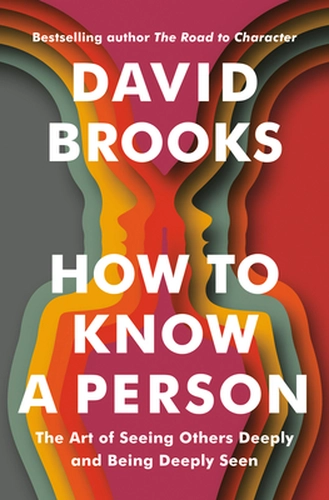
2. How to Know a Person by David Brooks
Understanding social dynamics is not just about reading people. It is also about seeing them. Brooks makes a distinction between being around someone and actually seeing them. Most of us never get past the first part.
The book is about what it takes to really see another person. How to ask questions that do not feel like interrogations. How to listen without waiting for your turn to speak. How to create a space where people feel safe enough to reveal themselves.
What I found useful is the focus on curiosity. You do not need to be charming or witty. You just need to be genuinely interested. Brooks gives you specific techniques for showing that interest in ways that make people feel seen.
This is the book for anyone who wants to understand the people around them on a deeper level—not just read their signals, but truly see who they are.
3. Surrounded by Idiots by Thomas Erikson
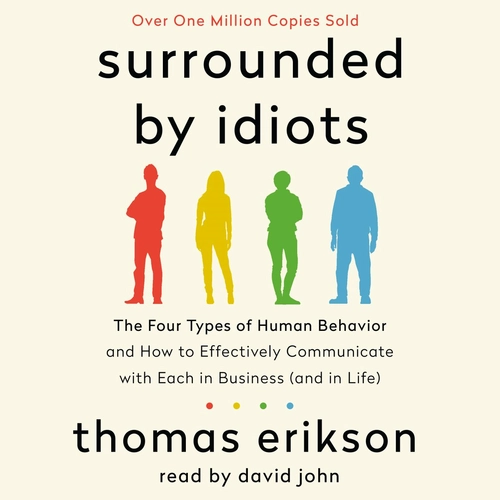
Some people are hard to read because they think and communicate differently than you do. Erikson gives you a framework for understanding those differences.
The book uses a simple personality framework to explore why different people communicate differently. It helps you recognize why you clash with certain people and how to adjust your approach so they can actually hear you. You learn to recognize their communication style, which helps you see why they react the way they do.
What makes this useful is the practical application. You do not need to agree with every part of the personality model. What matters is the shift in perspective: when someone seems difficult, it is often not personal. It is a difference in communication style.
This is the book for anyone who has ever thought: why are they being so difficult? The answer is often not about you.
If you want to finally see what you have been missing, start with Pierce.
If you want to go deeper and truly see the people around you, read Brooks.
If you want to understand why some people are so hard to communicate with, pick up Erikson.
For most people, the hardest part of social awareness is not knowing psychology theory. It is learning how to notice what is happening in everyday interactions. That is exactly where Pierce begins.
