Have you ever walked away from a conversation thinking:
“I should have said that differently.”
Maybe you wanted to explain your feelings, but the other person became defensive.
Maybe you were trying to solve a problem, but the conversation quickly turned into an argument.
These moments happen more often than we realize.
Communication problems are rarely caused by a lack of care. Most people want to be understood — they simply struggle to express their thoughts in a way others can receive.
The difference between a productive conversation and a frustrating one often comes down to the words we choose.
The Real Challenge Behind Communication
Many people think good communication means knowing what to say.
But communication is not only about speaking.
It is also about:
- Understanding emotions
- Choosing the right tone
- Listening without immediately reacting
- Expressing needs clearly
For example:
“You never listen to me.”
may come from a genuine feeling of being ignored.
But the other person may only hear criticism.
Changing the wording:
“I feel unheard when we discuss this. Can we talk about it?”
creates space for a real conversation.
A Book That Helps You Communicate With More Confidence
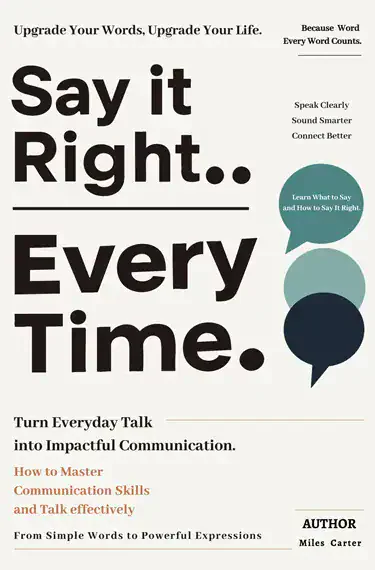
After understanding why conversations fail, the next step is learning practical ways to improve them.
Say It Right Every Time by Miles Carter explores how language choices influence emotional reactions and relationships.
The book focuses on practical communication patterns, helping readers:
- Express thoughts more clearly
- Avoid unnecessary conflict
- Handle difficult conversations
- Build stronger connections
Its key message is simple:
The right words can change not only a conversation, but also a relationship.
Who This Book Is For
Say It Right Every Time is a great fit for:
Readers interested in emotional intelligence and social skills
Anyone who struggles with difficult conversations
People who often feel misunderstood
Professionals improving workplace communication
FAQ
How can I communicate better in relationships?
Practice active listening, express your feelings clearly, and avoid blaming language when discussing problems.
Why do conversations turn into arguments?
Many conflicts happen because people feel criticized or misunderstood. Better communication can help reduce emotional tension.
Can communication skills be learned?
Yes. Communication improves through practice, awareness, and learning healthier ways to express thoughts and emotions.