Have you ever finished a conversation and realized it did not go the way you expected?
Maybe you were trying to explain your feelings, but the other person became defensive.
Maybe you wanted to solve a problem, but the discussion turned into an argument.
Communication is something we do every day, yet it is one of the skills many people struggle with the most.
The challenge is not simply knowing what to say.
Good communication requires understanding emotions, choosing the right words, listening carefully, and creating a sense of connection.
The good news is that communication skills can be learned and improved.
These three books explore different sides of communication:
- Expressing yourself clearly
- Communicating with empathy
- Handling difficult conversations with confidence
Say It Right Every Time: Improving the Way You Express Yourself
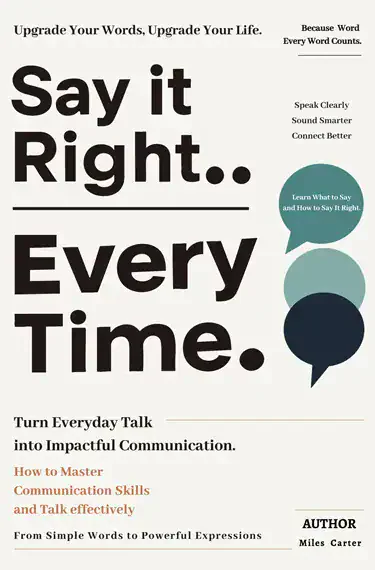
Best for: People who want to communicate more clearly and avoid misunderstandings
Many communication problems begin with a gap between intention and impact.
A person may mean:
“I want to feel closer to you.”
But the words they choose may sound like:
“You never care about me.”
The feeling behind the message is real, but the delivery changes how the message is received.
Say It Right Every Time focuses on how language choices influence conversations and relationships.
The book explores practical ways to:
- Express thoughts more clearly
- Handle emotionally difficult conversations
- Reduce unnecessary conflict
- Communicate with more confidence
What makes this book useful is its focus on real-life situations.
Instead of simply saying “be more confident” or “communicate better,” it looks at how small changes in wording can create better conversations.
This book is especially helpful for anyone who often thinks:
“I knew what I wanted to say, but I didn’t say it the right way.”
Nonviolent Communication: A Language of Life by Marshall Rosenberg
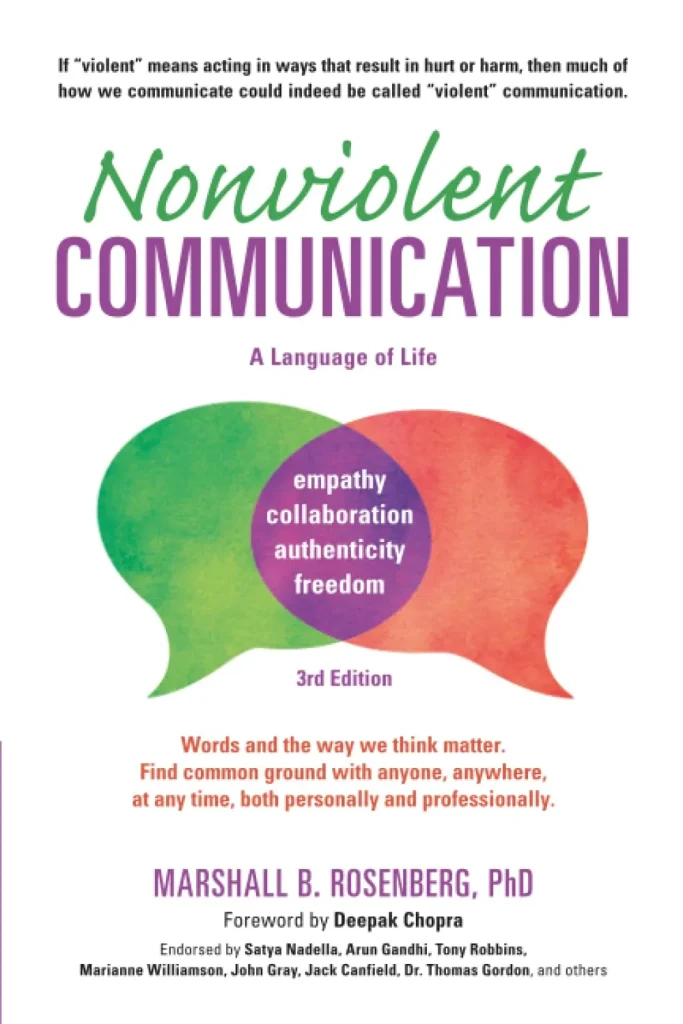
Best for: Building empathy and healthier relationships
Many conflicts are not actually caused by different opinions.
They are caused by people feeling unheard.
Nonviolent Communication introduces a communication approach based on empathy, honesty, and understanding.
The book focuses on four key elements:
- Observing situations without judgment
- Expressing feelings clearly
- Understanding personal needs
- Making respectful requests
One of the most valuable ideas in the book is learning how to express emotions without blaming others.
Instead of:
“You never listen to me.”
A more constructive approach might be:
“I feel frustrated because I want to feel understood.”
This shift changes the purpose of a conversation.
Instead of trying to prove who is right, both people can focus on understanding each other.
This book is particularly useful for people who want to improve relationships, manage conflicts, and communicate with more compassion.
Crucial Conversations: Tools for Talking When Stakes Are High
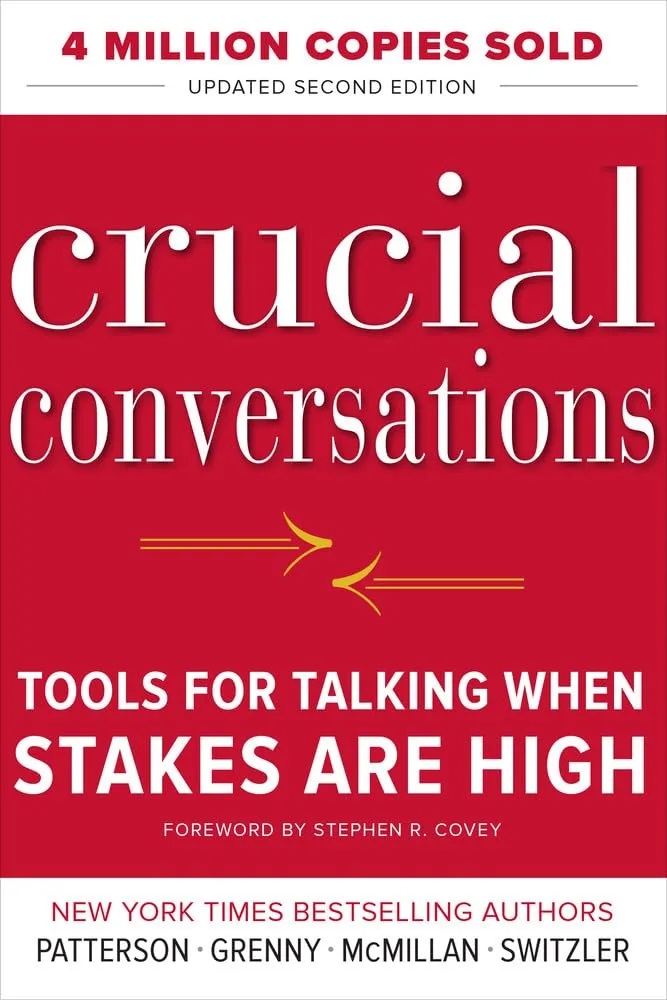
Best for: Handling difficult and high-pressure conversations
Some conversations are harder than others.
Talking about a serious disagreement.
Giving uncomfortable feedback.
Discussing problems at work.
Addressing issues in important relationships.
These moments often create strong emotions, which makes clear communication more difficult.
Crucial Conversations focuses on how to communicate effectively when the conversation really matters.
The book explores strategies for:
- Staying calm during emotional discussions
- Creating a safe environment for honesty
- Expressing opinions without damaging relationships
- Finding solutions during disagreements
Unlike everyday conversations, high-stakes conversations require more awareness and preparation.
This book is especially valuable for professionals, leaders, and anyone who needs to navigate challenging discussions.
Final Thoughts
Better communication can improve almost every area of life.
It can strengthen relationships, reduce misunderstandings, and help people express what they truly need.
The goal is not to become a completely different person.
It is to become more intentional with the words you already use.
A thoughtful conversation can change the way people understand each other.
And sometimes, the smallest change in communication can create the biggest difference.