You know you should be doing something with your money. But every time you open a finance book, you get lost in jargon. Save 20% of your income. Max out your retirement accounts. Invest in index funds. None of it applies when you are still figuring out how to pay off a credit card.
Most finance books assume you already have money to manage. They skip the part where you are still learning the basics. The three books below do not make that assumption. They start at the beginning.
1. From Debt to Wealth by Owen Pierce
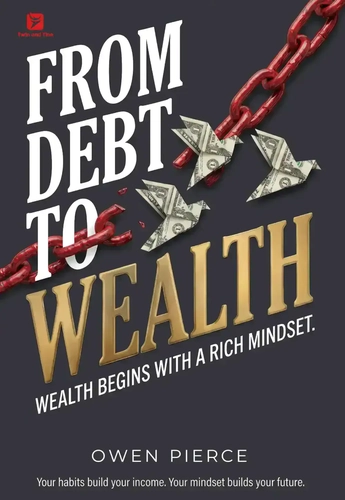
Book description: You work hard. Your income goes up. But somehow, you never get ahead. You make decent money, yet there is never anything left at the end of the month. You are not bad with money—you were just never taught the rules.
Pierce walks you through a complete reset. How to break the paycheck-to-paycheck cycle. How to eliminate bad debt without feeling deprived. How to build savings when you have never been able to keep them. It does not assume you already have money to manage. It assumes you are starting from behind.
The book is built around a simple question: why does your income never seem to be enough? The answer is not willpower. It is habits. You work harder, you earn more, but your expenses grow right along with it. You buy things to feel successful and end up deeper in debt.
What makes this book different is that it does not lecture. It walks you through the steps. By the time you finish, you know exactly what to do with your next paycheck.
Why you should read it: Most wealth-building books skip the part where you are still figuring out the basics. This one does not. If you are tired of wondering where your money went, this is where you start.
2. I Will Teach You to Be Rich by Ramit Sethi
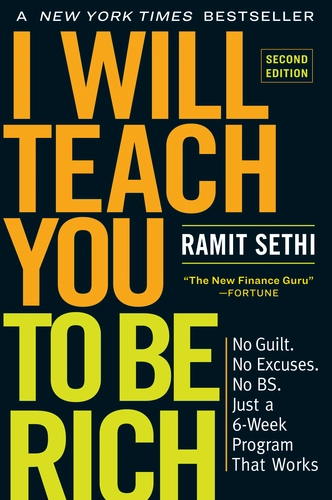
Book description: Sethi gives you a six-week system for getting your finances in order. He covers credit cards, banking, budgeting, and investing in plain, blunt language. The approach is simple: set up automatic transfers, negotiate your bills, and stop thinking about money every day.
The book is built around the idea that most people do not need more discipline. They need better systems. Sethi tells you exactly how to set up those systems. How to automate your savings. How to negotiate your bills. How to invest without becoming an expert.
He does not care about your latte habit. He cares about the big wins: lowering your fixed costs, automating your savings, and investing early. The book is designed for people who have some income and need a system to direct it.
Why you should read it: If you have tried to budget and failed, this book will show you a different way. It is not about willpower. It is about setting up a system that works without you having to think about it.
3. The Algebra of Wealth by Scott Galloway
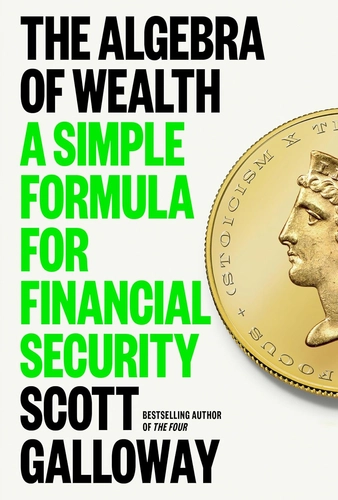
Book description: Galloway argues that the old rules of wealth-building no longer apply. In a world of economic uncertainty, job instability, and changing markets, you need a new playbook. He breaks it down into four pillars: focus, stoicism, time, and diversification.
The book is practical and direct. Galloway tells you what to study, what careers to pursue, and how to think about money in a way that fits the current economy. He is not interested in making you feel good. He is interested in giving you a real path.
What sets this book apart is the honesty. Galloway does not pretend that building wealth is easy. He acknowledges that the game has changed. But he also shows you how to play it differently.
Why you should read it: If you are young and feel like the old advice does not apply to you, this book gives you a modern framework. It is not about saving your way to wealth. It is about building wealth in a world that has changed.
These three books cover different starting points. Pierce gets you out of debt and onto solid ground. Sethi gives you a system for managing your money once you have it. Galloway gives you a modern framework for building wealth in a changing economy.
If you are still in debt or living paycheck to paycheck, start with Pierce.
If you have some income and need a system, read Sethi.
If you are ready to think about wealth in a new way, pick up Galloway.
The right book is the one that meets you where you are right now.
