Not every debt problem needs the same solution.
Some people need to understand why they keep falling behind. Some need a strict plan to follow. Some need to change their relationship with money entirely.
Most finance books assume you just need a better spreadsheet. But the hardest part about debt is rarely the math. It is the pattern you cannot seem to break. It is the shame that keeps you from looking at your balance. It is the cycle you have been stuck in for so long that you stopped believing there is a way out.
The three books below cover different stages of that journey. Different problems, different books.
Stage 1: You Are Stuck and Don’t Know Why
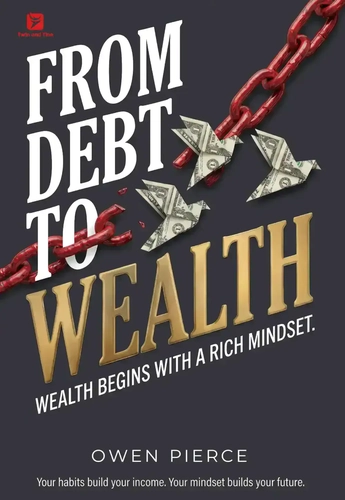
From Debt to Wealth by Owen Pierce
You get paid. Bills get paid. Somehow your account is empty again. You are not spending recklessly. You are not buying luxury things. But the math never works out.
This book starts where most finance books refuse to go: with the question of why you are stuck in the first place. Not what to do about it—but why it keeps happening.
The answer is not that you are bad with money. It is that many people develop habits that help them survive today but make long-term wealth harder to build. You work harder, you earn more, but your expenses grow right along with it. You buy things to feel better and end up deeper in debt.
Pierce does not give you a budget template. He gives you a way to understand the cycle and break it. Once you understand why you keep falling behind, the steps become obvious.
This book is for you if: you have tried budgeting and failed. You feel like you are running in place. You know the math should work, but it never does.
Stage 2: You Need a Step-by-Step Escape Plan
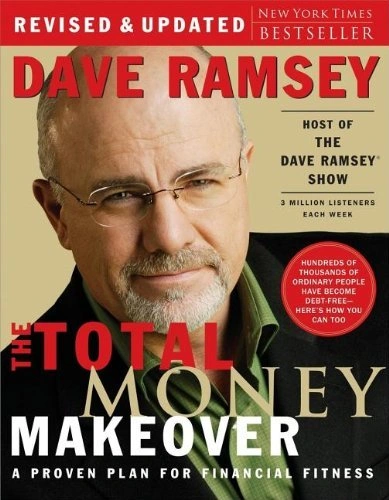
The Total Money Makeover by Dave Ramsey
You are tired of reading advice. You want someone to tell you exactly what to do next.
Ramsey gives you that. His approach is strict, simple, and built for people who are overwhelmed. The core is the “debt snowball”—you list all your debts from smallest to largest, pay minimums on everything except the smallest one, and throw every extra dollar at that one until it is gone.
The snowball is not mathematically optimal. It is behaviorally effective. It gives you small wins that build momentum. You see debts disappear. You believe you can do it because you already have.
Ramsey also pushes a strict budget and a $1,000 starter emergency fund. The goal is not to get rich overnight. It is to get your head above water.
This book is for you if: you need structure. You do not want theory. You want a clear, no-nonsense system that works if you follow it.
Stage 3: You Need to Change Your Relationship With Money
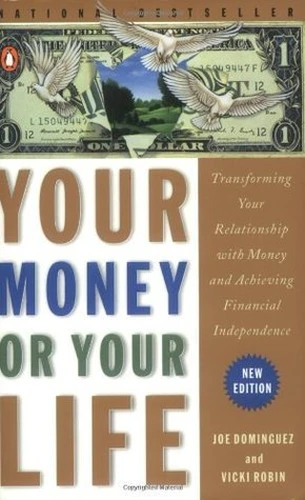
Your Money or Your Life by Vicki Robin
You have paid off debt before. But somehow, the stress never went away. You still feel anxious about money. You still spend on things that do not make you happy. You still wake up thinking about your bank balance.
Robin asks a different question: what is money actually for?
She reframes money as life energy. Every dollar you spend is a piece of your time, your attention, your energy—time you will never get back. Once you see it that way, spending decisions become something else entirely. You stop asking “can I afford this?” and start asking “is this worth my time?”
The book walks you through a nine-step program that starts with tracking every penny and ends with rethinking your entire relationship with money. It is not about getting out of debt. It is about never going back.
This book is for you if: you want to stop feeling controlled by money and start feeling like you are actually living your life.
Debt is not one problem. It is usually three problems happening at the same time: lack of clarity, lack of a system, and lack of a new relationship with money.
If you do not know why you keep falling behind, start with Pierce.
If you need a clear plan to follow, read Ramsey.
If you want to stop the cycle for good, pick up Robin.
