Most people think financial literacy means knowing how to invest. It does not.
Financial literacy starts much earlier. It is understanding why your money disappears, why you make certain choices, and how to make money work for you instead of constantly chasing it.
The three books below are not a random list. They are a path. Each one builds on the one before it.
Quick Comparison
| Book | Best For | Main Focus |
|---|---|---|
| From Debt to Wealth | Building a financial foundation | Money habits & financial reset |
| The Index Card | Learning the financial basics | Simple money rules |
| Scarcity | Understanding why money feels impossible | How financial stress affects decisions |
Step 1: Fix Your Relationship With Money
From Debt to Wealth by Owen Pierce
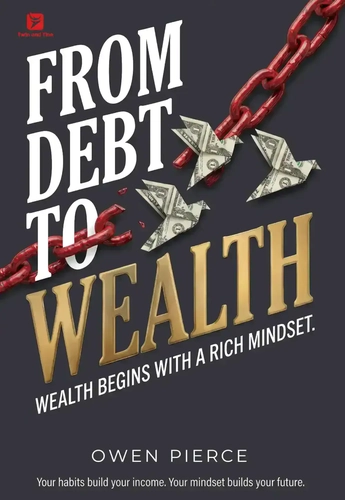
You make decent money. Your income has gone up over the years. But somehow, you still feel like you are running in place. You are not bad with money. You just never learned the rules.
Most finance books skip this part. They assume you already have money to manage. Pierce assumes you are still figuring out the basics. He starts with a question most books avoid: why does your income never seem to be enough?
The answer is not about willpower. It is about habits you were never taught to break. You work harder, you earn more, but your expenses grow right along with it. You buy things to feel successful and end up deeper in debt.
The book walks you through a complete reset. How to stop the paycheck-to-paycheck cycle. How to eliminate bad debt without feeling deprived. How to build savings when you have never been able to keep them. It does not tell you to “just save more.” It tells you to stop the bleed first.
Before you can build wealth, you need to understand why money disappears in the first place.
Step 2: Learn the Simple Rules of Money
The Index Card by Helaine Olen and Harold Pollack
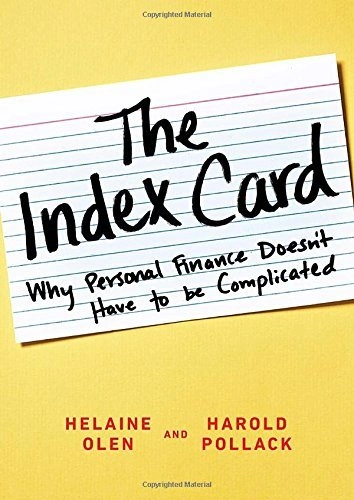
Financial literacy is often made to sound complicated. The Index Card argues that most people do not need more information. They need clarity.
A University of Chicago professor named Harold Pollack once said that the best financial advice could fit on a single index card. He wrote it down. It went viral. This book is the expanded version of that card.
The rules are simple. Save 10 to 20 percent of your income. Pay off your credit cards every month. Never buy individual stocks. Buy inexpensive, well-diversified index funds. Hire a fee-based fiduciary—not a commission-based salesperson. Buy only as much home as you can afford.
What makes this book different is its simplicity. The financial industry depends on making money management seem complicated. Olen and Pollack argue that most of what you actually need to know can be reduced to ten rules.
You do not need complicated financial advice. You need a few simple rules.
Step 3: Understand Why Financial Decisions Are So Hard
Scarcity by Sendhil Mullainathan and Eldar Shafir
Being broke does not just affect your bank account. It affects your thinking.
Mullainathan and Shafir are behavioral scientists who studied how scarcity—of time, money, or resources—changes the way people make decisions. Their conclusion is uncomfortable: when you are short on money, your brain is too busy surviving to think long-term. You make short-term decisions. You miss things. You fall further behind.
This is not a book about excuses. It is a book about why the problem is often not knowledge or willpower. It is about how financial stress actually changes cognitive function.
If you have ever wondered why you keep making the same financial mistakes despite knowing better, this book will explain why. And it will help you understand why change is so hard—not because you are broken, but because your circumstances are working against you.
Financial stress does not just affect your bank account. It affects your ability to make good decisions.
These three books cover different layers of financial literacy. Pierce helps you fix the foundation. The Index Card gives you the simple rules. Scarcity explains why you keep struggling despite knowing better.
Understanding money is not about becoming an expert. It is about building the right mental models one layer at a time.
If you are still figuring out why your money disappears, start with Pierce.
If you want simple rules to follow, read The Index Card.
If you want to understand why financial decisions are so hard, pick up Scarcity.
