You can be good with people and still misunderstand them.
You can make everyone like you and still fail to see when someone is manipulating you.
Because getting along with people and understanding people are two completely different skills. One helps you connect. The other helps you see. You can be charming and still miss the signals happening beneath the surface.
Most people assume these are the same skill. They are not.
Two books represent these approaches perfectly. One teaches you how to influence people. The other teaches you how to read them.
Quick Comparison
| Aspect | Awakening to Human Nature | How to Win Friends and Influence People |
|---|---|---|
| Core goal | Understand people | Connect with people |
| Focus | Reading signals, patterns, motives | Communication, appreciation, persuasion |
| Best for | Navigating relationships, avoiding missteps | Building rapport, making a good impression |
| Approach | Observation | Action |
| Question answered | “Why did this person act that way?” | “How do I get along with people?” |

Awakening to Human Nature
Owen PierceA practical guide for understanding hidden motives, social patterns, emotional pressure, and manipulation—so you can read situations more clearly and protect your boundaries with confidence.
Awakening to Human Nature by Owen Pierce

You walk away from a conversation knowing something was off. Someone said all the right things, but something underneath felt wrong. You could not explain why.
Sometimes your brain notices small patterns before you can consciously explain them.
Pierce wrote this book for people who are tired of being confused by others. He does not teach you to memorize gestures or decode micro-expressions. He teaches you to notice patterns most people overlook. Changes in tone. Hesitation before answering. A mismatch between words and actions.
Most people have consistent patterns in how they communicate. When those patterns break, something has shifted underneath. Once you learn to see these signals, you become better at choosing relationships, communicating clearly, and understanding what people really need.
Carnegie teaches you how to create a positive impression. Pierce teaches you how to recognize what is happening beneath the impression.
This is the book for you if: you keep feeling confused by people and want to understand why they do what they do.
How to Win Friends and Influence People by Dale Carnegie
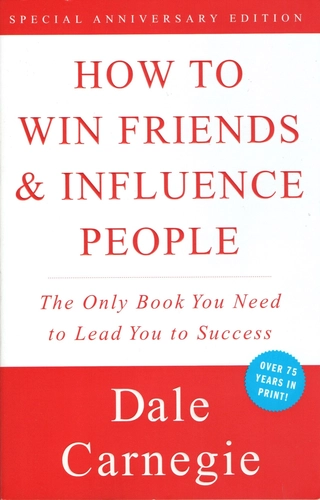
Carnegie wrote the most famous people-skills book of all time. It has been in print for nearly a century. There is a reason.
The book is built around simple principles. Listen more than you talk. Show genuine interest in others. Make people feel important. Avoid arguments. Admit your mistakes quickly. Smile. Remember names. These are not complicated. They are not even original. But they work.
The strength of Carnegie’s book is simplicity. Almost anyone can apply his advice immediately. You can pick it up, read a chapter, and try something new the same day.
The book is about building relationships. It is about making people feel valued. It is about getting others to like you so they are more willing to help you, work with you, and trust you.
But it focuses more on improving your behavior than analyzing someone else’s.
This is the book for you if: you want to improve how you come across to others and build stronger connections.
A Scene That Shows the Difference
Imagine a friend suddenly becomes distant. They stop texting back. They cancel plans. They seem less interested.
Carnegie’s lens: You focus on rebuilding the connection. You reach out. You show interest. You avoid making the other person defensive. You ask questions. You try to understand their perspective. The goal is to reconnect and repair the relationship.
Pierce’s lens: You focus on understanding the change. Was this person always like this? Did something shift? Are their words matching their behavior? What patterns are showing up? The goal is to see what is actually happening, not just to fix it.
One teaches you how to reconnect. The other teaches you how to see why the distance happened in the first place.
Where They Overlap
Both books will improve how you interact with people. Both are practical. Both are based on real-world experience. Both believe that people skills matter more than technical ability in most areas of life.
Where They Diverge
Carnegie assumes you already understand people well enough to apply his principles. He focuses on what you do. Pierce focuses on what you see.
Carnegie tells you to listen. Pierce tells you what you are missing when you listen.
Carnegie is about action. Pierce is about awareness.
If your biggest problem is that you struggle to connect with people, you struggle to make friends, or you keep saying the wrong thing, Carnegie gives you a clear playbook.
If your biggest problem is that you connect with people but still misunderstand them, you are confused by their behavior, or you walk away from conversations feeling unsettled, Pierce gives you the framework you need.
Both are useful. Many people benefit from reading both. But the right one to start with depends on what you are currently missing.