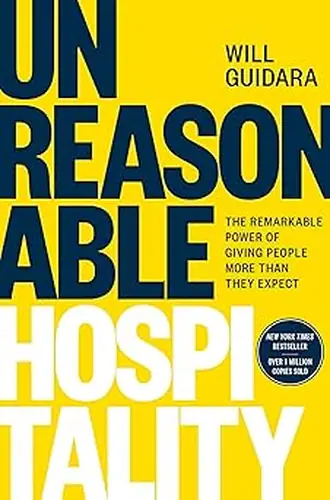
I was eating cold noodles out of the container at 11 p.m., hunched over my laptop. Another work night. Another day of being efficient and utterly forgettable. I clicked open Will Guidara’s Unreasonable Hospitality out of curiosity, not expectation. I thought it would be a business book about fine dining.
Twenty pages in, the noodles were cold and I hadn’t noticed. Guidara described a moment early in his career when a guest at Eleven Madison Park mentioned she was sad about missing her daughter’s soccer game. The team didn’t just sympathize. They found out the score, printed a fake newspaper headline about the team’s victory, and framed it for her. Tiny gesture. The woman cried.
I sat there with my chopsticks hovering, wondering: when did I last make someone feel that seen? What would it look like if I stopped treating my work as a series of tasks and started treating it as a series of human moments? That’s the question the book plants. It’s not a comfortable one.
The Restless Young Man Who Refused to Settle
Guidara was twenty-six when he took over Eleven Madison Park. The restaurant was a beautiful room serving mediocre food. The staff was talented but disconnected. The place had no soul.
What struck me most wasn’t his ambition. It was his willingness to fail in public. He describes walking into his first kitchen meeting and announcing they would become the best restaurant in the world. People laughed. Some probably wanted to quit.
He didn’t have a master plan. He had a stubborn belief that hospitality—genuinely caring about another person’s experience—could transform everything. The book follows his eleven-year journey to being named the best restaurant in the world. But the plot isn’t about Michelin stars. It’s about a young leader learning that excellence without warmth is just cold performance.
The core conflict is internal. Guidara had to choose between being right and being kind, between efficiency and humanity, between the safe path and the unreasonable one. He tells the story of a server who told him about a couple whose vacation was cancelled. Instead of just sympathizing, the team turned their private dining room into a beach. Sand, mai-tais, beach chairs. The couple laughed and cried.
My first reaction was skepticism. That sounds excessive. Wasteful. Then I realized my skepticism was the problem. I had been trained to think small. Guidara was asking: what if we thought unreasonably big about how we treat each other?
The Swan and the Paddling Feet Beneath
The central image of the book is the swan gliding across water. The guest sees grace and effortlessness. What they don’t see is the furious paddling underneath. That’s hospitality, Guidara says. The visible part is seamless. The invisible part is relentless.
This image carries the book’s core theme: true hospitality requires invisible labor. It requires systems, training, and culture that the guest never sees. It requires leaders who care more about their team than their own ego.
Guidara names an uncomfortable truth: most of us stop at service. We do the task. We check the box. We get the right plate to the right person. Hospitality means noticing that the person at table seven looks tired and asking if they’d like a quiet corner. It means remembering that a regular customer hates olives and making sure the kitchen knows. It means treating every interaction as a chance to create a memory.
We all want to matter. We all want to be seen. Most of us are too busy or too afraid to see others first.
What the Book Doesn’t Tell You
The book is inspiring. It’s also exhausting. Guidara’s team pulled off stunts that required extraordinary effort—sledding trips, custom menus for strangers, a level of attention that seems impossible for ordinary humans with ordinary jobs.
I wanted to close the book and feel energized. Instead I felt inadequate. I can’t do that, I thought. I don’t have the budget, the team, the time.
But that’s not what he’s asking. He’s not asking everyone to build a beach in their office. He’s asking everyone to ask one question before every interaction: how can I make this person feel a little more seen? Unreasonable means going beyond what’s expected. Impossible means trying to be someone else.
The book’s real gift is permission. Permission to care openly. Permission to be generous without calculating the return. Permission to admit that efficient, transactional, detached work leaves us hollow.
This isn’t for people who want a five-step system to success. It’s for people who suspect that the best thing they can offer another person is their full attention. It’s for people who are tired of treating life like a checklist.
One line broke me open: “People will forget what you said and what you did, but they will never forget how you made them feel.” I read that, looked at my cold noodles, and put down the chopsticks. I thought about what it would mean to actually try.
Maybe that’s unreasonable. I’m starting to think that’s exactly the point.
