Most articles are read once and forgotten.
Some ideas are worth coming back to.
You ask your child three times to pick up their toys. Nothing. You ask again, a little firmer. Still nothing. Then your partner walks in, says it once, and your child jumps up and does it immediately.
If this sounds familiar, you’re not alone. So many parents wonder: why do children usually listen more to their father than their mother?
It’s not because Dad is stricter. It’s not because Mom is weaker. It’s not because one parent is doing something wrong. The reason is actually much simpler than you might think.
Key Takeaways (At a Glance)
- Children procrastinate more with the person they feel safest with. You’re their secure base, so they test limits with you.
- Kids respond better to short, new commands. Repeating the same thing turns it into background noise.
- A brief, clear instruction lands differently. It gets their attention and action.
- This isn’t about who’s the better parent. It’s about how kids process information and who they feel comfortable pushing back against.
- Small changes in how you talk can make a big difference.

The Parent You Aspire to Be
Miles CarterPractical guidance for tantrums, backtalk, lying, screen addiction, emotional outbursts, and everyday parenting struggles.
Children Procrastinate More With the Person They Feel Safest With
Here’s the counterintuitive truth: children often push back more, delay more, and negotiate more with the parent they feel most secure with. That’s usually Mom.
When a child feels completely safe with someone, they feel free to test limits. They try to negotiate. They push boundaries. They see what they can get away with. This isn’t disrespect. It’s actually a sign of deep trust.
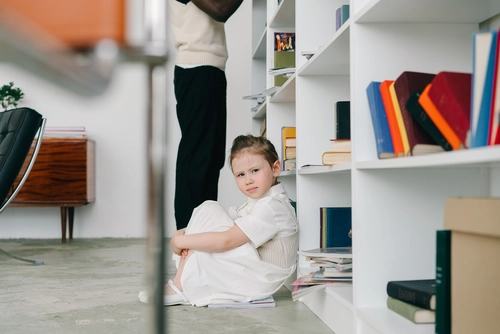
Think about it. Do you act the same way with a stranger as you do with your closest friend? Probably not. With someone you trust completely, you show all your messy parts. You argue. You procrastinate. You push back. That’s what kids are doing with you. They feel safe enough to be difficult.
A friend of mine, a mom of three, told me she used to feel hurt that her kids seemed to behave better for her husband. She thought it meant they loved him more. Then she realized: they only acted out with her because she was the one they trusted to still love them even when they were difficult. He was the one they were still a little unsure about.
It’s not that they love you less. It’s that they feel so safe with you that they’re not afraid to show their hardest side.
Kids Respond Better to Short, New Commands
There’s another piece to this puzzle. Children react better to short, clear commands that are new to them.
When you repeat the same thing over and over — “pick up your toys,” “pick up your toys,” “pick up your toys” — their brain starts to treat it like background noise. It stops being a signal and becomes something they barely register.
But when Dad comes in and says once, with a different tone and a clear, short command, it lands differently. It’s new. It’s different. It gets their attention. And because it’s brief and clear, they understand exactly what’s expected and they do it.
This isn’t about volume or authority. It’s about how kids process information. The brain is wired to notice new things and tune out the familiar. Repeating yourself doesn’t make the message stronger. It makes it invisible.
How to Make Your Words Land More Effectively
So what can you do if you’re the parent who’s constantly repeating themselves?
Here’s what worked for one mom I know. She switched from repeating herself to giving one clear instruction, waiting a moment, and then calmly following through. She stopped saying “pick up your toys” five times. She started saying “time to pick up your toys, I’ll help you with the first three” once. And then she’d wait. If nothing happened, she’d physically guide her child to start. It took longer at first. But over time, her kids started listening the first time because they learned that she actually meant it.
The key is to be clear, be calm, and be consistent. You can also try shifting from commands to questions: “What do we need to do before we can leave for the park?” This invites engagement instead of demanding compliance.
It’s Not About Who’s the Better Parent
This is important. It’s not about who’s the better parent. It’s not about who your child loves more. It’s about how kids process information and who they feel most comfortable pushing back against.
If you’re the parent who gets more pushback, that often means you’re the parent who’s given them the most safety. That’s not a failure. That’s a gift.
But it’s also a place where you can grow. Because if your child feels safe enough to push back, they also trust you enough to learn from you. You can use that trust to help them grow in new ways.
What the Research Shows
This pattern has been studied. Research shows that children often exhibit more challenging behavior with the parent they spend the most time with — usually the mother. Not because that parent is less capable, but because children are more relaxed and feel more secure in that relationship.
They also learn to ignore repeated commands. Their brains get used to the sound. The words stop having meaning. So when Dad steps in with a new, short, clear instruction, it cuts through the noise.
The solution isn’t for Dad to be around more or for Mom to be stricter. It’s for both parents to learn how to communicate in ways that cut through the noise. Clear, simple, new.

How to Develop Good Habits Without So Much Delay
The key to developing good habits in children is consistency and clarity. But clarity doesn’t mean repeating yourself. Clarity means saying it once in a way they can hear.
One approach that works is to use the same simple phrases consistently: “Shoes on, please.” “Lunch time.” “Five minutes until we leave.” Short, clear, and always the same. This trains your child’s brain to recognize and respond to these signals. It may take a few tries, but eventually the consistency clicks.
Another helpful strategy is to offer choices within clear boundaries. Instead of “pick up your toys” and leaving it open-ended, you can say “do you want to put the Legos away first or the cars?” This gives them a sense of control while still getting the job done.
The Role of Emotional Intelligence in Parenting
A child’s ability to listen and follow directions is deeply connected to their emotional state. When kids are overwhelmed by big emotions, they can’t process instructions — no matter who delivers them. That’s why raising emotionally intelligent children requires learning how to talk to them in ways that meet them where they are, not where we expect them to be.
When your child is upset, their brain goes into fight-or-flight mode. They literally cannot process complex instructions in that moment. That’s why yelling, threatening, or repeating yourself over and over doesn’t work. Instead, you need to help them calm down first — then talk.
FAQ
Q: Why do children usually listen more to their father than their mother?
A: Children often push back more with the parent they feel most secure with — typically the mother. They also respond better to short, new commands, which fathers often deliver when they step in. It’s not about authority. It’s about comfort and communication style.
Q: Does this mean I’m doing something wrong as a mom?
A: Absolutely not. Your child’s willingness to push back with you is actually a sign of deep trust. They feel safe enough with you to test limits. That’s not a weakness — it’s a sign of a secure relationship.
Q: How can I get my child to listen better?
A: Try giving one clear, short instruction instead of repeating yourself. Ask questions instead of just giving commands when appropriate. Give your child a moment to process and respond. And remember, they’re not trying to be difficult. They’re just wired to tune out things they’ve heard before.
Q: What if my child doesn’t even listen to my partner?
A: This isn’t about whose method works best. It’s about finding an approach that fits your child’s personality. Some kids respond better to certain voices or tones, but all kids need consistency and clarity. If no one is getting their attention, it might be time to reassess the way you both communicate as a team.
Q: Is it too late to change how I talk to my child?
A: It’s never too late. Children are always learning, and they respond to changes in how they’re spoken to. Small shifts can make a big difference, even with older kids. Consistency and patience are key.