If you have read Robert Greene’s The Laws of Human Nature, you already know the feeling. You finish the book and suddenly see the world differently. You recognize envy in a colleague’s smile. You see status games playing out in meetings. You understand why people act the way they do—at least in theory.
But many readers finish Greene’s book and still struggle to apply those ideas to everyday life. You know the patterns. You understand the concepts. But when you are sitting across from someone in a conversation, when you are trying to figure out if you can trust a new colleague, when you are wondering why a relationship feels off—the big ideas do not always help in the moment.
The three books below are for that gap. One helps you apply human nature insights to everyday relationships. One explores the power dynamics Greene writes about from a different angle. One reveals the hidden forces that make people say yes.
1. Awakening to Human Nature by Owen Pierce
Best for: Applying human nature insights to everyday life
Greene gives you the map. Pierce teaches you how to read the terrain.
Awakening to Human Nature is not about historical figures or grand power struggles. It is about the person sitting across from you right now. Why do they react the way they do? What are they signaling without realizing it? How do you read patterns instead of isolated moments?
Greene explains human nature at a macro level. Pierce helps you see it in the small, everyday interactions that shape your relationships, career, and decisions. You learn to pay attention to consistency, incentives, and repeated behavior. You stop being surprised when people act out of character, because you start seeing that it was not out of character. It was the pattern you missed.
If you liked Greene’s focus on understanding human motives but want something more practical and personal, this is the book that bridges the gap between theory and real life.
If you loved The Laws of Human Nature but wished there was a more practical guide for everyday interactions, start here.

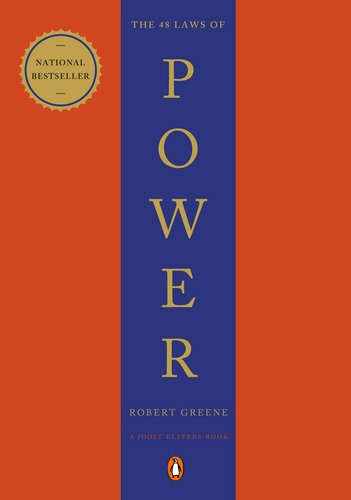
2. The 48 Laws of Power by Robert Greene
Best for: Understanding power dynamics
If you read The Laws of Human Nature, you already know Greene’s style. The 48 Laws of Power is his earlier work, and it is the book that made him famous.
It is not a book about being a good person. It is a book about how power actually works. Each law is based on historical examples—figures like Machiavelli, Louis XIV, and Bismarck who understood that power has its own rules.
Some laws are uncomfortable. “Never outshine the master.” “Use enemies to your advantage.” “Keep others in suspended terror.” Greene does not pretend the world is fair. He shows you what people actually do when they are competing for status, resources, and influence.
What makes this book valuable is the honesty. You do not have to agree with every law to benefit from reading it. You will start noticing the patterns: why some people rise, why others fall, how authority changes the way people think and act.
If you liked Greene’s exploration of human nature and want to understand power dynamics more deeply, read this.
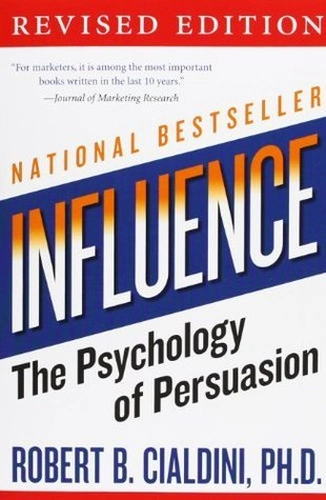
3. Influence by Robert Cialdini
Best for: Understanding why people say yes
Greene explains the big picture of human behavior. Cialdini explains the specific mechanisms that get people to do what you want.
He spent years studying why people say yes. He identified six principles of influence that shape our decisions without us realizing it. Reciprocity. Scarcity. Authority. Consistency. Liking. Social proof.
You have experienced all of them. The free sample that made you feel obligated. The email that said “only three left” that made you panic. The meeting where everyone nodded and you nodded too, even though you disagreed.
What makes this book valuable is the awareness it gives you. You are not learning how to manipulate others. You are learning how to recognize when you are being influenced. And once you see the patterns, you have a choice.
If you liked Greene’s focus on human motives and want to understand how people influence each other, read this.
These three books each take a different angle on understanding people. Pierce helps you apply human nature insights to everyday interactions. Greene’s 48 Laws explores power dynamics from a strategic angle. Cialdini reveals the hidden forces that shape decisions.
Greene gives you the map. These books teach you how to read the terrain—and use what you see.
