You know what you should do. Save more money. Exercise consistently. Control your emotions. Stop repeating the same mistakes.
But knowing what to do does not always change what you do. You intend to save, then you buy something you do not need. You plan to be patient, then you snap at someone. You know you should speak up, but you stay silent.
Behavioral psychology helps explain the gap between what people intend to do and what they actually do. The books below explore different layers of human behavior—from hidden motivations to automatic habits to environmental influences.
Quick Comparison
| Book | Behavioral Psychology Focus |
|---|---|
| Awakening to Human Nature | Why people behave the way they do |
| The Power of Habit | How behaviors become automatic |
| Nudge | How environments influence decisions |
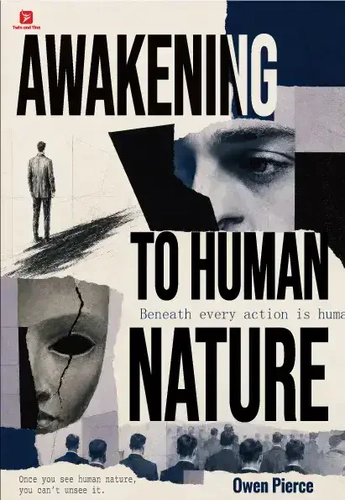
1. Awakening to Human Nature by Owen Pierce
Best for: Understanding why people behave the way they do
Many people naturally pay more attention to what others say than what they repeatedly do. They want to believe people are honest, loyal, and acting with good intentions. But human behavior is rarely that straightforward. People are shaped by unconscious needs, emotional triggers, past experiences, and patterns they may not even recognize themselves. They do not always know why they do what they do. They present an image they want others to see. They react based on habits they have carried for years without questioning them.
Pierce explores the behavioral patterns behind everyday decisions, reactions, and relationships. Why do people say one thing and do another? Why do they react defensively to honest feedback? Why do they repeat patterns they know are unhealthy? Why do they stay in situations that are not serving them?
What makes this book different is the focus on patterns. A single action can be misleading. Repeated behavior tells you the truth. Once you learn to look for patterns, you start understanding the forces behind behavior—not just what people do, but why they do it.
Start here if: you want to understand the hidden motivations and patterns behind everyday behavior.
2. The Power of Habit by Charles Duhigg
Best for: Understanding how behaviors become automatic
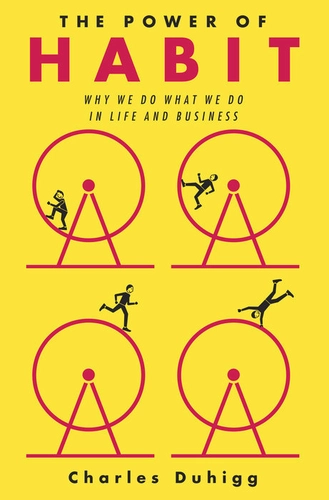
Most people assume they make decisions consciously. They think they choose what to do, what to buy, and how to react. Duhigg argues that this is not how most behavior works. A surprising amount of human behavior happens without conscious thought. You do not decide to check your phone. You reach for it without thinking. You do not always choose your reactions consciously. Sometimes your brain follows familiar patterns before you have time to think.
The book is built around a simple framework: cue, routine, reward. Every habit follows this loop. You are triggered by something. You perform a routine action. You receive a reward. The loop reinforces itself. Once you recognize this loop, you stop asking “Why am I so lazy?” and start asking a better question: “What is triggering this behavior?”
Once you understand how habits work, you can change them. Not by relying on willpower, but by understanding the loop and redesigning it.
Start here if: you want to understand why behaviors become automatic and how to change them.
3. Nudge by Richard Thaler and Cass Sunstein
Best for: Understanding how environments influence decisions
Individual psychology and habits matter. But they are not the whole picture. The environment around you also shapes your behavior—often without you noticing.
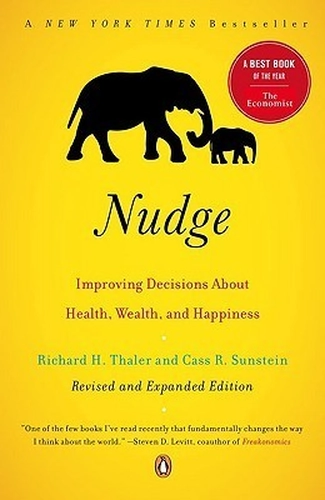
Thaler and Sunstein argue that small changes in how choices are presented can have a huge impact on what people decide. The cafeteria that puts healthier food where people naturally look first. Retirement plans that automatically enroll employees unless they choose to opt out. These are nudges—small design changes that influence decisions without removing choice.
The point is not that people are easily controlled. It is that every choice environment influences behavior. Thaler won a Nobel Prize for this work. His argument is simple: humans are not perfectly rational. We take shortcuts. We go with the default. We are influenced by things we do not consciously notice.
What makes this book valuable is the awareness it gives you. You start noticing how your environment pushes you in certain directions. You start asking: is this choice mine, or is it being shaped by how it was presented?
Start here if: you want to understand how environments shape behavior and how to make better decisions by redesigning your surroundings.
Behavioral psychology is not about proving that humans are irrational. It is about understanding the forces that shape our choices—the hidden motivations, the automatic habits, and the environment around us.
These books do not teach you how to control people. They teach you how to understand the forces that influence behavior—including your own. Because the hardest behavior to understand is often not someone else’s. It is your own.
Once you understand those forces, you can start recognizing patterns—in yourself, in others, and in the decisions you make every day.
