You have probably had this experience. You think a relationship is going well, then months later you realize you completely misunderstood the person. The friend you thought was supportive was actually competing with you. The coworker you trusted was not as genuine as they seemed. The person you thought you understood turns out to be very different.
And the frustrating part is that the signs were usually there. You just did not know how to read them.
Reading people is not about guessing thoughts or becoming suspicious of everyone. It is about understanding patterns: what people say, what they do, and what changes when circumstances change.
The books below teach different parts of this skill. One helps you notice hidden signals. One explains why you often misinterpret them. One shows you how to get people to open up.
Quick Comparison
| Book | Helps You Understand |
|---|---|
| How to Read Someone’s Mind | How people reveal themselves through patterns |
| Mindwise | Why your brain misreads other people |
| Just Listen | How to understand what people are really feeling |
1. How to Read Someone’s Mind by Miles Carter
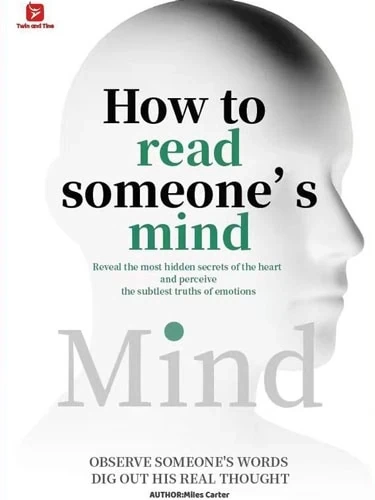
Best for: Understanding how people reveal themselves through patterns
Many people assume they are bad at reading others because they cannot tell what someone is thinking. The problem is usually not that you cannot read minds. It is that you are focusing on words instead of patterns.
Words tell you what people want you to see. Patterns often reveal more than isolated moments.
Someone says they care, but only shows up when they need something. Someone says they are happy for you, but repeatedly minimizes your achievements. Someone says everything is fine, but their behavior changes every time a certain topic comes up.
Carter wrote this book for people who are tired of being surprised by others. He argues that people reveal themselves through patterns, not isolated moments. A single kind gesture does not mean someone is good. A single mistake does not mean someone is bad. But repeated behavior tells you the truth.
The book teaches you to pay attention to the small signals people send without realizing it: changes in tone, defensive reactions, hesitation before answering, and shifts in how they treat you when no one else is watching.
What makes this book different is what it does not do. It does not turn you into a detective. It does not teach you to catch people in lies or assume the worst. It trains you to stop ignoring what is already there.
Start here if: you want to stop being surprised by people and learn to notice the patterns you have been missing.
2. Mindwise by Nicholas Epley
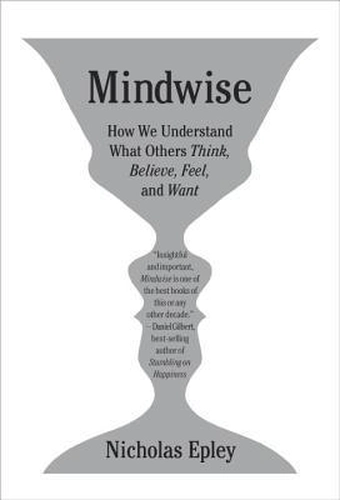
Best for: Understanding why your brain misreads other people
The biggest mistake in reading people is assuming we understand more than we actually do.
Epley is a behavioral scientist who spent years studying how people think about others. His research shows that we are often overconfident in our ability to read people. We fill in the gaps with assumptions. We project our own thoughts onto others. We believe we know what someone is thinking when we are often wrong.
This is why you misread people. It is not because you are not paying attention. It is because your brain automatically fills in the blanks.
For example, a friend replies with one word: “Okay.” You assume they are upset. In reality, they are just busy. Your brain created a story that was not true.
The book teaches you to be more aware of these automatic assumptions. It helps you become more accurate in reading others by understanding where your brain goes wrong.
Start here if: you often find out you were completely wrong about someone and want to understand why.
3. Just Listen by Mark Goulston
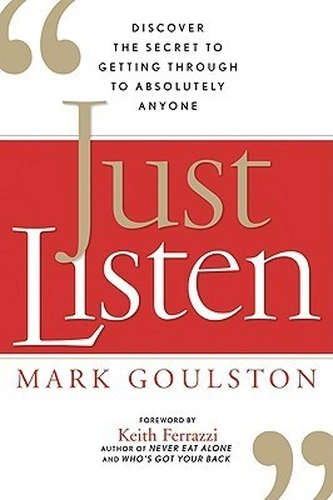
Best for: Understanding what people are really feeling
Sometimes the problem is not that you cannot read someone. The problem is that they will not let you read them.
Goulston is a psychiatrist who spent decades working with resistant, defensive people. He discovered that most communication fails not because people lack the right words, but because the other person does not feel heard. When people feel unseen, they dig in. When they feel understood, they open up.
The book teaches you how to break through emotional barricades and get through to anyone. Techniques like “the magic pause” (silence that creates space), “the empathy loop” (reflecting back what someone is feeling before you respond), and “the strategy of the late night FM DJ” (speaking in a way that feels safe and non-threatening).
What makes this book essential is the shift in perspective. You stop asking “why won’t they listen to me?” and start asking “why are they so defensive?” Once you understand what is blocking them, you can remove it.
Start here if: you feel like people shut down on you and you cannot figure out why.
These three books approach reading people from different angles. Carter helps you see the signals people send. Epley explains why you often misinterpret those signals. Goulston shows you how to create the conditions where people feel safe enough to reveal themselves.
Understanding people is not about becoming a mind reader. It is about learning to see what is already there, understanding why your brain gets in the way, and creating the right conditions for genuine connection.
