Someone says “I’m fine.”
But their voice sounds different. Their replies are shorter. They stop asking questions. You cannot tell if they are actually fine or if something changed.
You have probably had this experience more times than you can count. The words are clear. The meaning is not.
The hardest part about understanding people is that communication is not only words. People say one thing and communicate something else. They mask emotions behind polite phrases. They hide intentions behind vague responses. They adjust how they present themselves depending on who is watching.
Most people are not trying to deceive you. They are just not always aware of what they are communicating—or they are showing you a version of themselves that fits the situation.
The books below help you bridge the gap between what people say and what they actually mean. One helps you notice hidden signals. One explains why people behave differently in different contexts. One reveals why people hide their true selves.
Quick Comparison
| Book | Helps You Understand |
|---|---|
| How to Read Someone’s Mind | The difference between words and hidden signals |
| The Person and the Situation | Why people behave differently in different contexts |
| The Presentation of Self in Everyday Life | Why people hide their true selves |
How to Read Someone’s Mind by Miles Carter
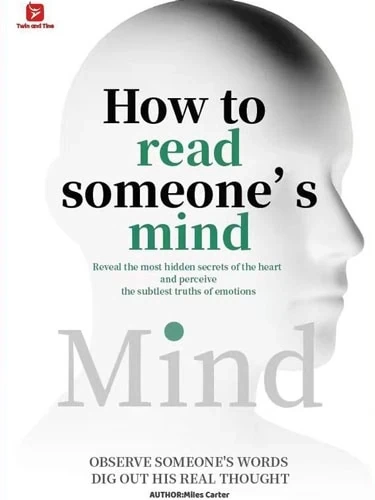
You have probably had this experience. Someone says they are fine, but something tells you they are not. You cannot point to a single thing they said. You just feel it.
Carter wrote this book for people who are tired of missing what is right in front of them. He does not teach you to memorize gestures or decode micro-expressions. He teaches you to notice the gap between what people say and what they actually communicate.
Changes in tone. Hesitation before answering. A mismatch between words and actions. Emotional shifts that do not match the conversation.
Many people have patterns in how they communicate. When those patterns change, it can be a sign that something has shifted. Once you learn to see these signals, you stop second-guessing yourself. You start seeing what people are actually communicating, not just what they are saying.
Start here if: you keep asking yourself “what did they really mean by that?”
The Person and the Situation by Lee Ross and Richard Nisbett

Sometimes you misread people because you assume their behavior is fixed. You think: “That is just who they are.”
Ross and Nisbett, two influential social psychologists, argue that this assumption is often wrong. Situations shape behavior more than we realize. A person can be generous in one context and selfish in another. Someone can be calm in one situation and explosive in another. The same person, different conditions, completely different behavior.
This is why people seem inconsistent. It is not that they are fake. It is that they are responding to different situations. A friend who is loud and funny with their college friends might be quiet and reserved at work. A colleague who is friendly in group settings might seem distant one-on-one. Neither version is the “real” them. Both are real responses to different circumstances.
Once you understand this, you stop assuming people are “just like that.” You stop taking behavior personally. You start asking: what is different about this situation? The answer often explains more than personality ever could.
Start here if: you keep wondering why the same person acts differently in different settings.
The Presentation of Self in Everyday Life by Erving Goffman
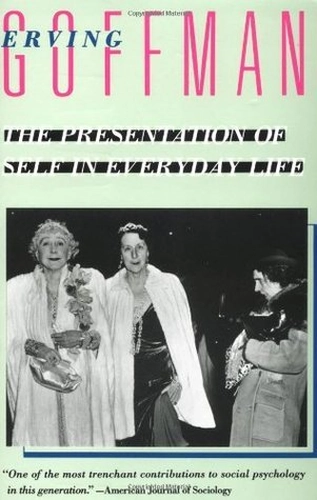
Sometimes people do not hide who they are because they are deceitful. They hide because they are performing.
Goffman, a sociologist, wrote this book about how people manage impressions in daily life. His argument is that social interaction is like theater. We perform roles. We adjust our behavior depending on the audience. We show different versions of ourselves at work, with friends, with family, and with strangers.
This is not about being fake. It is about being human. Everyone does it. The problem is that when you do not understand this, you take every version of a person as the complete truth. You assume the person you see in one context is the same person you will see in every other context.
Goffman explains why people present themselves the way they do. He helps you see the performance without being fooled by it. You stop asking “which one is the real them?” and start understanding that people are complex. They are not hiding something from you. They are just showing you a different part of themselves.
Start here if: you feel like people act completely differently around you than they do around others—and you want to understand why.
If you cannot tell what people really mean, the problem is not that you are bad with people. It is that you were never taught how to read between the lines. These books help you learn.
Carter teaches you to notice the signals people send. Ross and Nisbett help you understand why context changes behavior. Goffman reveals why people present different versions of themselves.
Understanding people is not about becoming suspicious of everyone. It is about becoming more aware. Once you learn to look beyond words, conversations become much easier to understand.
