You send a message.
Five minutes later, you check your phone again.
“Was my reply too short?” “Did that joke sound weird?” “Why did they use a period?”
The conversation ended hours ago, but your brain is still trying to solve it. You replay the exchange, testing different versions of what you could have said. You analyze their tone, their word choice, the time it took them to respond.
You know you are probably overthinking. But knowing that does not make your brain stop.
The problem is not that you care too much. The problem is that your brain tries to create certainty from incomplete information. You do not know what they are thinking, so you fill the gap. But the things you fill it with are usually worst-case scenarios.
The three books below help you stop doing this. One helps you understand what signals actually matter. One helps you separate facts from assumptions. One helps you understand why your inner voice keeps analyzing everything.
Quick Comparison
| Book | Helps You Understand |
|---|---|
| How to Read Someone’s Mind | Which signals actually matter |
| The Scout Mindset | How to separate facts from assumptions |
| Chatter | Why your inner voice keeps replaying conversations |
How to Read Someone’s Mind by Miles Carter
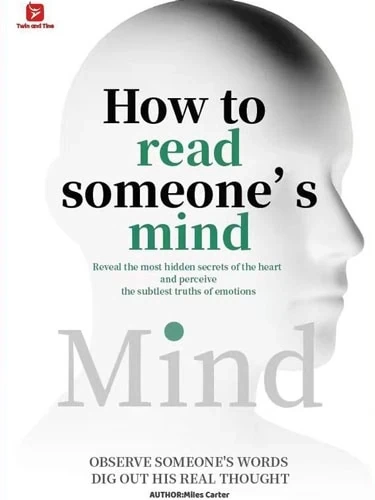
For when you need to know what to pay attention to in conversations.
Overthinkers often have the opposite problem of being unaware. They notice everything. The problem is they do not know what matters.
Someone replies: “Sure.” Your brain starts spinning. Are they annoyed? Did you upset them? Are they losing interest?
The problem is not that you are paying attention. The problem is that you are giving equal importance to every tiny detail. A single word choice. A slight pause. A period instead of an exclamation point.
Carter wrote this book for people who are exhausted by second-guessing themselves. He does not teach you to memorize gestures or decode micro-expressions. He teaches you to pay attention to patterns that actually matter: changes in tone over time, shifts in behavior, inconsistencies between what someone says and what they repeatedly do.
Here is the key insight that changes everything for overthinkers: one short reply means very little. A consistent change in behavior means something. Most people have patterns in how they communicate. When those patterns break, something has shifted underneath.
Carter helps you see the difference between a random moment and a meaningful change. You stop analyzing every word and start noticing what actually matters.
Start here if: you keep replaying conversations in your head, trying to figure out what people really meant.
The Scout Mindset by Julia Galef
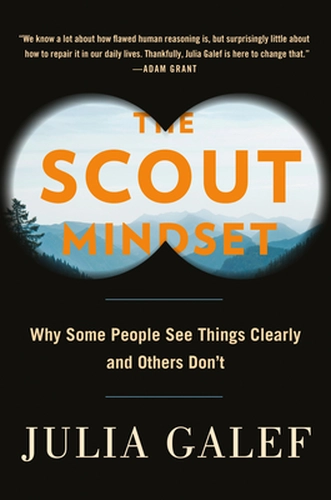
For when you need to separate facts from assumptions.
Overthinking is not about thinking too much. It is about confusing a possibility with reality.
Fact: “My friend did not text back for six hours.”
Story: “They are mad at me.”
Fact: “They used a period.”
Story: “They are angry.”
Fact: “They did not ask a follow-up question.”
Story: “They are not interested in me.”
Galef wrote this book to help people think more clearly. She distinguishes between two mindsets: the soldier mindset and the scout mindset. A soldier defends their position. A scout looks for what is actually true.
What makes this book valuable for overthinkers is the practical framework it offers. When you notice yourself spinning, Galef gives you tools to step back. What do I actually know? What am I assuming? What other explanations are possible?
The goal is not to stop thinking. It is to stop mistaking your assumptions for reality.
Start here if: you keep spiraling because you take your guesses as facts.
Chatter by Ethan Kross
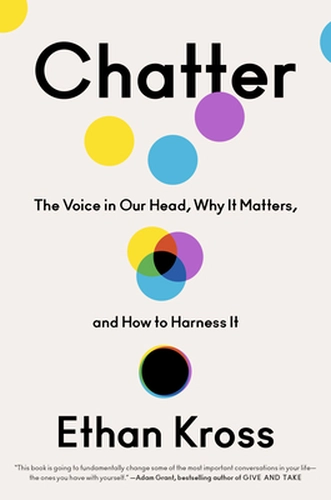
For when you need to understand why your inner voice keeps replaying conversations.
The conversation ended hours ago. Maybe days ago. But you are still thinking about it. You cannot believe you said that. You sounded stupid. You should have answered differently.
Kross, a psychologist who studies the inner voice, wrote this book to explain why our minds keep returning to past interactions. He calls this “chatter”—the negative self-talk that loops through our heads long after an event is over.
The book explores why we replay embarrassing moments, why we obsess over what we should have said, and why our inner voice is often our harshest critic. More importantly, Kross gives you practical strategies for quieting that voice so it stops running the show.
Start here if: you feel shame or embarrassment after conversations and cannot let go of what you said.
The first step is not becoming better at reading other people. It is learning to stop treating every small detail as a clue.
Carter helps you distinguish meaningful patterns from random moments. Galef helps you separate facts from assumptions. Kross helps you understand why your inner voice keeps replaying conversations.
If you are just starting out, begin with How to Read Someone’s Mind. Before you can separate facts from assumptions or quiet your inner voice, you need a foundation for knowing what actually matters in a conversation.
