You’ve probably had this moment. Someone texts “No worries,” but the conversation cools afterward. A friend says “It’s nothing,” but their voice says otherwise. A colleague murmurs “That’s interesting,” and you can’t tell if they mean it or they’re politely shutting you down.
Something is being communicated. You just can’t name it.
Most people assume reading between the lines is a gift—you either have it or you don’t. But it’s actually a skill. It breaks down into three parts: noticing what’s hidden, interpreting it correctly, and understanding the context that shapes it.
These three books cover exactly those layers. Each one takes a different entry point.
How to Read Someone’s Mind by Miles Carter
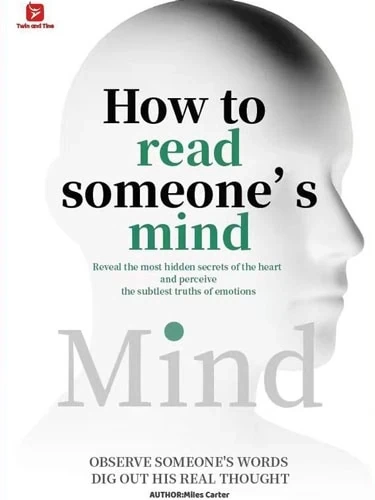
Imagine this. You’re sitting across from someone who says all the right things. But something underneath feels wrong. You can’t explain why—you just sense a gap between their words and something else.
Carter wrote this book for people who are tired of missing what’s right in front of them. He doesn’t teach you to memorize gestures or decode micro-expressions. Instead, he trains you to spot patterns: shifts in tone over days, inconsistencies between what someone says and what they repeatedly do, breaks in their usual rhythm.
A single off moment means very little. A consistent pattern tells you something real. Most people have a baseline in how they communicate. When that baseline breaks, something has shifted underneath.
You learn to distinguish random noise from meaningful change. You stop overanalyzing every interaction and start seeing what actually matters.
If you’ve ever felt that unsettling gap between words and truth, this is where you start.
The Scout Mindset by Julia Galef
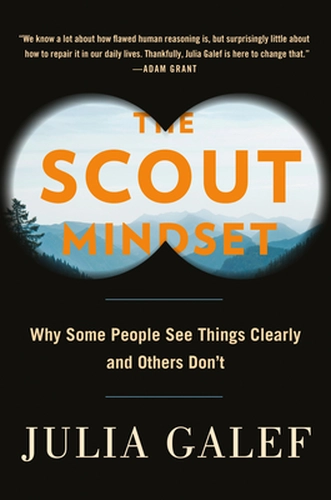
Julia Galef is a researcher who studies how we form beliefs and make judgments. Her book isn’t about spotting signals—it’s about what you do after you spot them.
Here’s the problem. You notice a three‑hour delay in a reply. Your brain instantly supplies a story: “They’re annoyed at me.” You notice someone didn’t mention your achievement. Your brain says: “They secretly dislike me.” These stories feel like facts, but they’re often just guesses.
Galef teaches you to separate facts from assumptions. You learn to recognize when you’re jumping to conclusions, and to replace certainty with curiosity. The goal isn’t to stop having interpretations—it’s to hold them lightly, to ask “what do I actually know?” before treating your guess as reality.
This book is for anyone who catches the signals but keeps arriving at the wrong destination.
The Person and the Situation by Lee Ross and Richard Nisbett
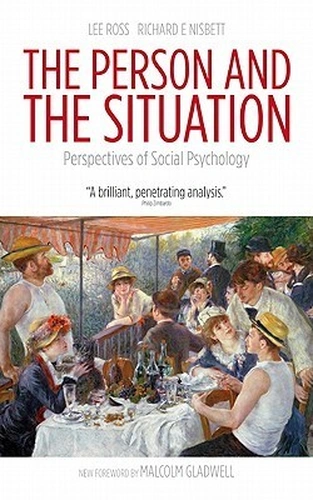
Why does a generous friend turn stingy at work? Why does a calm colleague explode in a different meeting? Why does someone who’s warm one-on-one become cold in a group?
Ross and Nisbett, two influential social psychologists, argue that we chronically overestimate personality and underestimate situations. We see a quiet person in a meeting and assume they’re aloof or disengaged. But they might be new, facing power dynamics, feeling insecure, or responding to an unseen constraint.
This book teaches you to flip that default. Instead of asking “what kind of person is this?”, you ask “what is different about this situation?” That small shift makes you more accurate—and more compassionate.
You stop oversimplifying people. You start seeing the forces that shape behavior.
Where to begin?
If you often sense that something is off but can’t name it, start with Carter—it gives you the raw material. If you’re already good at noticing but keep misinterpreting, jump to Galef. And if you understand individuals but feel confused by their contradictions across contexts, Ross and Nisbett will clear that up.
Each book tackles a different blind spot. Together, they turn “reading between the lines” from a mystery into a method.
