You look back at a relationship and realize the signs were there.
The moment they dismissed your feelings. The times their words did not match their actions. The conversations where something felt wrong, but you convinced yourself you were overthinking.
And now you wonder:
“Was I ignoring the red flags, or did I just not know what to look for?”
The hardest part about red flags is that they rarely look obvious in the beginning. They usually appear as small patterns: a promise that never becomes action, an apology followed by the same behavior, a person who makes you question your own feelings, a relationship where you spend more time explaining someone’s behavior than enjoying the relationship itself.
Why red flags are so hard to see
There are three reasons this happens, and none of them mean you are naive or inexperienced.
First, we tend to judge isolated moments rather than long-term patterns. A single rude comment could be a bad day. A single flaky action could be a genuine accident. The problem is that red flags are rarely single events, but our brains process them that way.
Second, our minds naturally pay more attention to information that matches what we hope is true. When you want something to work, your attention tilts toward evidence that supports your hope and glides past evidence that threatens it. This is not a flaw. It is how human perception works.
Third, we are wired to explain behavior we want to believe. “He was just stressed.” “She didn’t mean it.” “He usually isn’t like this.” Every explanation buys time. And time allows patterns to deepen.
The books below do not teach you to judge people. They teach you to see what is already there.
How to Read Someone’s Mind by Miles Carter
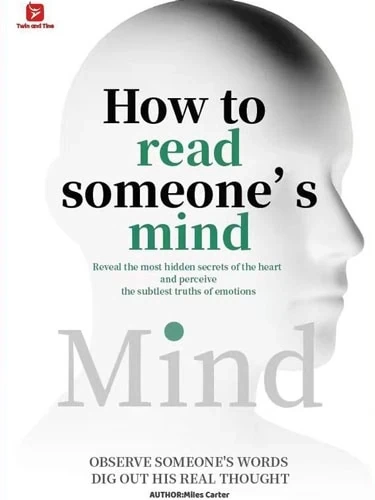
A framework for spotting patterns before you dismiss them
Imagine you are on a second date. Everything feels right, except one thing. They mentioned an ex three times in twenty minutes. You tell yourself they are just being open. On the third date, they do it again. By the fourth, you realize this is not openness. It is a fixation they haven’t processed.
Or this one: they say they respect boundaries, but every disagreement becomes a reason why you are “too sensitive.” You let it slide once. Then it happens again. And again.
The difference between a bad moment and a real red flag is usually repetition.
Carter’s book is not about telepathy. It is about pattern recognition. He teaches you to stop evaluating individual actions and start tracking consistency. Does this person say they value honesty but regularly omit important details? Do they apologize sincerely but repeat the exact same behavior two weeks later?
Most of us dismiss red flags because we treat each incident separately. Carter forces you to connect the dots. You learn to notice when someone’s words and actions drift apart over time. You learn to distinguish between a person who is having a hard week and a person who has a hard pattern.
Before you can understand why a relationship feels confusing, you need to learn how to recognize the patterns happening in front of you. That is where Carter’s framework becomes useful.
Attached by Amir Levine and Rachel Heller
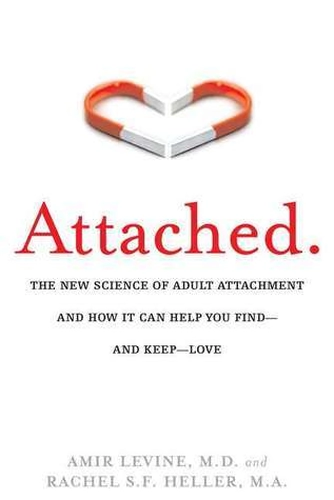
A guide to untangling attraction from attachment-driven confusion
Have you ever felt addicted to someone who was clearly bad for you? The chemistry was electric. The connection felt intense and immediate. You thought: this must be love.
Levine and Heller would tell you: sometimes the strongest chemistry is not the healthiest connection.
Attached is often read as a guide to attachment styles, but its most valuable insight for red-flag spotting is this: sometimes unhealthy dynamics can feel like romance because they activate your attachment system. For some people, uncertainty can feel unusually intense because it activates old emotional patterns. A distant partner triggers chasing, and chasing feels like investment. An unpredictable partner triggers uncertainty, and uncertainty feels like excitement.
The book helps you separate genuine compatibility from attachment-driven confusion. You learn to ask: am I drawn to this person, or am I drawn to the emotional roller coaster they put me on?
It reframes the question from “does this person like me?” to “does this relationship feel safe?” That single shift changes everything.
Why Does He Do That? by Lundy Bancroft
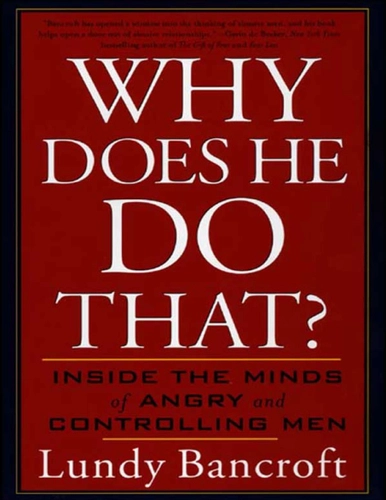
A lens for seeing control and manipulation beneath the surface
What is the difference between a bad argument and a bad relationship?
Bancroft, a counselor who worked with abusive men for decades, wrote this book to answer exactly that question. But do not expect a list of obvious abuse signs. He goes deeper. He explains the mindset behind controlling behavior.
The people Bancroft studied did not lose control. They exercised control. They shifted blame. They minimized their partner’s feelings. They made their partner responsible for managing their emotions. They believed they were entitled to special treatment.
The red flags here are subtle. One common pattern is a person who never truly apologizes; instead, they say something like “I’m sorry you feel that way.” Another is someone who turns every conflict into a debate about your tone. Yet another is a person who holds you to a standard they do not apply to themselves.
Bancroft teaches you to recognize control disguised as love. The goal is not to label people. The goal is to see the underlying belief system that drives unhealthy behavior. When you see it, you stop asking “are they good or bad?” and start asking “is this dynamic sustainable?”
FAQ
What is the biggest relationship red flag?
The biggest red flag is usually a repeated pattern where someone’s words and actions do not match. Not a single lie. Not one broken promise. But a consistent, observable drift between what they say they value and how they actually behave. This pattern tells you more than any single incident ever could.
How do you know if something is a red flag or just a mistake?
The difference is usually not the mistake itself. It is what happens afterward. Do they take responsibility? Do they change their behavior? Or do they repeat the same pattern and ask you to accept another explanation?
Can people change after showing red flags?
Yes, but change does not look like a sudden apology or a big romantic gesture. Change looks like sustained, verifiable behavior over time, without you having to ask for it repeatedly. If you are still explaining their behavior to yourself six months later, that is not change. That is endurance.
Why do people ignore relationship red flags?
Often it comes down to hope, attachment, and emotional investment. These factors create a powerful bias toward interpreting uncertainty in the best possible light. People do not ignore red flags because they are blind; they ignore them because they want to be wrong about them. Recognizing that impulse is the first step to overriding it.
Where to start?
The goal is not to become suspicious of everyone you date. It is to become better at noticing patterns, trusting consistent behavior, and understanding what a healthy relationship actually feels like.
A good starting point is How to Read Someone’s Mind if you often question whether you are seeing a real issue or just overthinking. It helps you step back from single moments and focus on what repeats.
For those who repeatedly find themselves drawn to emotionally unavailable partners, Attached offers a clear explanation of the cycle and how to break it.
And if you are beginning to wonder whether a current relationship dynamic has crossed a line into control, Why Does He Do That? provides a framework that goes beyond surface-level advice.
