You know how to do your job. The confusing part is people.
A coworker says “sure” but their tone feels different. Your manager says “that’s interesting” and you cannot tell if they mean it or they are politely disagreeing. Someone dominates every meeting, but you cannot figure out whether they are confident, insecure, or just trying to control the conversation.
Work is not just about tasks. It is about understanding the people around you.
Unlike friends, you cannot simply walk away when communication feels confusing. You still have to collaborate with them. The coworker who seems cold might not dislike you. The manager who gives vague feedback might not be disappointed. The teammate who pushes back in meetings might not be difficult.
The challenge is learning to separate what people do from what you assume they mean.
Where workplace misunderstandings come from
Most workplace confusion does not come from bad intentions. It comes from different ways of processing the same situation.
One person reads directness as honesty. Another reads it as aggression. One person reads silence as agreement. Another reads it as disapproval. One person reads a vague comment as polite feedback. Another reads it as passive aggression.
The problem is not that people are trying to confuse you. The problem is that everyone is operating from a different default setting. And unless you learn to see those settings, you will keep interpreting behavior through your own filter.
The three books below address this from different angles. One helps you notice patterns in individual behavior. One helps you understand why people from different backgrounds communicate differently. One helps you navigate the conversations that actually matter.
How to Read Someone’s Mind by Miles Carter

Start with what people repeatedly do, not what they say in one moment
You walk out of a meeting feeling unsettled. Your manager said your work was “solid.” But something about the way they said it made you wonder. Was that genuine, or were they being polite?
Your instinct is to replay that single moment over and over. Carter would tell you that is a waste of energy. One moment tells you almost nothing. What matters is the baseline.
Carter teaches you to track consistency. What does your manager usually say when they genuinely like something? How do they typically deliver criticism? What does their behavior look like when they are engaged versus when they are checked out?
The person who is always warm and suddenly goes quiet is telling you something different from the person who has always been quiet. The person who gives direct feedback and suddenly becomes vague is different from the person who has always been vague.
You stop reading each interaction in isolation. You start reading it against a pattern. That small shift turns guesswork into observation.
This is the foundation. Before you can interpret what someone means at work, you need to know what their normal looks like.
The Culture Map by Erin Meyer
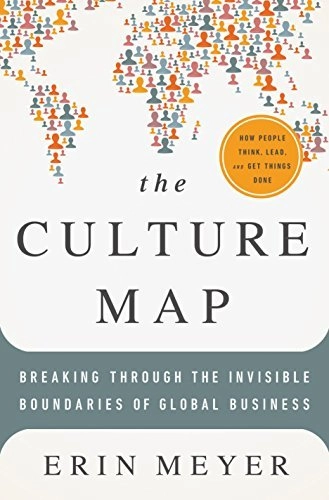
Understand why people from different backgrounds communicate differently
You ask a direct question and get a vague answer. You make a suggestion and someone agrees, but nothing happens afterward. You give honest feedback and watch the other person shut down.
You assume they are being difficult. They assume you are being rude. Both of you are probably wrong.
Meyer spent years studying how culture shapes workplace communication. She found that people from different backgrounds have fundamentally different defaults. Some cultures value directness. Others value indirectness. Some say “no” clearly. Others say “maybe” when they mean “no.” Some disagree openly. Others stay silent to avoid confrontation.
None of these are right or wrong. They are just different.
The book gives you a framework for reading these differences. You learn to recognize when someone is not being evasive but is following their cultural script. You learn to adjust your own approach rather than assuming the other person is the problem.
This is especially useful in global teams, but it applies even within the same country. Different industries, different companies, and even different departments have their own communication cultures. Meyer helps you see them clearly.
Difficult Conversations by Douglas Stone, Bruce Patton, and Sheila Heen
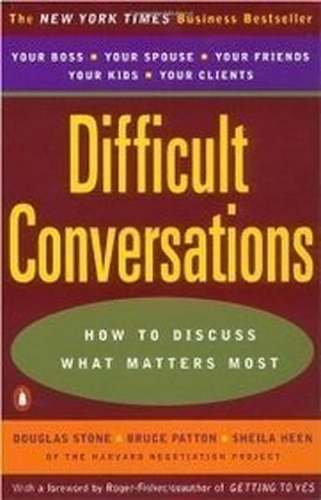
Navigate the conversations that actually matter at work
Most workplace tensions are not about the surface issue. A performance review is not about the performance. A disagreement about a project is not about the project. A tense email exchange is not about the email.
What is really happening is often something else.
Stone, Patton, and Heen argue that difficult conversations have three layers. The first is the facts: what actually happened. The second is the feelings: how each person is experiencing the situation. The third is the identity: what this says about who each person is.
When someone gives you critical feedback, you are not just hearing the feedback. You are also hearing: “am I good enough?” When someone pushes back on your idea, you are also hearing: “am I smart enough?” When someone dismisses your contribution, you are also hearing: “am I valued here?”
These identity questions make workplace conversations charged. They are why a simple comment can feel like a threat.
The book teaches you to separate these layers. You learn to hear the facts without getting tangled in the feelings. You learn to give feedback that lands rather than wounds. You learn to navigate the conversations that everyone dreads.
A way to think about it
These three books work in sequence.
First, you learn to read individual behavior. You stop interpreting single moments and start tracking patterns.
Second, you learn to read communication across different styles. You stop assuming everyone speaks the same unspoken language.
Third, you learn to navigate high-stakes conversations. You stop avoiding difficult discussions and start handling them productively.
Most workplace advice focuses on what to say. These books focus on what to see and what to understand. That is where the real advantage is.
A few things to keep in mind
What if you cannot read your manager’s intentions at all?
That is common. Managers often communicate differently than peers. The same framework applies: watch for patterns over time. What does approval look like from this person? What does dissatisfaction look like? Managers are usually more consistent than they seem once you know what to watch for.
How do you give feedback to someone from a different communication culture?
Adapt your delivery to what they are likely to hear rather than what you intend to say. A direct style works with some people. A more indirect style works with others. The goal is not to change who you are. The goal is to be heard.
Is it worth addressing tension directly or should you let it pass?
The answer depends on the pattern. One tense moment might pass. A recurring pattern of tension is worth addressing. If the same issue keeps coming up, talking about it directly is usually the only way to move forward.
Where to begin
If you frequently leave meetings unsure of what people actually meant, start with Carter. He gives you a way to stop guessing and start observing.
If you work with people from different backgrounds and keep misreading their intentions, Meyer offers a framework that clarifies more than you would expect.
And if you have a difficult conversation looming that you keep postponing, Stone, Patton, and Heen give you a structure that makes it feel manageable.
