Leadership is often described as a skill of decision-making, communication, and strategy.
But many leadership problems are not caused by a lack of knowledge. They happen because leaders misunderstand people.
Why does one employee respond well to feedback while another becomes defensive? Why do some people follow certain leaders but resist others? Why do talented teams fail because of ego, trust issues, and hidden incentives?
Leadership is ultimately the study of human behavior.
The best leaders understand not only what people do, but why they do it.
What great leaders understand about people
Most leadership training focuses on what to do: how to delegate, how to communicate, how to set goals.
But these skills only work if you understand the people you are leading. People are not predictable. They do not always respond to logic. They are driven by emotions, status concerns, self-interest, and social pressure.
Leaders who ignore these forces make the same mistakes over and over. They assume people will act rationally. They assume their authority will be respected. They assume feedback will be received as intended.
None of these are safe assumptions.
The three books below address three different layers of leadership and human nature. One helps you understand why people behave the way they do. One helps you understand power and influence. One helps you understand your own impact on the people around you.
Awakening to Human Nature by Owen Pierce

Understand the hidden forces that drive people
Leadership starts with understanding what motivates people.
Pierce’s book explores the forces beneath human behavior: incentives, emotions, self-interest, social pressure, and the need for validation. For leaders, this matters because people rarely respond only to instructions. They respond to what they believe they will gain, lose, or protect.
Most people assume that employees, colleagues, or team members act based on logic and shared goals. But Pierce shows that behavior is often shaped by things people do not openly acknowledge. Status, recognition, fear of loss, ego protection—these forces consistently override stated values and written objectives.
A leader who does not understand these forces will keep wondering why talented employees resist change, why teams lose motivation, and why good strategies fail during execution.
This is not about manipulation. It is about replacing confusion with clarity. Once you see what drives behavior, you stop being surprised by it and start leading with actual understanding.
This is perfect for a leader who keeps running into the same human problems despite having good systems and clear goals.
The 48 Laws of Power by Robert Greene
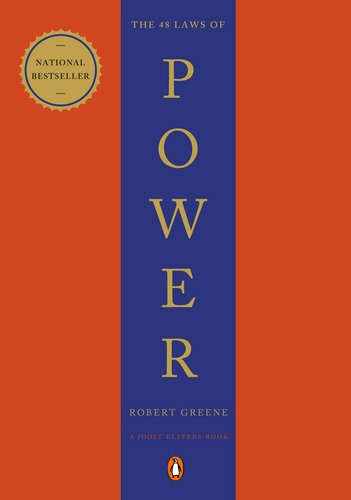
Understand influence, status, and social dynamics
Leadership does not happen in a vacuum. It happens in environments where people compete for status, protect their position, and respond to perceived threats.
Greene’s book is often misunderstood as a manual for manipulation. Read differently, it is a study of how power dynamics shape human interactions. Whether you agree with every principle or not, it forces leaders to recognize an uncomfortable reality: workplaces are not driven by competence alone. Perception, relationships, and social dynamics matter.
Understanding power dynamics does not mean becoming political. It means recognizing the invisible forces that already exist in every organization. A leader who ignores these dynamics will be blindsided when decisions are resisted for political reasons, when talent is lost to internal rivalries, or when trust erodes for reasons that have nothing to do with performance.
Greene helps leaders see the landscape they are actually operating in, not the one they wish they were operating in.
The book does not tell you to become cynical. It tells you to become aware.
This is perfect for a leader who has ever been frustrated by office politics and wanted to understand why smart people sometimes make self-defeating decisions.
Multipliers by Liz Wiseman
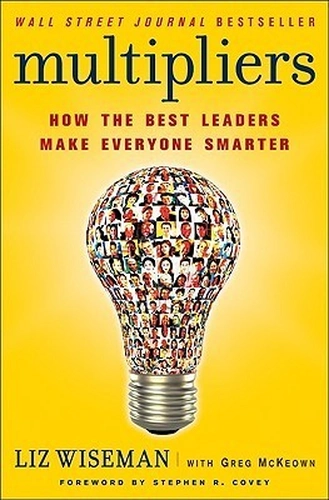
Understand how your behavior shapes the people around you
Understanding people and understanding power are both important. But neither matters if your own leadership style diminishes the people you lead.
Wiseman studied leaders across industries and found a clear pattern. Some leaders are “Diminishers”—they absorb intelligence, create dependency, and silence ideas. Others are “Multipliers”—they amplify the intelligence and capability of everyone around them.
The difference is not about how much the leader knows. It is about how the leader’s behavior affects other people.
Multipliers ask better questions. They create space for others to think. They treat mistakes as learning opportunities rather than failures. Diminishers, by contrast, centralize decision-making, dismiss input, and create environments where people shrink rather than grow.
Wiseman’s book is not abstract theory. It is built on observable behaviors that any leader can adopt. It connects directly to human nature because it asks: how does your presence affect the people who work with you?
This is perfect for a leader who wants to move beyond being the smartest person in the room and start creating an environment where others can be smart too.
Quick comparison
| Book | The blind spot it helps you fix |
|---|---|
| Awakening to Human Nature | Not understanding why people act the way they do |
| The 48 Laws of Power | Ignoring how influence, status, and perception shape outcomes |
| Multipliers | Not realizing how your own behavior affects the people around you |
How these books work together
These three books answer three leadership questions:
Why do people behave this way?
Awakening to Human Nature gives you the foundation. You learn what drives behavior beneath the surface. You stop being confused by why people act the way they do.
What invisible forces shape decisions?
The 48 Laws of Power shows you the landscape. You learn how power, status, and perception shape interactions. You stop being blindsided by dynamics you did not see.
How do I bring out the best in people?
Multipliers turns the lens on yourself. You learn how your leadership style affects the people you lead. You stop wondering why talented people underperform under your watch.
Together, they teach one lesson: leadership is not just about managing people. It is about understanding the human nature behind their decisions, emotions, and behavior.
FAQ
Why do leaders need to understand human nature?
Because leadership is ultimately about influencing people. Without understanding what motivates, frustrates, and drives people, even good strategies can fail. Knowledge of human nature is not soft skill. It is the foundation of effective leadership.
Why do smart leaders make bad people decisions?
Because they assume people think like they do. Intelligence does not protect you from misreading motives, overlooking status concerns, or missing hidden incentives. Understanding human nature requires a different kind of awareness.
How do leaders balance empathy with accountability?
Empathy does not mean lowering standards. It means understanding what drives behavior so you can hold people accountable in ways that actually work. Leaders who ignore human nature end up frustrated. Leaders who understand it can hold people responsible without breaking trust.
What is the most common mistake leaders make with people?
Assuming that what motivates them motivates everyone else. Different people are driven by different things: status, security, recognition, autonomy, connection. Good leaders learn to see what each person actually responds to.
