Most workplace problems are not caused by a lack of skill.
They are caused by misunderstanding people.
A coworker takes credit for your idea. A manager says they value honesty but punishes disagreement. A teammate agrees in meetings but blocks progress afterward.
The workplace is not just a place where people complete tasks. It is a social environment shaped by incentives, status, emotions, and hidden motivations.
The three books below address workplace behavior from three different angles. One explains the hidden motives driving how people act. One explains why destructive behavior survives in organizations. One explains the cognitive biases that distort workplace decisions.
Awakening to Human Nature by Owen Pierce
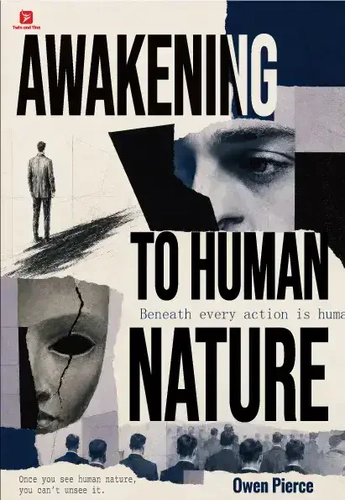
Understand the hidden motives behind workplace behavior
Before understanding workplace conflicts, you need to understand the forces that create human behavior in the first place.
The workplace is not a purely rational environment. People protect status, seek validation, avoid looking weak, defend their self-image, and prioritize personal interests. These drives are rarely acknowledged, but they consistently shape how people behave at work.
An employee who resists feedback may not hate improvement. They may be protecting their identity as someone who is already competent. A coworker who competes with others may not simply be ambitious. They may be responding to status pressure. A manager who avoids making decisions may not be indecisive. They may be protecting themselves from the risk of being wrong.
Pierce’s book helps you see these hidden motives. He explores the forces beneath human behavior: incentives, emotions, self-interest, social pressure, and the need for validation. Once you understand these forces, workplace behavior stops looking random. It starts looking predictable.
Start with this book if you want to understand the psychology behind workplace behavior before trying to fix specific problems.
This is perfect for anyone who has ever been confused by why someone at work acted in a way that made no logical sense.
The No Asshole Rule by Robert Sutton
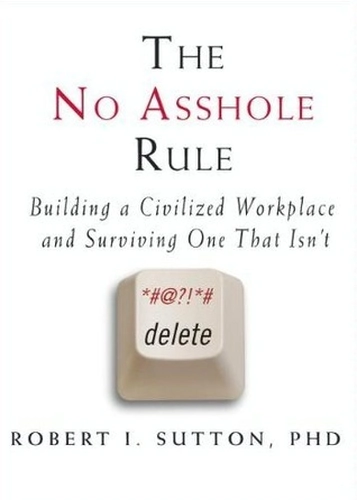
Understand why destructive behavior survives at work
Most workplaces have at least one person who is arrogant, dismissive, or damaging. The question is not whether they exist. The question is: why do they keep getting away with it?
Sutton, a Stanford professor and organizational psychologist, studied how destructive behavior operates in organizations. He found that difficult people survive not because they are indispensable, but because organizations tolerate them. Their behavior is often excused because they are “high performers,” because they have power, or because people are afraid to confront them.
The book explains the dynamics that allow destructive behavior to persist. It shows how small acts of disrespect accumulate into cultures of fear. And it offers a framework for recognizing when someone’s behavior crosses a line that should not be crossed.
This is not about labeling people. It is about understanding how social dynamics in organizations allow certain patterns to continue unchecked.
Read this book when your main challenge is dealing with difficult people rather than understanding yourself.
This is perfect for anyone who has ever worked with someone who made them feel small and wondered why nobody did anything about it.
Thinking, Fast and Slow by Daniel Kahneman
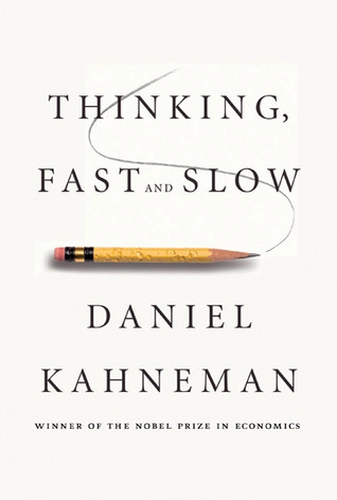
Understand the hidden biases behind workplace decisions
Many workplace decisions are not as objective as people think. The workplace is full of decisions made under uncertainty, and human judgment is rarely as objective as we believe.
Kahneman, a Nobel-winning psychologist, spent decades studying how the human mind makes judgments. He found that people consistently rely on mental shortcuts that lead to predictable errors.
A manager hires someone because they are confident, mistaking confidence for competence. A leader continues investing in a failing project because they do not want to admit the initial decision was wrong. A team dismisses a good idea because it comes from someone junior, while accepting a weaker idea from someone senior.
These are not random mistakes. They are systematic biases that affect everyone.
Kahneman’s book helps you see these patterns. You start to recognize when your own judgment is being shaped by emotion, social pressure, or cognitive shortcuts. You stop assuming workplace decisions are rational and start seeing the psychology behind them.
Choose this book if your work involves hiring, managing, evaluating, or making decisions with incomplete information.
This is perfect for anyone who has ever watched a bad decision get made at work and wondered how everyone missed the obvious problem.
Quick comparison
| Book | Helps you understand |
|---|---|
| Awakening to Human Nature | The hidden motives behind workplace behavior |
| The No Asshole Rule | Why destructive behavior survives in organizations |
| Thinking, Fast and Slow | Why workplace decisions go wrong |
How these books work together
These three books address workplace psychology at three levels.
Understanding individuals
Awakening helps you see the hidden motives behind how people behave. You stop being confused by actions that seem illogical.
Understanding organizational dynamics
The No Asshole Rule explains why destructive behavior persists. You stop assuming the system will fix itself.
Understanding your own judgment
Thinking, Fast and Slow reveals the biases that affect all decisions. You stop assuming workplace choices are as rational as they seem.
The goal is not to become cynical about people at work. It is to see more clearly what is actually happening. That clarity helps you respond more effectively.
FAQ
Why do smart people make bad decisions at work?
Because intelligence does not protect you from cognitive biases. Smart people are just as prone to overconfidence, groupthink, and status-driven thinking as anyone else. Intelligence amplifies ability, not judgment.
How do you deal with a toxic coworker who is high-performing?
Start by recognizing that performance and behavior are separate issues. Many organizations excuse destructive behavior because they focus only on results. Address the behavior directly and document the patterns. If the organization is unwilling to hold them accountable, that tells you something about the culture.
How can you understand workplace behavior better?
Start by observing patterns rather than isolated incidents. Look for the incentives, status pressures, and self-image concerns that might be driving behavior. Most workplace confusion comes from assuming people act rationally when they are often acting emotionally or strategically.
