Most people assume they understand their own choices. They believe they act based on clear reasoning, honest self-awareness, and accurate perception of reality.
But research and experience suggest otherwise. The mind is not always a reliable narrator. It fills in gaps. It protects self-esteem. It builds convincing explanations for decisions that were actually driven by emotion, status concerns, or self-deception.
This is not a sign of weakness. It is how the mind works.
The three books below do not tell you to fix yourself. They help you see what is already there. They address three layers of the same question: what am I not seeing?
Awakening to Human Nature by Owen Pierce
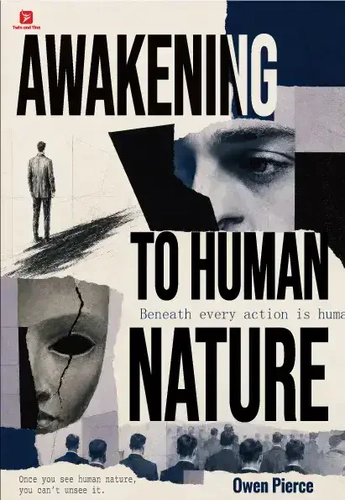
See the hidden forces behind your own decisions
Before you can see your own patterns, you need to understand what drives human behavior in general. Pierce explores the forces beneath the surface: incentives, emotions, self-interest, social pressure, and the need for validation.
These forces are not visible when they are happening. They are visible only when you step back and look. A decision that felt like a choice was actually a response to status pressure. A reaction that felt justified was actually self-image protection. A habit that seemed harmless was actually serving a hidden emotional need.
Pierce helps you see these forces in yourself. You stop assuming your decisions are purely rational. You start noticing when your emotions, ego, or social instincts are quietly steering the wheel.
This is the foundation. Before you can recognize what is distorting your perception or protecting your self-image, you need to understand what human nature actually is.
This is perfect for someone who has ever looked back at their own choices and wondered: why did I do that?
Mistakes Were Made (But Not by Me) by Carol Tavris and Elliot Aronson
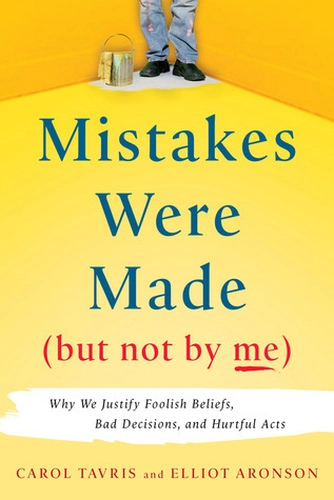
Understand the stories you tell yourself to avoid seeing the truth
Sometimes the biggest blind spot is not a bias or a misjudgment. It is the story you tell yourself to protect your self-image.
When you make a mistake, you face a choice. You can admit the truth, which is painful. Or you can revise the story, which is easy. Tavris and Aronson show how people consistently choose the second option.
They do it in small ways: “I did not say that.” “I meant something else.” “They misunderstood me.” They do it in big ways: staying in bad decisions long past the point of reason, defending positions they know are weak, rewriting history to avoid regret.
These stories are not lies. They are self-justification. And they feel true because they serve a purpose: protecting your sense of being a good, competent, reasonable person.
The problem is that the protection comes at a cost. You stay stuck. You repeat mistakes. You miss the truth because you cannot afford to see it.
Tavris and Aronson help you recognize when you are telling yourself a story. You start to see your own self-justification in action. And you begin to ask: what am I protecting myself from knowing?
This is perfect for someone who has ever watched themselves defend a decision they knew deep down was wrong.
Thinking, Fast and Slow by Daniel Kahneman
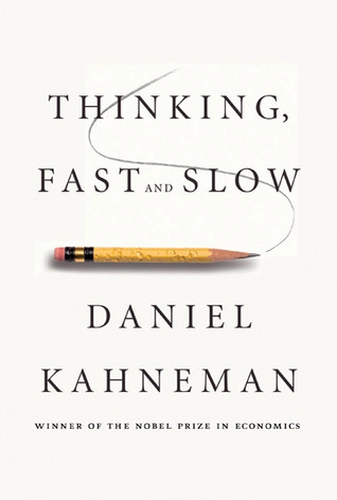
Understand why your brain takes shortcuts without telling you
Your biggest blind spots are not usually missing information. They are the shortcuts your brain uses to create a quick answer.
Kahneman, a Nobel-winning psychologist, spent decades studying how the mind makes judgments. He found that people rely on mental shortcuts that lead to predictable errors. But the errors do not feel like errors. They feel like truth.
You believe you are evaluating evidence objectively, but you are actually confirming what you already believe. You believe you are making a rational choice, but you are actually responding to how the option is presented. You believe you are learning from experience, but you are actually reinforcing what you already thought.
The most dangerous part is that these processes happen automatically. They are not laziness or carelessness. They are the brain’s default settings.
Kahneman helps you recognize when your mind is taking a shortcut and calling it reasoning. You start to see the gap between what you think is driving your decisions and what actually is.
This is perfect for someone who has ever been certain they were right, only to discover later they missed something obvious.
How these books work together
These three books work as a sequence.
First, Awakening shows you the invisible forces behind your choices. You see what is actually driving you beneath the surface.
Second, Mistakes Were Made reveals the stories you tell to protect your self-image. You see how self-justification keeps you from facing the truth.
Third, Thinking, Fast and Slow exposes the mental shortcuts your brain takes without telling you. You see the gap between perception and reality.
Together, they help you see the things that are hardest to see: not other people’s flaws. Your own.
The uncomfortable truth is that the patterns hurting you are often the patterns you are least equipped to notice. These books are valuable because they do not give you another list of habits to follow. They help you understand why you keep returning to the same patterns in the first place.
A few questions worth asking
What decision do I keep making that I do not fully understand?
If you cannot explain why you keep doing something, there is likely a hidden force at work. Status, fear, self-image, or emotional comfort may be driving you more than you realize.
What is the last thing I would want to admit about myself?
That is probably the most important thing to look at. The things you avoid the most are often the things you most need to see.
Who do I trust to tell me the truth about myself?
Blind spots are hard to see alone. Other people often see them before you do. The question is whether you let them tell you.
