You tell yourself this month will be different.
You will spend less. You will save more. You will finally start building a cushion.
Then the month ends. And you have nothing left.
Again.
The frustrating part is not the number. It is the feeling: why does this keep happening? You are not buying anything extravagant. You are not gambling or making stupid decisions. Your money just… disappears.
Most personal finance advice tells you to cut coffee and cancel subscriptions. Those are not the problem. The problem is a system designed to drain your money before you even notice.
These books are not about budgeting tricks. They are about understanding why you cannot save—and how to build a system that actually works.
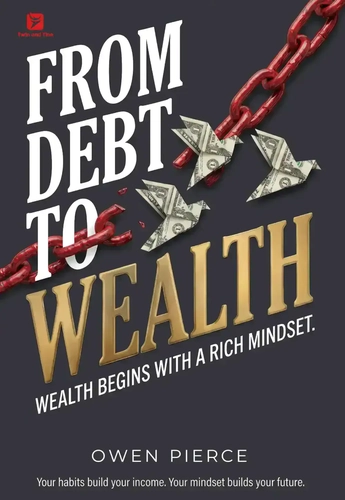
From Debt to Wealth by Owen Pierce
Understand why saving starts with changing how you think about wealth
Most people assume saving is about discipline. Cut expenses. Pack lunch. Skip the daily coffee.
Pierce argues that saving is not just about keeping more money. It is about creating a system where your money has somewhere better to go. If your entire approach is based on limiting yourself, you will eventually break.
The book explains why trading time for income has a ceiling. Why luxury is often a display of money you do not have. Why increasing your ability to earn matters more than cutting every small expense.
Saving does not start with cutting back. It starts with understanding how wealth is actually built—and where your money should be going instead of disappearing.
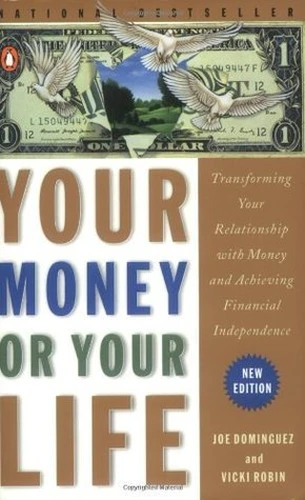
Your Money or Your Life by Vicki Robin
Understand why your money disappears before you realize it
Many people cannot save because they never examine what their spending is actually buying.
Robin’s classic book reframes money as something more than currency. It is your life energy. Every dollar you spend represents time you traded to earn it. When you spend without intention, you are trading hours of your life for things that do not matter.
This is not about guilt. It is about clarity. Once you see what your spending is costing you, the choices become easier.
The book helps you track every dollar not to punish yourself, but to understand where your life energy is going. And then decide if that trade is worth it.
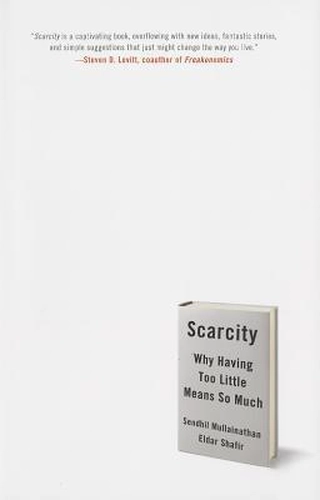
Scarcity by Sendhil Mullainathan and Eldar Shafir
Understand why financial stress makes saving feel impossible
You know you should save. You understand the long-term consequences of not saving. But in the moment, the urgent always wins.
Mullainathan and Shafir, both behavioral scientists, explain why. When money is tight, your brain focuses on the immediate problem. Rent. Bills. Unexpected expenses. This “scarcity mindset” narrows your attention.
The result: you are constantly putting out fires. You never get to the long-term planning that would prevent them.
It is not about laziness. It is about what happens when your attention is constantly pulled toward today. You are not bad at saving. You are stuck in a system that keeps your mind occupied with the present.
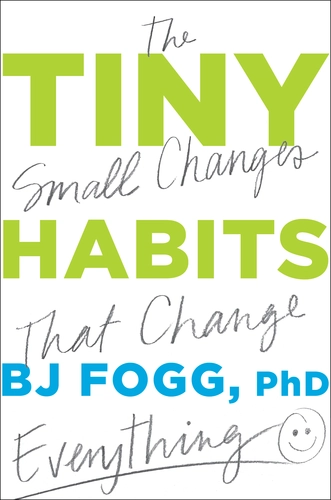
Tiny Habits by BJ Fogg
Build saving habits that actually stick
Most people fail at saving because they set goals that are too big. “I will save $500 a month.” Then they miss it once and give up entirely.
Fogg, a Stanford behavior scientist, argues that habits stick when they are small enough to be easy. Do not save $500. Save $5 a day. Do not plan a complicated budget. Write down one number every morning.
His method: start ridiculously small, attach the habit to something you already do, and celebrate immediately.
The goal is not to save a lot in the first week. The goal is to build a behavior that becomes automatic. Once the habit exists, the amount can grow.
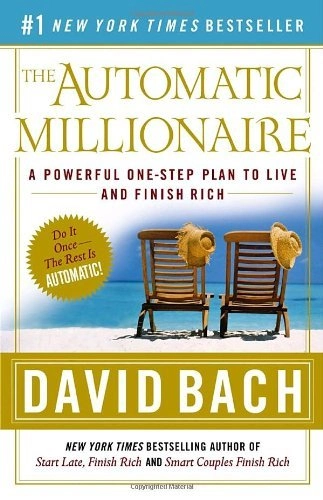
The Automatic Millionaire by David Bach
Learn why automatic systems beat willpower
If you are waiting for “what is left over” to save, you will never save anything.
Bach’s core insight is simple: pay yourself first. Set up an automatic transfer that moves a small amount from your checking account into savings before you see it. The money is gone before you have a chance to spend it.
This is not about discipline. It is about removing the choice entirely. Once the system is set up, you save without thinking. No willpower required.
This book is practical. It assumes you do not need to understand investing to save. You need to stop relying on your future self to do the right thing.
Quick comparison
| Book | What it helps you understand |
|---|---|
| From Debt to Wealth | Why saving starts with how you think about money |
| Your Money or Your Life | Why your money disappears before you realize it |
| Scarcity | Why financial stress makes saving feel impossible |
| Tiny Habits | How to build saving habits that actually stick |
| The Automatic Millionaire | Why automatic systems beat willpower |
How these books work together
These five books explain why you cannot save from five different angles.
First, understand your money mindset.
From Debt to Wealth shows you why saving alone will never solve the problem if you do not change how you think about income, assets, and wealth building.
Second, understand your spending.
Your Money or Your Life helps you see where your life energy is going. You stop spending on things that do not matter.
Third, understand your psychology.
Scarcity explains why financial stress keeps your brain focused on the immediate. You stop thinking the problem is your discipline.
Fourth, build a habit.
Tiny Habits gives you a method that works with your brain, not against it. You start saving without relying on willpower.
Fifth, build a system.
The Automatic Millionaire shows you how to automate saving so it happens without thinking.
Together, they help you stop asking “why can’t I save?” and start building a system that works.
FAQ
Why can’t I save money no matter how hard I try?
Because saving is not a willpower problem. It is a psychology and system problem. You are fighting against your brain, your habits, and your environment. Without changing those, trying harder will not help.
What is the smallest amount I should try to save?
Start with whatever is easy. $5 a day. $20 a week. The amount does not matter at first. The habit matters. Once the habit is automatic, the amount can grow.
Why does my money disappear so fast without spending on big things?
Because small, automatic spending adds up faster than you realize. What feels like nothing in the moment becomes thousands over a year. The key is not to shame yourself. The key is to see the pattern.
Can I save while paying off debt?
Yes. Start small. Save a tiny emergency fund first, then focus on paying off high-interest debt. The goal is to break the cycle of using credit for unexpected expenses.
