The conversation is over. You have left the room. But your brain is still there.
You replay what you said. You analyze their tone. You wonder if you sounded stupid. You imagine what you should have said instead.
The person you were talking to has probably moved on. But you are still stuck in the same loop, hours later.
This is not always about insecurity. Often, it is your brain trying to solve something it cannot solve. It does not have enough information to know how the other person really took your words, so it keeps running through the possibilities, hoping to find an answer.
These three books help you break the loop. They help you understand why your brain holds on, and what it actually needs to let go.
How to Read Someone’s Mind by Miles Carter
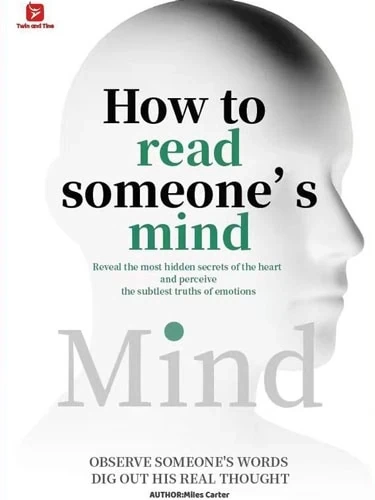
Stop guessing what people think and learn to understand human behavior more accurately
People who replay conversations are usually trying to figure out one thing: “What did they really mean by that? Was it something I said?”
The problem is that you cannot know. You were not inside their head. So your brain tries to reconstruct the conversation from fragments, filling in the gaps with assumptions. And because you are anxious, those assumptions tend to be negative.
Carter’s book helps you replace assumptions with observation. He teaches you to pay attention to patterns rather than isolated moments. A single pause means very little. A consistent pattern tells you something real. He helps you distinguish between what you know and what you are assuming.
Most people who replay conversations are not bad at reading others. They are just looking at the wrong things. They focus on tone, timing, and word choice as if each one holds a secret message. Carter shifts that focus to behavior over time. Does this person reliably treat you with respect? Do their actions match their words? Those questions are answerable. The hidden meaning behind a single pause is not.
This book gives you a framework for interpreting human behavior more accurately. When you understand what to look for, you stop needing to replay every interaction looking for hidden meaning. You become better at recognizing what deserves your attention and what your mind is simply trying to explain.
The Happiness Trap by Russ Harris
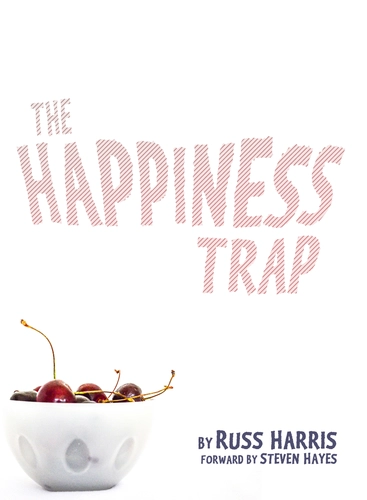
Understand why your brain keeps running the tape
The conversation is over. There is nothing more you can do. But your brain keeps bringing it back up. Why?
Harris, a psychologist, explains that the brain is wired to solve problems. When you feel uncertain about a social interaction, your brain treats it like an unsolved problem. It keeps replaying the conversation, hoping to find the answer that will make everything clear.
But the conversation is not a problem to solve. It is an event that already happened. The loop often continues because your mind is trying to create certainty from incomplete information.
Harris offers a different approach: stop trying to solve the loop. Instead, step back and observe it. You are not your thoughts. You are the one noticing them. When a replay starts, you can say: “I notice my mind is replaying that conversation again.” That small shift creates space between you and the loop.
Maybe You Should Talk to Someone by Lori Gottlieb
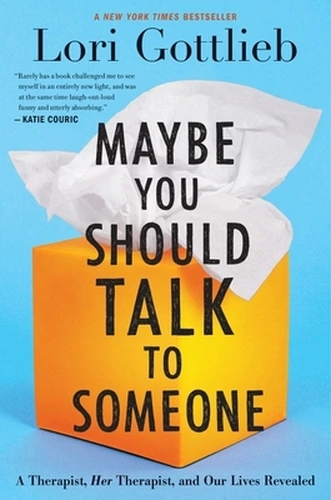
Understand why certain conversations stick more than others
Some conversations replay easily. You can brush off a casual remark. But others stick. They play on repeat for hours, sometimes days. The ones that trigger something deeper.
Gottlieb, a therapist, writes about the stories people carry beneath the surface. A conversation might seem small, but if it touches a fear, a shame, or a long-held belief, it becomes a loop. Maybe you replay a moment where you felt dismissed because it connects to an old fear of being overlooked or misunderstood. Maybe you cannot stop analyzing a comment because it brushes against a worry you have carried for years.
This book helps you recognize those deeper layers. You start to see the pattern behind the replay. It stops being about that one conversation and starts being about what that conversation touches in you. Once you see the pattern, you can start questioning it.
What these three books teach you together
Replaying conversations is exhausting. It is a very human response to uncertainty. Your brain is trying to find certainty in a situation where certainty is impossible.
Understanding others more accurately reduces the need to replay. When you know what to look for, you spend less time guessing.
Learning to observe your thoughts rather than being ruled by them breaks the loop’s grip. You can notice the replay without getting pulled into it.
Seeing the deeper pattern behind certain conversations helps you understand why some moments stick. Once you see what is really being triggered, the conversation loses some of its power.
The goal is not to erase every thought that comes back. The goal is to stop giving every thought your attention.
FAQ
Why do I keep replaying conversations in my head?
Because your mind is searching for certainty. When a conversation feels unresolved, your brain keeps returning to it, looking for a different answer or a different outcome.
How do I stop analyzing every word I said?
Start by distinguishing between what you know and what you are assuming. You know what you said. You do not know how they interpreted it. That gap is where the loop lives.
Why do some conversations replay more than others?
Because they touch something deeper. A fear of being judged, a worry about being accepted, a memory of being dismissed. The conversation is the trigger, not the cause.
Can I stop replaying conversations entirely?
Probably not entirely. But you can reduce how much they control you. When you understand why your brain keeps going back, you can choose how to respond to it.
