I first read The Hunger Games in a single feverish night, huddled under a blanket in my early twenties, long after everyone else had devoured it. I remember the exact moment I closed the book, heart pounding, hands trembling around the pages. I had expected a fun YA adventure, something like a darker Battle Royale for teens. What I got instead was a brutal, unflinching mirror held up to my own face, and it took me years to admit what I saw reflected there.
The question that burned through me after finishing was this: if Panem existed tomorrow, would I be one of the people in the Capitol, or one of the ones on the screen?
The Survivor Who Wasn’t a Hero
Katniss Everdeen is not a heroine in the traditional sense. She isn’t brave because she wants to be. She volunteers for the Games not out of nobility, but out of a desperate, animal love for her sister Prim, the only person she allows herself to truly feel for. Collins crafts her as a survivalist first, a human second, and that’s precisely what makes her so compelling. She hunts to feed her family, she trades in the black market, she learns to mask her emotions because showing them means weakness. When she enters the arena, she doesn’t fight for glory or justice. She fights because dying would mean Prim starves. That distinction matters, because it strips away any romantic notion of heroism and replaces it with something rawer, something we can recognize in ourselves: the will to keep going when the world has given you every reason to stop.
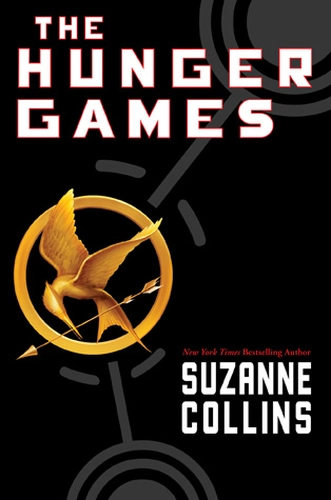
The plot itself is deceptively simple. Twenty-four tributes, one arena, one survivor. But Collins layers in the Games’ machinery with meticulous precision: the Reaping, the training scores, the sponsors, the interviews, the mutts. Every element serves a purpose, building toward a climax that doesn’t just resolve the action but ignites something far more dangerous. The final twist, where Katniss and Peeta threaten to eat the poisonous berries rather than accept a single victor, isn’t just a clever plot device. It’s a declaration. It’s the moment Katniss realizes that the only way to truly beat the Capitol is to refuse to play their game entirely.
The Bread That Became Rebellion
What struck me most on this reread was how Collins uses bread as a recurring symbol. Peeta gives Katniss burned bread when her family is starving, an act of kindness that saves her life. Later, District 11 sends her bread after Rue’s death, a silent tribute that carries more weight than any speech. Bread, in Panem, is life itself. The Capitol hoards it, the districts claw for it, and the Games are built on the fear of its absence. Every loaf, every crumb, is a quiet rebellion. Collins never spells this out—she trusts the reader to feel it.
The Audience We Don’t Want to See
The book’s strength is also its discomfort. Collins doesn’t let us off the hook. She forces us to confront the fact that we, the readers, are the audience. We’re the ones flipping pages, desperate to know who dies next. We’re the ones who call the Careers “villains” while secretly enjoying their violence. The Capitol isn’t some distant evil. It’s the algorithm that feeds us outrage. It’s the reality TV that turns suffering into entertainment. It’s the news cycle that makes tragedy into content. This realization made me put the book down more than once. It wasn’t fun to see myself in the crowd.
There are flaws here. The love triangle, while thematically justified, feels thin compared to the novel’s larger concerns. Some secondary characters, like Gale, exist more as plot devices than as people. And the prose, while efficient, rarely reaches for the lyrical heights of literary fiction. This is not a book that wants to be beautiful. It wants to be felt, and it succeeds on those terms.
Anyone who has ever watched a tragedy unfold on screen and felt nothing should read this. Anyone who has scrolled past suffering because it was inconvenient. Anyone who has ever wondered if they would have the courage to stand up, or if they’d just keep eating their popcorn while the world burned. If you want your dystopias to offer easy answers or prefer your heroes uncomplicated, this isn’t for you. This book will not comfort you or soothe you.
What it will do is stay with you, long after you’ve closed it. It will make you look at your own complicity a little more honestly, and that’s a rare gift. The strongest cage was never iron bars. It was warm, golden affection, the kind that makes you forget you’re trapped at all.

