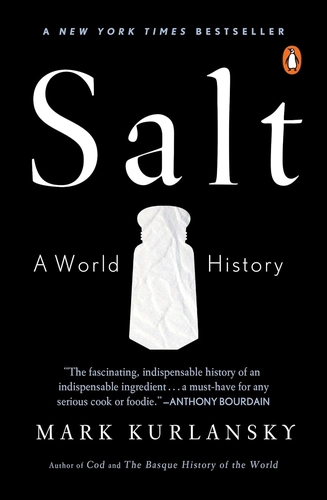
I met this book on a rainy Tuesday, stuck in a train carriage that smelled of wet wool and someone’s overly ambitious tuna sandwich. I had grabbed it from a shelf almost out of spite, tired of novels that all seemed to whisper the same secrets. A 450-page book about salt. I expected a snooze. I got a revelation.
Kurlansky’s central argument is audacious: salt is not a footnote to history, but one of its primary drivers. He proposes that this humble crystal, the only rock we eat, has been a fundamental force in shaping trade routes, founding cities, financing wars, and toppling governments. The book asks a simple, profound question: what does it mean that the most ordinary object in our kitchen once held the power of life and death over nations?
A Mineral with More Drama Than Most Heroes
The book’s protagonist isn’t a person, but a mineral. Yet Kurlansky gives it a narrative arc more dramatic than most fictional heroes. In ancient China, we see salt as a state-controlled commodity, its monopoly funding dynasties and sparking philosophical debates. In the Roman Empire, we see it as a form of currency, paid to soldiers, its very name giving root to our word “salary.” The story intensifies as salt becomes a tool of empire, a source of immense wealth for Venice, and a strategic resource in the American Civil War, where the Union’s blockade of Southern salt works was a deliberate, crippling blow.
The most gripping chapter is Gandhi’s Salt March, where a simple act of picking up a lump of sea salt became the symbolic shattering of British colonial authority. Kurlansky doesn’t just list facts. He weaves them into a narrative of power, greed, and human ingenuity. The core conflict is humanity’s eternal dance with a resource we cannot live without, but which has so often been used to control us. It’s a story of how the search for this essential mineral led to both our greatest achievements and our most brutal oppressions.
The Hidden History in Your Kitchen Cabinet
Kurlansky’s craft is in his ability to make the mundane magnificent. His core theme is that we are blind to the foundations of our own existence. We take salt for granted, yet it has been the silent partner in almost every major human endeavor. He uses powerful imagery, from the gleaming white pyramids of salt in the evaporating ponds to the dark, suffocating salt mines where slaves and prisoners toiled. He shows us the physicality of it, the way salt can preserve a corpse for millennia, yet also destroy a landscape through over-extraction.
One recurring image is that of the salt road, not just a physical route for trade, but a metaphor for the connections and dependencies that bind civilizations together. His exploration of the word “salary” and “salad” is a perfect example of how he uncovers the hidden history embedded in our daily language. We are shaped by the very things we fail to notice.
What the Book Leaves You With
This book is a corrective to our collective amnesia. It forces us to see the invisible infrastructure of our lives, the quiet, essential elements that make our world possible. It resonates across eras, reminding us of our current dependence on other “invisible” resources, like rare earth minerals for our phones or the global supply chains for our food. We may not fight wars over salt anymore, but the same dynamics of resource control, political manipulation, and economic disparity are playing out with other commodities.
Kurlansky’s great triumph is that he makes you feel the weight of this history in your hand. He takes a symbol of flavorlessness and shows it to be the very essence of our story. He does not pretend salt is the only force in history, but he proves it is one we can no longer afford to ignore. He ends not with a grand conclusion, but with a quiet observation about artisanal salts making a comeback, a circular return to a past we thought we’d left behind. He leaves you with a sense of wonder, not just about salt, but about everything you’ve ever overlooked.
If you enjoy narrative nonfiction that reads like a thriller, read this. If you want to feel smarter without the effort of a textbook, read this. If you are allergic to fascinating facts, skip it. The book won’t make you a history expert, but it will make you feel slightly more connected to the long, strange, and salty story of being human. In the end, the book’s greatest gift is its quiet, persistent question: what other miracles are we currently ignoring?

