I found this book on a Tuesday night, sprawled on my couch with a half-eaten bag of chips and the hollow feeling that my career had become a series of checked boxes. I had just finished another goal-setting workbook, the kind that promises transformation and delivers a headache. I wanted something different. I wanted a story.
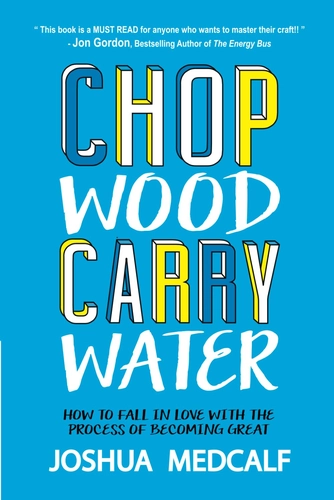
Chop Wood Carry Water by Joshua Medcalf is that story. It is a 120-page parable about John, a salaryman who abandons his corporate life to become a samurai archer. His teacher, Akira-sensei, does not hand him a bow. He hands him an axe and a bucket. For months, John chops wood and carries water, waiting for the real training to begin. The question that kept nagging me, the one this book forced me to face: what if the real training was never supposed to look like training at all?
The War Against the Man in the Mirror
John is not a likable hero at first. He is impatient, arrogant, and convinced that his dream of becoming a samurai justifies skipping the boring parts. When Akira-sensei tells him to chop wood and carry water, John fumes. He wants to shoot arrows. He wants to be great, now.
What struck me was how familiar John felt. I have been John. I have chased promotions, certifications, and side hustles with the same frantic energy, believing that the next milestone would finally make me feel complete. Medcalf uses John’s journey to expose this delusion. The greatest adversary, Akira-sensei tells him, is the man in the mirror. John’s real battle is not against enemy archers or physical limits. It is against his own ego, his need for validation, his addiction to outcomes he cannot control.
The plot is simple, almost deceptively so. John trains, fails, gets humbled, and slowly learns to find meaning in the mundane. The core conflict is internal, and that is exactly the point. Medcalf does not give John a dramatic showdown with a rival warrior. He gives him a quiet, daily struggle with his own impatience. It is not the most thrilling structure, but it is honest. And honestly, it is the kind of honesty I needed.
The book does have flaws. The prose is sometimes clunky, and the self-published editing leaves a few rough edges. Some readers will find the Christian undertones too overt. But the story works because John’s struggle is universal. Who among us has not wanted to skip the boring parts and arrive at greatness fully formed? That question led me deeper into the book’s themes, which is where its real power lives.
The Invisible Preparation
The central theme of Chop Wood Carry Water is that the process is more important than the goal. Medcalf argues that we build our own houses with every small action. No matter how it feels, we are always laying bricks. This is not a new idea, but Medcalf’s delivery through the samurai parable makes it stick.
The key imagery is the act of chopping wood and carrying water itself. It is repetitive, unglamorous, and necessary. Medcalf uses this image to dismantle our obsession with talent and outcomes. He suggests that talent is more of a curse than a blessing because it lets people coast. The real strength lies in faithfulness to the little things. When you are under pressure, he writes, you do not rise to the occasion. You sink to the level of your training.
This resonated with me in a way I did not expect. I have spent years trying to be smarter, faster, and more efficient. Medcalf is not interested in efficiency. He is interested in faithfulness. He wants you to show up, do the boring work, and let the results take care of themselves. It is a radical idea in a world that worships hustle culture and overnight success.
There is a moment in the book where John finally gets to shoot an arrow, and he is terrible at it. Akira-sensei laughs and tells him that of course he is terrible. He has been training his body to chop wood and carry water, not to shoot. John realizes that every mundane task was preparing him for this moment. That image, the woodcutter who becomes an archer through invisible preparation, stayed with me long after I finished the book. It made me rethink what I call wasted time.
What Faithfulness Actually Looks Like
I have read enough self-help books to be suspicious of them. Most of them promise a shortcut and deliver a lecture. Chop Wood Carry Water does something different. It tells a story, and through that story, it changes how you see your daily grind.
The book does not offer a quick fix. It offers a perspective shift. You stop asking, “When will I be great?” and start asking, “Am I being faithful to what is in front of me?” That shift is small, but it is seismic. It applies to athletes, writers, parents, and anyone who has ever felt stuck in the mundane.
Athletes and coaches will find this book immediately useful. Anyone in a period of waiting—waiting for a job offer, a diagnosis, or a breakthrough—will find comfort. It is also a great book for young adults who are just starting their journeys and need to hear that the boring parts count. If you are allergic to spiritual language or prefer your self-help with hard data and case studies, this might not be for you. The Christian framing is present, though not heavy-handed.
What I took away was a kind of peace. I stopped measuring my days by what I accomplished and started measuring them by how faithfully I showed up. I cannot say I have fallen in love with the process yet, but I have stopped resenting it. That is a start.
The book does not promise to make you great. It promises something better. It promises to make the path bearable, even beautiful. As Medcalf writes, “Everyone wants to be great, until it’s time to do what greatness requires.” This book helped me understand what greatness requires. It requires chopping wood. It requires carrying water. And it requires you to do both with your whole heart, even when no one is watching. I am still learning to do that, but I am glad I have a book that reminds me why it matters.

