Some people are physically tired.
Others are mentally exhausted.
And sometimes, mental exhaustion is harder to explain.
You may sleep enough.
You may complete your daily responsibilities.
But your mind never seems to slow down.
You replay conversations from yesterday.
You imagine problems that have not happened.
You analyze every possible outcome.
Even when life seems fine, your brain keeps searching for something to worry about.
This is what makes anxiety loops so exhausting.
The problem is not having thoughts.
The problem is feeling unable to step away from them.
For people experiencing this, the right books can provide something valuable:
A new way to understand their own minds.
1. Break the Anxiety Circle

Best for: People who feel trapped in endless thinking
Many people believe overthinking happens because they care too much or think too deeply.
But often, overthinking is a repeating mental pattern.
A situation happens.
Your brain creates questions.
Those questions create uncertainty.
The uncertainty creates more questions.
And the cycle continues.
Break the Anxiety Circle focuses on helping readers recognize these patterns and understand why anxious thoughts continue repeating.
Instead of simply telling readers to “stop worrying,” the book explores the relationship between thoughts, emotions, and reactions.
It helps readers understand:
- Why certain worries keep coming back
- How anxiety loops develop
- Why uncertainty feels uncomfortable
- How to create healthier emotional responses
This approach is especially helpful for people who often think:
“I know I am overthinking, but I don’t know how to stop.”
Understanding the pattern is often the first step toward changing it.
2. Burnout: The Secret to Unlocking the Stress Cycle
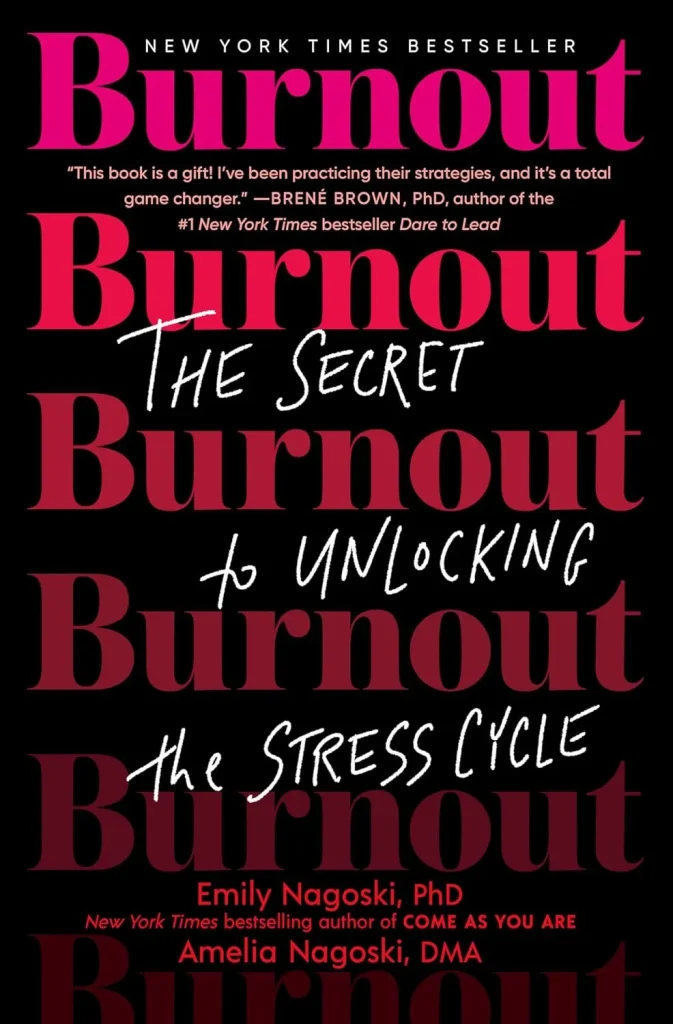
Best for: Understanding emotional exhaustion
Sometimes constant worrying is connected to long-term stress.
You are not dealing with one anxious thought.
You are carrying continuous pressure.
Burnout by Emily Nagoski and Amelia Nagoski explores how stress affects emotional wellbeing and why people can feel completely drained even when they keep functioning.
The book discusses:
- How stress affects the mind and body
- Why people get stuck in stress cycles
- Why recovery requires more than simply resting
- How to process emotional pressure
For people who feel exhausted from always being “on,” this book offers a deeper understanding of stress and recovery.
3. The Untethered Soul

Best for: Learning to observe thoughts instead of being controlled by them
Many people experience their thoughts as absolute truth.
A thought appears:
“What if everything goes wrong?”
And immediately, the emotion follows.
The Untethered Soul by Michael A. Singer explores how people can create distance from their inner voice and become more aware of their thoughts.
The book focuses on:
- Observing thoughts without automatically reacting
- Creating emotional space
- Understanding inner conversations
- Developing greater inner calm
For people who feel overwhelmed by their own thoughts, this perspective can help them build a different relationship with their mind.
Mental Exhaustion Often Comes From Fighting Your Own Thoughts
Many people spend enormous energy trying to control every worry.
They analyze.
They predict.
They search for certainty.
They try to find the perfect answer.
But the mind is not designed to eliminate every uncertainty.
Sometimes peace does not come from solving every possible problem.
It comes from learning which thoughts deserve your attention.
Understanding Your Mind Is the Beginning of Change
Feeling mentally exhausted does not mean you are weak.
Often, it means your mind has been working hard to protect you.
The challenge is learning when protection becomes a burden.
Books about anxiety and emotional health can help you recognize patterns that are difficult to notice by yourself.
Break the Anxiety Circle is especially valuable for readers who want to understand why their thoughts repeat and how to step away from unhelpful anxiety cycles.
Because the goal is not to stop thinking.
The goal is to stop being controlled by every thought that appears.