You know you should stop. You tell yourself this time will be different. You make a plan. You promise to save more, spend less, and finally get control of your money.
Then you see something. A sale. A notification. A moment where you feel stressed, bored, or like you deserve a reward. And suddenly, you are checking out again.
Later, you look at the receipt and wonder: why did I do that? You knew better. You had good intentions. But in that moment, none of that mattered.
The hardest part is not the money. It is the feeling that you have no control over your own choices.
From Debt to Wealth by Owen Pierce
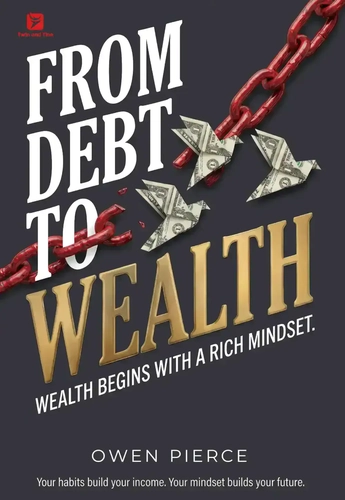
Understand what you are really trying to buy
Most people assume spending is about desire. You see something you want, and you buy it. Simple.
Pierce argues that the real driver is deeper. Many people think they are buying things, but what they are actually buying is a feeling. Success. Worth. Progress. Relief from the fear of falling behind.
A person who constantly upgrades their lifestyle may not be chasing the product itself. They may be chasing the feeling that they are finally “doing better.” A person who buys things they cannot afford may not be irresponsible. They may be trying to prove something to themselves or to others. A person who spends compulsively may not lack self-control. They may be trying to fill a gap that money was never meant to fill.
Pierce helps you see what is really driving your spending. Before you can change the behavior, you need to understand what spending is doing for you.
What you will learn:
- How beliefs about success and worth drive spending
- Why people buy feelings, not products
- How lifestyle inflation makes it impossible to save
- How to understand what you are really trying to buy
Who should read this: Anyone who has ever bought something and later wondered why they did it.
The Willpower Instinct by Kelly McGonigal
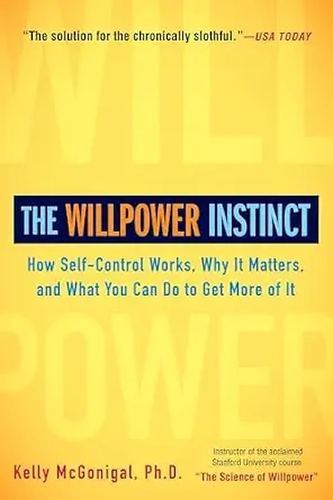
Why your self-control keeps failing
Most people believe that stopping a bad habit is about willpower. If you just try harder, you will succeed.
McGonigal, a Stanford psychologist, explains why this belief is wrong. Willpower is not a fixed trait. It is a resource that gets depleted, influenced by stress, sleep, and emotional state. When you are tired, stressed, or emotionally drained, your ability to say no drops dramatically.
She also explains why the anticipation of buying something is often more powerful than the purchase itself. The brain releases dopamine when you think about buying, not when you actually buy. That is why you feel excited before a purchase and empty after.
This book helps you understand why your willpower fails at the worst moments and gives you practical strategies for building it back up.
What you will learn:
- Why willpower fails when you need it most
- How stress makes you spend more
- Why anticipation is more powerful than the purchase
- How to build self-control without relying on sheer willpower
Who should read this: Anyone who has ever promised themselves they would stop and then failed.
The Marshmallow Test by Walter Mischel
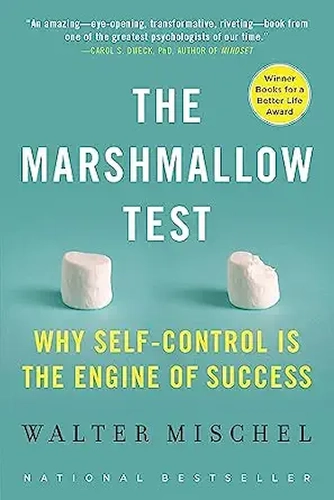
Why you choose now over later
Mischel is the psychologist behind one of the most famous studies in psychology history. He gave young children a choice: eat one marshmallow now, or wait and get two later. Some children waited. Others could not.
The study showed that the ability to delay gratification is one of the strongest predictors of success in life. It also showed that this ability can be learned. Mischel explains why some people can hold out for a bigger reward while others give in to immediate temptation.
For spending, this applies directly. A person who cannot wait for a sale, a person who buys now instead of saving, a person who chooses instant gratification over long-term security is not broken. They are struggling with the same impulse that affects almost everyone.
This book helps you understand why now always feels more urgent than later, and how to train yourself to wait.
What you will learn:
- Why waiting is so difficult
- How to train your ability to delay gratification
- Why immediate rewards feel more powerful than future ones
- How to make the future feel more real
Who should read this: Anyone who has ever chosen instant gratification and regretted it later.
How these books work together
These three books approach the problem from different angles.
The first book helps you understand what you are really trying to buy. You stop blaming yourself and start seeing the pattern.
The second book explains why your willpower fails. You see how stress, emotion, and biology work against you.
The third book gives you the ability to wait. You learn to delay gratification and build better long-term decisions.
Together, they help you stop asking “why can’t I stop spending?” and start building a life where you are in control of your choices.
FAQ
Why can’t I stop spending money even when I know I should?
Because spending is often driven by emotions, habits, and beliefs that operate below awareness. Understanding the pattern is the first step to changing it.
What is the difference between impulse spending and not being able to stop?
Impulse spending is a single moment of weakness. Not being able to stop is a pattern that repeats, even when you know better. It is about control, not one bad decision.
How do I stop spending money impulsively?
Start by understanding what is driving the impulse. Books like these help you see the pattern so you can pause before you buy.
What is the first step to changing my spending habits?
Stop asking “how do I spend less?” and start asking “why do I spend this way?” Understanding the reason makes the change stick.
