You have probably watched someone make a decision and thought: what were they thinking?
A colleague chooses a path that clearly hurts their career. A friend stays in a relationship that everyone can see is bad for them. A leader doubles down on a strategy that is obviously failing. And you wonder: how can someone so smart do something so illogical?
The answer is rarely that they are stupid. People do not act irrationally because they lack intelligence. They act irrationally because they are driven by forces that have nothing to do with logic: emotion, identity, fear, self-protection, and mental shortcuts that once served them well.
These books help you understand why people make decisions that seem to defy reason.
Awakening to Human Nature by Owen Pierce

Why people act against their own interests
Most people assume that when someone makes a bad decision, they simply did not think it through. Pierce argues that the real driver is often deeper. A person who stays in a bad situation may not be stubborn. They may be avoiding the discomfort of change. A person who defends a bad decision may not be illogical. They may be protecting their sense of competence. A person who resists feedback may not hate improvement. They may be protecting their identity as someone who is already competent.
People do not always act according to what makes sense. They act according to what protects their self-image, what avoids discomfort, and what serves their unspoken needs.
Pierce helps you see the hidden logic behind behavior that seems irrational. You stop asking “why would they do that?” and start seeing the deeper patterns driving their choices.
What you will learn:
- How self-protection drives decisions that seem illogical
- Why people defend choices that are clearly wrong
- How identity and ego override rational thinking
- How to see the hidden logic behind irrational behavior
Who should read this: Anyone who has ever watched someone make a bad decision and wondered why.
The Art of Thinking Clearly by Rolf Dobelli
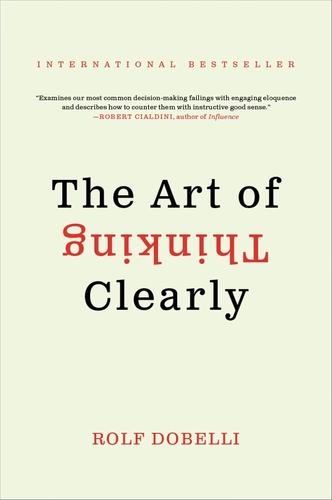
Why your brain makes predictable mistakes
Dobelli, a writer and former businessman, spent years studying the cognitive biases that lead people astray. He argues that most of our thinking errors are not random. They are systematic and predictable.
A person who overestimates their abilities may not be arrogant. They are falling prey to overconfidence bias. A person who keeps investing in a failing project may not be stubborn. They are responding to sunk cost fallacy. A person who lets a small annoyance ruin their day may not be irrational. They are influenced by the availability heuristic, which makes the most recent or vivid events feel more important than they are.
Dobelli distills these cognitive traps into short, readable chapters. He helps you see why smart people make the same mistakes over and over, and how to recognize these patterns in your own thinking.
What you will learn:
- Why people consistently overestimate their own abilities
- How sunk costs trap people in bad decisions
- Why recent events feel more important than long-term trends
- How to recognize and avoid common thinking errors
Who should read this: Anyone who has ever wondered why they keep making the same mistakes.
The Upside of Irrationality by Dan Ariely
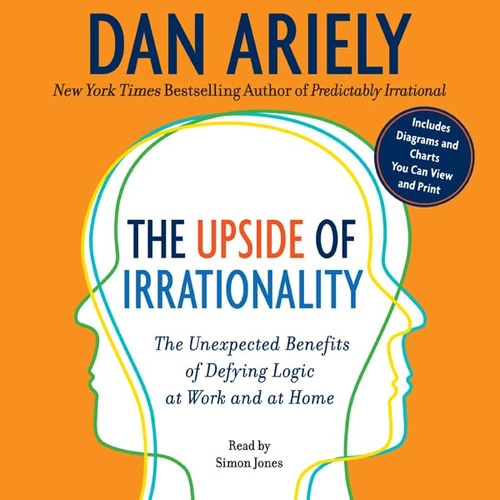
Why irrationality can be useful
Most books about irrationality focus on the damage it causes. Ariely takes a different approach. He argues that irrationality is not always a flaw. Sometimes it helps people connect, create, and persevere.
A person who works for less than they could earn may not be making a bad choice. They may be finding meaning that money cannot buy. A person who stays loyal to a difficult friend may not be foolish. They may be building bonds that will sustain them through hard times. A person who overestimates their own abilities may not be delusional. They may be motivated to try things they would otherwise avoid.
Ariely balances the negative side of irrationality with its surprising benefits. He helps you see that irrational behavior is not always something to eliminate. Sometimes it is something to understand.
What you will learn:
- Why people work for less than they could earn
- How irrational loyalty can strengthen relationships
- Why overconfidence sometimes helps people succeed
- How to distinguish harmful irrationality from useful irrationality
Who should read this: Anyone who has ever wondered why irrational behavior is so common—and why it sometimes leads to good outcomes.
How these books work together
These three books approach irrational behavior from different angles.
The first book helps you see the hidden forces that drive irrational decisions. You understand how self-protection, identity, and discomfort shape behavior.
The second book reveals the systematic thinking errors that lead people astray. You see the predictable patterns behind bad decisions.
The third book shows that irrationality is not always a flaw. Sometimes it serves a purpose that logic cannot explain.
Together, they help you stop asking “why would they do that?” and start understanding what is really driving people’s choices.
FAQ
Why do people make bad decisions even when they know better?
Because knowing better is not enough. Emotion, identity, and self-protection often override logic. Behavior is shaped by forces that operate beneath awareness.
Are people actually irrational?
Not in the way we often assume. Many behaviors that look irrational are driven by emotions, identity, and mental shortcuts that made sense at the time. The logic is there—it is just not the logic we expect.
Why do smart people do irrational things?
Intelligence does not protect you from emotion, bias, or self-justification. Smart people are just as prone to defending bad decisions, protecting their identity, and falling into predictable patterns.
How do you make better decisions?
Start by recognizing the forces that shape your choices. Books like these help you see the hidden drivers so you can pause and think before you act.
