You have probably encountered this. Someone told you something that felt true, and later you discovered it was not. Or you told yourself a story about a situation, only to realize later that you had been hiding from the truth.
Deception is not always about lying to others. Sometimes it is about lying to ourselves. Sometimes it is about believing what we want to believe. Sometimes it is about protecting an image we are afraid to lose.
The books below explore deception from multiple angles: how people deceive themselves, why deception works on ordinary people, why humans believe stories over facts, how deception appears in behavior, and why ordinary people justify dishonesty.
Awakening to Human Nature by Owen Pierce
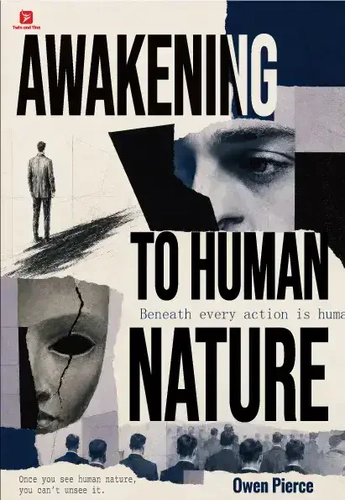
The hidden psychology behind deception
Pierce explains that deception often begins before anyone else is involved. It starts with the stories people tell themselves to protect their self-image, avoid discomfort, or maintain control.
A person who cannot admit fault may not be dishonest with others. They may be unable to face what the truth would say about them. A person who rationalizes a bad decision may not be intentionally misleading anyone. They may be trying to preserve their sense of being right.
This book helps you see the self-protective mechanisms that make deception possible in the first place.
What you will learn:
- How self-protection leads to self-deception
- Why people rewrite their own memory
- How identity shapes what people are willing to see
- Why people believe their own excuses
Who should read this: Anyone who has ever wondered why people believe things that are clearly not true.
The Confidence Game by Maria Konnikova
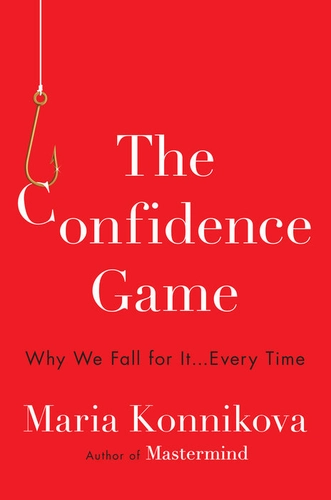
Why deception works on normal people
Konnikova, a psychologist and writer, spent years studying con artists and deception. She found that victims of deception are not stupid or gullible. They are ordinary people who were persuaded by something that felt real.
A good deception does not begin with a lie. It begins with something people want to believe. A story that fits their hopes. A promise that answers a need. A person who seems trustworthy because they mirror what the victim is looking for.
Konnikova explains why intelligent people fall for scams, why confidence and consistency feel trustworthy, and why people often defend a deceiver long after evidence suggests they should not.
What you will learn:
- Why intelligent people fall for deception
- How charm and confidence create credibility
- Why people trust stories that feel true
- How to recognize the patterns of deception
Who should read this: Anyone who has ever wondered how they could be fooled.
Sapiens by Yuval Noah Harari

Why humans believe stories over facts
Humans survive through shared stories. Nations, religions, corporations, and social norms are all fictions that large groups of people agree to believe.
Harari, a historian, argues that this ability to believe in collective stories is what allowed humans to cooperate at scale. But it also makes humans vulnerable. A story that everyone believes feels like reality. When that story is challenged, people defend it as if their lives depend on it.
This book helps you understand why people resist evidence that contradicts their worldview. It is not about stupidity. It is about the way human minds are wired to protect the stories that hold society together.
What you will learn:
- How shared stories shape reality
- Why people defend collective beliefs
- How narratives override facts
- Why challenging a belief can feel like a personal attack
Who should read this: Anyone who has ever wondered why people believe things that seem obviously false.
Spy the Lie by Philip Houston, Michael Floyd, and Susan Carnicero
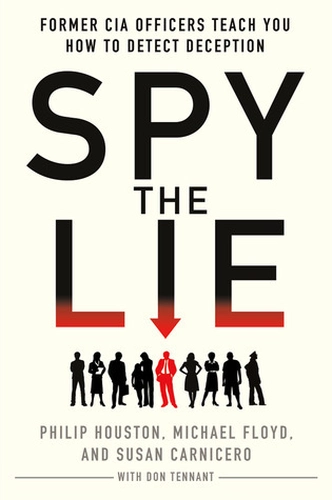
How deception appears in behavior
Deception leaves traces. Not through dramatic gestures or obvious tells, but through patterns that can be observed over time.
Houston, Floyd, and Carnicero, former CIA officers, developed a framework for detecting deception in real-world interactions. They focus on inconsistencies between words and emotions, defensive reactions, and changes in storytelling.
This book is not about becoming a human lie detector. It is about learning to see the gaps between what someone says and what their behavior reveals.
What you will learn:
- How to spot inconsistencies between words and emotions
- Why defensive reactions often signal deception
- How to recognize evasive or contradictory answers
- How to observe patterns without jumping to conclusions
Who should read this: Anyone who has ever felt like something was off but could not explain why.
The Honest Truth About Dishonesty by Dan Ariely
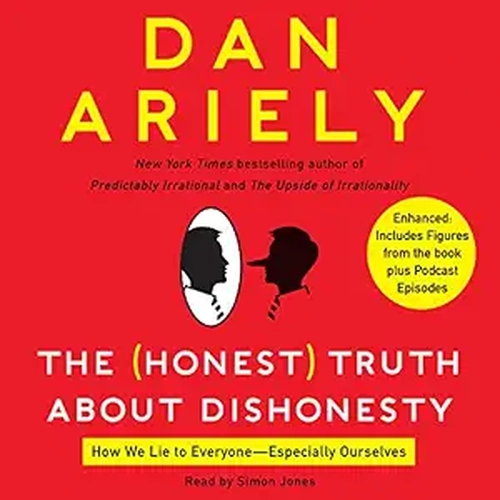
Why ordinary people justify dishonesty
Ariely, a behavioral economist, studied why people lie and cheat. He found that most dishonesty is not about bad people doing bad things. It is about ordinary people rationalizing small acts of self-interest while still believing they are honest.
People cheat up to the point where they can still look themselves in the mirror. They bend rules, justify choices, and protect their self-image. The dishonesty is real, but the person doing it often does not see themselves as dishonest.
What you will learn:
- How people rationalize small acts of dishonesty
- Why self-image limits how far people will go
- How context and temptation shape ethical choices
- How to recognize the gap between stated values and actual behavior
Who should read this: Anyone who has ever made an excuse for a choice they knew was not quite right.
Why deception is so difficult to see clearly
These five books approach deception from different angles.
The first book shows how self-deception begins before anyone else is involved. You see the self-protective mechanisms that make deception possible.
The second book reveals why deception works on ordinary people. You see how trust, hope, and the desire to believe make people vulnerable.
The third book explains why humans believe stories over facts. You see how collective narratives shape reality and resist challenge.
The fourth book shows how deception appears in behavior. You learn to observe the gaps between words and emotions.
The fifth book explains why ordinary people justify dishonesty. You see how people rationalize small acts while maintaining a positive self-image.
Deception is not always about bad people doing bad things. Often, it is about ordinary people protecting themselves from uncomfortable truths. The most useful question is not “who is lying?” but “what are we all avoiding?”
FAQ
Why do people deceive themselves?
Self-deception protects people from uncomfortable truths. It preserves self-image, avoids shame, and maintains a sense of control. The person doing it often does not know they are doing it.
Why do smart people fall for deception?
Intelligence does not protect against deception. Smart people are just as vulnerable to hope, trust, and the desire to believe. Deception works because it answers a need, not because it is clever.
Can you always tell when someone is lying?
No. Most people are not reliable lie detectors. The best approach is to observe patterns over time, not to rely on a single gesture or reaction.
Is deception always harmful?
Not always. Some deception is protective or socially necessary. But when deception replaces accountability, it creates patterns that harm relationships and trust.
