I was avoiding a stack of work emails on a Tuesday night, rain hammering the window, when I picked up my copy of Sapiens by Yuval Noah Harari. I told myself I would read one chapter. Two hours later I was still there, the emails forgotten, my tea gone cold. Harari had just told me that wheat domesticated humans, not the other way around. I closed the book and stared at my wall. How had I never thought of that before?
The central argument of this book is unsettling. Harari claims that the secret to our species’ success is not intelligence, strength, or even tool-making. It is our ability to believe in fictions. Not lies exactly, but shared stories. Money, nations, human rights, corporations, religions. None of these exist in objective reality. They exist because millions of strangers agree to believe in them. And that shared belief lets us cooperate on a scale no other animal can match. I kept asking myself one question while reading: if our greatest power is fiction, what happens when we forget that it is fiction?
The Species That Never Asked What It Wanted
The protagonist here is not a person. It is the species. Homo sapiens, the wise human, a label Harari suggests we may not deserve. The book follows us from our humble origins as insignificant apes in East Africa to our current position as self-appointed gods of the planet. Along the way we meet our cousins, the Neanderthals and the Denisovans, and Harari presents the uncomfortable possibility that we did not peacefully coexist with them. We likely wiped them out. The core conflict of the book is between our immense power and our questionable wisdom. We can split atoms, edit genes, and create artificial intelligence. Yet we cannot agree on what we want. We are like children who have found a flamethrower. The most chilling part, for me, was the chapter on happiness. Harari argues that despite all our progress, we may not be happier than our hunter-gatherer ancestors. We just have more comfortable suffering. I found myself remembering my grandfather, a farmer who worked from dawn to dusk. He never seemed anxious about his life purpose. I am not sure I can say the same about myself.
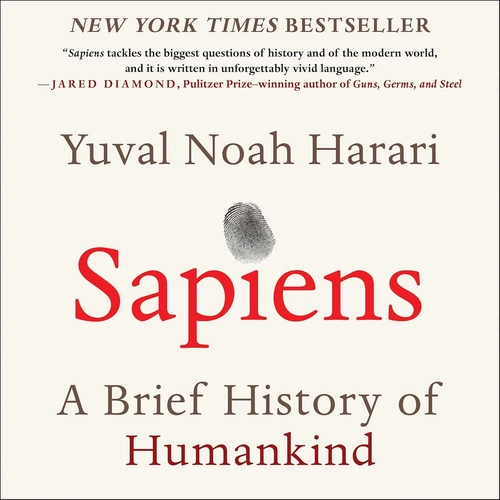
The core theme of Sapiens is that our imagined realities have become more powerful than physical reality. The survival of rivers and forests, Harari writes, now depends on the decisions of imagined entities like corporations and nations. The key imagery of the book is the dual reality we live in. There is the objective world of trees and rivers and animals. And there is the imagined world of borders and currencies and laws. The second world has grown so strong that it now controls the first. Consider the example Harari uses of the Bari people, who believed a child could have multiple biological fathers. Or the story of the Catholic Church, which built a global institution on the belief in a man who died and rose again. These examples made me realize something uncomfortable. I have spent my life inside a story I never chose to read. The money in my bank account, the country on my passport, my belief in human rights. All of it is a collective hallucination that works only because we all agree to keep dreaming it. The question Harari forces me to face is this: if I can see the fiction, can I also choose to change it?
The Uncomfortable Question
This book is not perfect. Harari sometimes overreaches, making sweeping claims with limited evidence. His treatment of complex topics like Buddhism can feel reductive. He has been criticized by historians for cherry-picking data. The book might frustrate experts in any single field. But for a general reader, its power lies in its ability to make you question everything. It is less a history book and more a mirror. It shows you how much of your life is built on assumptions you never examined. I found myself arguing with Harari in my head while reading. That is a sign of a good book. It does not tell you what to think. It forces you to think.
Anyone who has ever wondered why we fight wars over borders that exist only in our heads should read this. Anyone who has felt that something is wrong with modern life but could not name it. Anyone who works in an office, spends money, votes in elections, and wants to understand the invisible machinery behind those acts. If you want a comforting story about human progress, skip it. Harari will not give you that. If you believe your religion, nation, or political system is the one true story, this book will feel like an attack—even though it treats all fictions equally. It attacks no single belief system. It attacks belief itself.
What I took from this book, I am still processing. It has changed how I read the news. When I see politicians arguing about borders, I now see two groups arguing about which fiction should rule. When I swipe my credit card, I understand that I am participating in a story about value that has no physical basis. And when I look at my own ambitions, my desire for a bigger house, a better car, a more impressive title, I wonder which of these desires are truly mine and which were planted by the stories I absorbed. This book will not make you happier. It might make you less certain. But in a world full of people who are absolutely certain about everything, a little less certainty might be exactly what we need.
The deepest cut comes near the end. Harari writes that we are more powerful than ever before, but we have very little idea what to do with that power. Worse, we are more irresponsible than ever. We are self-made gods with only the laws of physics to keep us company. And we are accountable to no one. I read that passage three times. Then I put the book down and sat in silence. We have built a world of extraordinary wonders. We have also built a world of extraordinary suffering, for our fellow humans and for the animals we raise and slaughter by the billions. The question that haunts me, and the one this book left with me, is this: if our power comes from our ability to believe in stories, what story could we tell ourselves that would make us worthy of that power?

