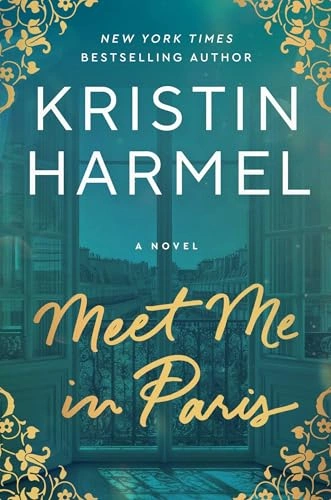
I finished this book on the 6 train, tears running down my face, a stranger offering me a tissue. It was embarrassing. It was also inevitable. Kristin Harmel’s Meet Me in Paris is the kind of novel that ambushes you with its tenderness, weaving together nine American lives over one week in the City of Light. The premise sounds almost too neat—seven love stories tangled together in Paris—but the execution is anything but simple. The real question at the heart of this book is one I keep circling myself: can we ever truly be known by another person, or do we all carry secret versions of ourselves that love somehow sees anyway?
The Burden of Goodbyes
Julia Glover is dying. She is forty-nine, she has terminal cancer, and she has brought her twenty-three-year-old daughter Piper to Paris for one last trip together. She is the anchor of this novel, the character whose story you sense from the first page will not end well. Yet Harmel does something unexpected with Julia. She does not make her a martyr. She makes her a woman who is furious, tender, and desperately trying to cram a lifetime of advice into seven days.
Piper meets a French waiter named Marc who seems to understand her grief before she can articulate it. Julia meets a man at a dive bar and wrestles with whether to tell him she is dying on their second date. And then there is Henry McGee, an eighty-something songwriter who has spent his whole life composing love songs for a woman named Celeste, whom he lost during World War II. A letter arrives informing him she is alive, living in a care home with dementia. He flies to Paris to try to make her remember him through the songs he wrote for her.
What struck me most was the parallel between Julia and Celeste. One woman is losing her future, the other has lost her past. Both are surrounded by men who love them and cannot stop them from slipping away. It made me think about my own grandmother, who forgot my name in her final years but always remembered the song my grandfather used to hum. There is something about Harmel’s writing that digs into that ache, the way love persists even when recognition fails.
City of Light as a Map of the Heart
The core theme here is memory, and what we choose to hold onto. Harmel uses Paris itself as the key imagery, the city as a repository of love stories past and present. The song “City of Light”—written by Henry for Jackson Quick, the aging rock star who returns to Paris for his reunion tour—becomes a thread connecting nearly every character. It is the song Henry wrote for Celeste, the song that made Jackson famous, the song that plays in a bar where Julia and Piper sit, the song that brings strangers together.
Paris functions as a kind of emotional GPS, each arrondissement holding a different character’s hope or regret. There is the bookstore where Melody, Henry’s granddaughter, discovers her husband Gilles has been unfaithful. There is the bridge where Jackson meets a woman who sees past his fame. There is the care home where Henry plays piano for Celeste, hoping a melody will unlock what time has taken.
The craft here is genuinely impressive. Harmel juggles nine perspectives without ever losing the reader, and each reveal lands with the satisfaction of watching a puzzle piece click into place. I will admit that some storylines worked better for me than others. The gay couple who fought together in World War II and are only now finding the courage to live openly felt somewhat rushed compared to the depth given to Julia and Piper. But the whole is greater than the sum of its parts, and the way these lives intersect feels organic rather than contrived.
The Kind of Hope That Costs Something
Here is what I will say about the ending, without spoiling it. It is not neat. It does not give everyone a happily ever after, and that is precisely why I trusted it. Harmel understands that love is not always about staying together. Sometimes it is about showing up, witnessing, and letting go with grace.
This book will not fix your grief. It will not tell you that everything happens for a reason, because it does not believe that, and neither do I. What it will do is make you feel slightly less alone in the messy, painful, beautiful work of loving imperfect people. It will make you want to call your mother. It will make you want to book a flight to Paris. It will make you believe, at least for a few hundred pages, that love is worth the inevitable heartbreak.
The kindest thing I can say about Meet Me in Paris is that it earns its tears. Every sob, every lump in the throat, every moment of quiet recognition is paid for by the honesty of the writing. Harmel has written a love letter to the city, yes, but more importantly, to the people we love and lose, and the songs we leave behind.
“Together forever, you’re my City of Light.”

