Have you ever noticed how some people just feel easy to be around?
You don’t tense up when they walk over. You don’t search for things to say. You don’t feel judged, rushed, or quietly evaluated. Conversation flows. Silence feels fine. When you leave, you feel lighter—not drained.
These people aren’t necessarily the funniest, smartest, or most outgoing. They have something else. A quality that makes you drop your guard without realizing you were holding it up.
What is that quality? And can you learn it?
How to Read Someone’s Mind by Miles Carter

Comfort starts with seeing what others miss.
The people who make you feel comfortable share one thing: they notice. Not in a suspicious way. In a way that makes you feel like they actually see you.
A slight tension in your shoulders. A pause before you answer. A shift in your tone when a topic touches something personal. They catch these signals and respond—maybe leaning back to give you space, maybe softening their voice, maybe changing the subject without making it obvious.
“The most comfortable people to be around are the ones who adjust to you without you having to ask.”
Carter’s book teaches you to read these signals through:
- Face — The micro-expressions that reveal discomfort or ease.
- Body — The open postures that invite connection and the closed ones that signal “give me room.”
- Voice — The subtle shifts in tone and pace that tell you how someone is really feeling.
- Context — The situation that shapes what is appropriate and what is not.
When you can read these signals, you stop guessing. You know when someone needs space, when they need reassurance, when they are ready to open up and when they are not.
And that knowing—that quiet ability to meet people where they are—is what makes them exhale around you.
For anyone who wants to understand the subtle cues that tell you what others need to feel at ease.
Just Listen by Mark Goulston
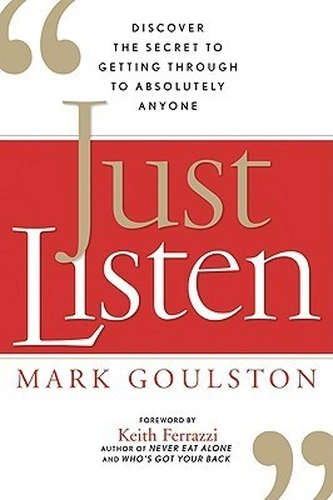
The fastest way to make someone comfortable is to actually hear them.
Most people do not listen. They wait for their turn to speak. They rehearse responses while the other person is still talking. They interrupt with advice, solutions, or their own stories.
Goulston, a psychiatrist and negotiation expert, argues that this is why so many interactions feel draining. People leave conversations feeling unheard, even when the other person meant well.
“The deepest need of every human being is to be heard, not fixed.”
The book teaches a simple but powerful skill: listening without the urge to respond. Not just staying quiet while someone talks, but staying present. Letting them finish their thought. Letting them sit in silence if they need to. Letting them know you are with them by your attention, not your words.
Goulston also covers techniques like the “echo” — repeating the last few words someone said to show you are tracking them — and the “stripping” technique to get past defensiveness and reach what someone is really feeling.
When you master this kind of listening, people around you feel safe. They open up. They relax. They want to keep talking to you, not because you are interesting, but because you make them feel interesting.
For anyone who wants to stop being the person who talks and start being the person people want to talk to.
The Six Pillars of Self-Esteem by Nathaniel Branden
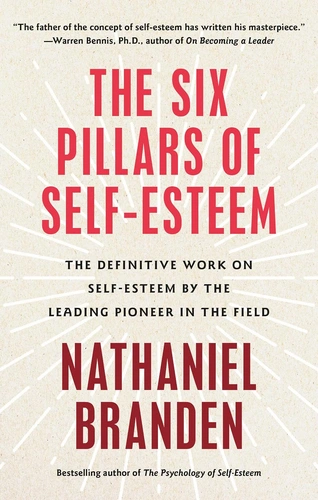
You can’t make others comfortable if you are not comfortable with yourself.
Here is something people do not say out loud: anxious people make others anxious. When you are worried about how you are coming across, checking yourself constantly, second-guessing every word—people feel that tension. It puts them on edge, even if they do not know why.
Branden’s book is about building genuine self-esteem. Not arrogance. Not confidence that requires constant proof. A quiet, unshakable sense of your own worth that does not depend on anyone’s approval.
“Self-esteem is the immune system of the mind. Without it, you are constantly defending yourself.”
The six pillars Branden outlines are practices, not ideas. Living consciously. Accepting yourself. Taking responsibility. Being assertive. Living purposefully. Acting with integrity.
When you practice these, something shifts. You stop needing to prove yourself. You stop monitoring every interaction for signs of rejection. You stop filling silence with nervous chatter.
And when you stop doing those things, the people around you stop feeling like they have to manage your emotions. That relief—that freedom from your anxiety—is what makes you feel comfortable to be around.
For anyone who wants to build the inner stability that lets others relax around you.
If you want to know what people need to feel at ease, start with Carter—he teaches you to read the signals.
If you already notice those signals but do not know how to respond, pick up Goulston—listening is the response.
If you feel anxious in social situations and it is affecting how others feel around you, go with Branden—inner stability creates outer ease.
Comfort is not about being charming. It is about being present, being steady, and letting people feel that they can be themselves around you. And those are things anyone can learn.
