Two people walk into a party.
One scans the room, spots a familiar face, and heads straight over. Within minutes, they are laughing, exchanging numbers, making plans for next weekend.
The other hovers near the entrance, phone in hand, scrolling through nothing. They know they should talk to someone, but the gap between knowing and doing feels impossibly wide.
You have been both of these people at different times. But you have probably noticed that some people are the first version every single time. They make friends effortlessly. They turn strangers into acquaintances and acquaintances into close friends without even seeming to try.
The three books below each explain a different piece of this ability. One teaches you to read the signals that tell you when someone is open to connecting. One breaks friendship-building down into a practical system you can practice. One reveals what keeps you from connecting and how to remove the blocks.
How to Read Someone’s Mind by Miles Carter

Can you tell when someone is open to connecting?
Watch two people at a party. One stands with their body turned toward the room, posture relaxed, arms uncrossed. The other faces the wall, shoulders hunched, scrolling their phone. The first is sending a clear signal: “I am available.” The second is sending an equally clear signal: “Leave me alone.”
The difference matters. Most people who struggle to make friends are not bad at talking. They are bad at reading the signals that tell them when to start talking.
Carter’s book teaches you to read people through their face, body, voice, and context. You learn to spot the subtle cues that indicate openness: eye contact that lingers a second too long, feet that point toward you, a torso that turns when you approach. You also learn to spot the opposite: the guarded posture, the short answers, the glance that drifts past you.
Making friends is not about saying the right thing. It is about knowing when someone is ready to hear it.
When you can read these signals, you stop approaching people who do not want to be approached. You stop missing opportunities with people who do. You stop wondering “what went wrong” because you can see what is happening in real time.
For anyone who keeps approaching the wrong people or missing the right ones.
The Social Skills Guidebook by Chris MacLeod
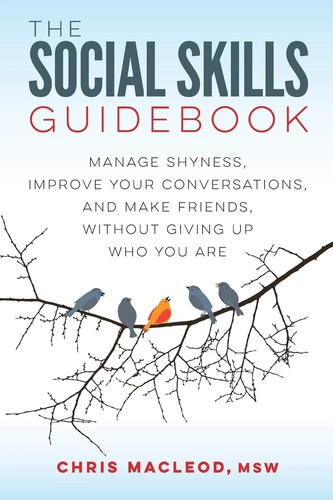
What if making friends is a system, not a personality trait?
Here is a thought that changes things: friendship is not magic. It is a process. And processes can be learned.
MacLeod wrote this book for people who feel awkward in social settings and want a practical, step-by-step system for getting better. He covers everything from starting conversations to maintaining friendships over time to handling social anxiety in the moment.
What makes this book different is the emphasis on practice. It is not about becoming a different person. It is about learning specific skills: how to ask follow-up questions that keep conversation flowing, how to transition from small talk to deeper topics, how to invite someone to hang out without it feeling forced, how to handle rejection gracefully and move on.
You do not need to be more interesting. You need to be more interested.
The book also addresses the internal blocks that keep people stuck. The fear of being boring. The worry that you are interrupting. The belief that people would not want to talk to you anyway. MacLeod gives you strategies for managing these thoughts so they do not get in the way.
For anyone who wants a practical system for building friendships, one conversation at a time.
Platonic by Marisa G. Franco

What is the psychology behind lasting friendship?
Here is something you might not expect. The research shows that people consistently underestimate how much others like them. When you meet someone and have a good conversation, you walk away thinking “they probably thought I was boring.” Meanwhile, they are thinking “that person seemed great.”
This is called the “liking gap.” And it keeps people isolated. You assume you made a bad impression, so you do not follow up. They assume you are not interested. Both of you lose a potential friendship.
Franco is a psychologist who studied friendship for years, and her book is built on the research that explains why some people form deep connections quickly and others struggle. She covers how vulnerability accelerates intimacy, why proximity is one of the strongest predictors of friendship, and how to show up in ways that make others feel safe enough to let you in.
The people who make friends easily are not the most interesting or charismatic. They are the ones who show up consistently and let themselves be known.
The book also explores how adult friendships are different from childhood ones. As adults, we have fewer built-in opportunities to meet people. We have to be more intentional. Franco gives you the framework for doing that.
For anyone who wants to understand the psychology of friendship and stop underestimating how much people already like you.
These three books each approach friendship from a different angle. Carter helps you read the signals that tell you when someone is open to connecting. MacLeod gives you the practical skills to start conversations, deepen them, and maintain them over time. Franco explains the psychology behind why some friendships flourish and others fizzle out.
If you are tired of watching other people make friends while you hover near the entrance, start with the one that matches where you are stuck:
- Need to stop approaching the wrong people? Start with Carter.
- Need practical conversation skills you can practice? Start with MacLeod.
- Need to understand why you underestimate how much people like you? Start with Franco.
Making friends is not a gift you are born with. It is a skill you can learn. And the first step is learning to see what is already in front of you.
