You have a friend. But you do not entirely trust them.
You tell yourself you are overthinking. They have been around for years. They show up when it matters. But something sits differently now. A comment that felt like a jab dressed as a joke. A pattern of showing up only when they need something. A habit of making your struggles about them.
Toxic friendships do not usually start toxic. They start like any other friendship—warm, promising, fun. The shift happens slowly. A small boundary crossed here. A pattern of behavior that you explain away there. You adjust. You accommodate. And before you know it, the friendship is not feeding you anymore. It is draining you.
The three books below each address a different part of this problem. One helps you recognize the patterns you have been missing. One helps you understand why you stay in relationships that drain you. One gives you the tools to walk away, or reset, without guilt.
How to Read Someone’s Mind by Miles Carter

Are you missing the patterns that tell you something is wrong?
Toxic friendships do not announce themselves. They show up as inconsistencies. A friend who says they care but only shows up when they need something. Someone who makes you feel small but frames it as honesty. A pattern of behavior that leaves you feeling confused, drained, or uncertain about your own reality.
Carter’s book teaches you to read the signals people reveal through their face, body, voice, and behavior over time. The mismatch between what they say and what they do. The hesitation before answering a direct question. The shift in tone when you bring up something that matters to you. The friend who is supportive in private but dismissive in groups.
What makes this book relevant here is the focus on patterns, not isolated moments. A friend who cancels once is not toxic. A friend who consistently makes you feel like a backup option is telling you something. A friend who dismisses your achievements once might be having a bad day. A friend who consistently minimizes your successes has a pattern.
The difference between a bad moment and a toxic pattern is time. One is human. The other is a choice.
The book gives you a framework for distinguishing between someone who is genuinely struggling and someone who is showing you who they are. Once you can name the difference, you stop second-guessing yourself.
For anyone who keeps wondering “is this friendship off, or am I overthinking it?”
The Art of Letting Go by Damon Zahariades
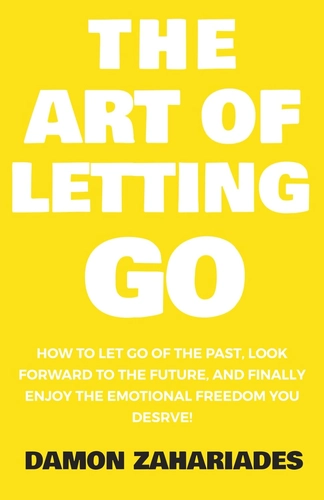
Why is it so hard to walk away from a friendship that hurts?
Here is something people do not talk about enough.
You can recognize a friendship is toxic and still not leave. You can know someone is bad for you and keep them around. You can list all the reasons they hurt you and still feel guilty about ending it.
This is not weakness. It is the weight of history. You have memories. You have shared experiences. You know the version of them that was good to you, and you keep hoping that version will come back.
Zahariades wrote this book for people who struggle to let go of relationships that no longer serve them. He does not just tell you to leave. He walks you through why leaving feels so hard and how to actually do it.
What makes this book valuable is the practical guidance. How to set boundaries without feeling guilty. How to have the conversation when you are ready. How to mourn the loss of a friendship without letting the guilt pull you back in. The book helps you separate who someone is right now from who they used to be.
Letting go is not giving up. It is choosing yourself over a version of someone that no longer exists.
For anyone who knows they should leave but keeps staying.
Toxic Friends by Susan Shapiro Barash
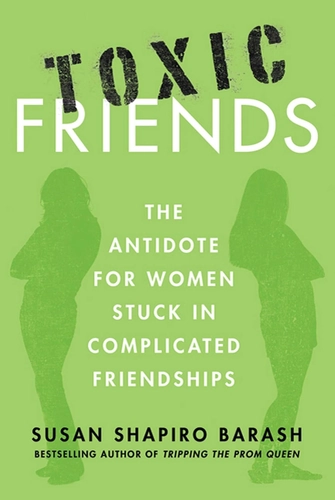
What are the specific patterns of toxic friendships—and how do you spot them?
Barash, a psychologist who has studied female friendships for decades, wrote this book to name the patterns that show up again and again in harmful relationships.
She identifies specific types: the friend who competes with you instead of celebrating you. The friend who needs constant reassurance and drains you with their neediness. The friend who withholds approval and makes you chase their attention. The friend who shares your secrets under the guise of “just being honest.”
What makes this book essential is the specificity. It is not a general book about “bad friends.” It names the patterns so clearly that you recognize them instantly. You stop wondering “is this toxic?” because the description matches exactly what you are living through.
When you can name the pattern, you stop blaming yourself.
The book also addresses the question that keeps people stuck: can toxic friendships change? Barash gives you a realistic answer—not a hopeful one, but an honest one—and helps you decide whether to work on the friendship or walk away.
For anyone who wants to stop wondering and finally name what is happening.
These three books each approach toxic friendships from a different angle. Carter helps you recognize the patterns you have been missing. Zahariades helps you understand why leaving feels so hard and how to do it. Barash names the specific patterns so you stop questioning yourself.
If you are tired of wondering whether a friendship is toxic or not, start with the one that matches where you are stuck:
- Need help recognizing the patterns? Start with Carter.
- Need help walking away without guilt? Start with Zahariades.
- Need someone to name exactly what is happening? Start with Barash.
The hardest part is not recognizing toxic behavior. It is accepting that the friend you once loved is now someone you need to leave behind.
