You walk into a room. You have something to say. You know it matters. But when you open your mouth, the words come out softer than you intended. You apologize for taking up space. You hedge. You ask for permission. You hope people will listen.
Respect isn’t given to people who shrink. It’s given to people who speak with clarity and conviction. And sometimes, the difference between being heard and being overlooked comes down to a single word.
Here are eight simple language shifts that will change how people hear you — and how they treat you.
Key Takeaways (At a Glance)
- Instead of “Excuse me,” say “May I have everyone’s attention for a moment?” You’re not apologizing — you’re leading.
- Instead of “Sorry for interrupting,” say “I’d like to add something important.” Your contribution matters. State it like it does.
- Instead of “I think,” say “Based on what I know” or “My view is…” This signals confidence and conviction.
- Instead of “Can I speak?” say “I’d like to share a perspective.” You’re not asking permission — you’re offering value.
- Instead of “I hope,” say “I’m confident that…” when you genuinely are. Confidence breeds confidence.
- Instead of “I’ll try,” say “I’ll get it done.” It signals reliability and follow-through.
- Instead of “Is that okay?” say “Does that work for you?” You’re checking in without seeking approval.
- Instead of “Maybe,” say “I’ve decided” — but only when you actually have.
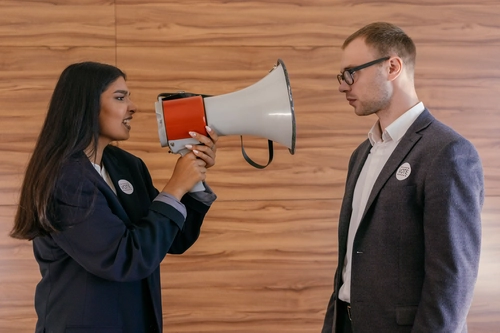
Instead of “Excuse Me” — Say “May I Have Everyone’s Attention for a Moment?”
“Excuse me” is a polite way to get someone’s attention, but it also sounds like you’re apologizing for needing it. It’s a request from a smaller position. You’re asking to be allowed into the space.
“May I have everyone’s attention for a moment?” is different. It’s a request, but it’s a confident one. You’re not apologizing. You’re leading. You’re saying: “I have something important to say, and I need you to hear it.”
This isn’t about being aggressive. It’s about being clear. When you ask for attention directly, you’re more likely to get it. People respond to confidence, not hesitation.
Instead of “Sorry for Interrupting” — Say “I’d Like to Add Something Important”
Apologizing for interrupting signals that you’re aware you’re taking up space — and that you feel bad about it. It puts you in a subordinate position before you even say what you have to say.
“I’d like to add something important” is a different approach. You’re not apologizing. You’re contributing. You’re saying: “What I’m about to say matters.” And when you say it that way, people are more likely to listen.
If you genuinely interrupted someone, you can still acknowledge it: “I know you weren’t finished, but I’d like to add something important.” You’re being respectful and direct.
Instead of “I Think” — Say “Based on What I Know…” or “My View Is…”
“I think” is a small phrase with a big impact. It signals uncertainty. It signals that you’re offering an opinion, not a perspective. It sounds like you’re not sure.
“Based on what I know” or “My view is” signals confidence. It says: “I’ve thought about this. I have a perspective. It’s worth hearing.” You’re not pretending to be certain about everything — you’re just speaking with conviction about what you do know.
A friend of mine used to start every sentence with “I think.” He didn’t realize it was making him sound unsure. He switched to “My view is” and “Based on what I know.” People started taking him more seriously. The words changed, and so did the way people heard him.
Instead of “Can I Speak?” — Say “I’d Like to Share a Perspective”
Asking permission to speak puts you in a passive position. You’re waiting for approval. You’re signaling that you need someone to say yes before you can contribute.
“I’d like to share a perspective” is active. You’re not asking for permission — you’re telling people you have something to offer. It’s not demanding. It’s just clear. You have value to add, and you’re going to add it.
Instead of “I Hope” — Say “I’m Confident That…” (When You Genuinely Are)
“I hope” is a wish. It’s passive. It’s something you say when you’re not in control. “I’m confident” is a statement. It says: “I’ve considered this, and this is where I stand.”
But here’s the catch: only say it when you genuinely are confident. If you’re not sure, don’t fake it. People can tell. But when you are sure, don’t water it down. Say what you mean.

Instead of “I’ll Try” — Say “I’ll Get It Done”
“I’ll try” is a hedge. It says: “I might do this, but I’m not sure.” It signals that you’re not fully committed.
“I’ll get it done” or “I’ll do my best” is stronger. It signals that you’re reliable. That you follow through. That people can count on you.
Does this mean you always have to be 100% certain? No. But it does mean you should stop hedging when you actually plan to follow through. If you’re committed, say it like you are.
Instead of “Is That Okay?” — Say “Does That Work for You?”
“Is that okay?” seeks approval. It puts you in a position of asking someone to validate your choice. It’s a small shift, but it matters.
“Does that work for you?” is a check-in. It’s not seeking approval — it’s making sure the other person is aligned. It’s respectful and collaborative, but it doesn’t put you in a subordinate position.
A manager I knew used to ask “is that okay?” to his team. He noticed people would pause and think about whether they were allowed to say no. He switched to “does that work for you?” People felt more comfortable being honest. And he still got the information he needed.
Instead of “Maybe” — Say “I’ve Decided” (Only When You Actually Have)
“Maybe” is the language of indecision. It keeps doors open. It avoids commitment. It makes you sound unsure and unreliable.
“I’ve decided” is the language of conviction. It says: “I’ve considered the options, and I’ve made a choice.” It signals leadership and clarity.
But use this one carefully. Only say “I’ve decided” when you actually have decided. If you’re still figuring things out, say “I’m still thinking about it.” That’s honest. That’s also confident. Don’t fake decisiveness. Commit to what you’ve decided and say it like you mean it.
Why These Language Shifts Work
Words matter. They shape how people perceive you. They shape how you perceive yourself. When you use language that is more direct, more confident, and more clear, people respond differently. They take you more seriously. They respect your boundaries. They listen when you speak.
These shifts aren’t about being aggressive or arrogant. They’re about being clear. They’re about knowing what you want to say and saying it without apology.
FAQ
Q: How to command respect in any room without being aggressive?
A: Use language that is clear and confident without being domineering. Say what you mean without apologizing for taking up space. Speak directly, listen actively, and respect others’ contributions while valuing your own.
Q: Why do small language changes make such a big difference?
A: Language shapes perception. When you say “I think” vs. “Based on what I know,” people hear confidence vs. uncertainty. These small shifts signal that you believe in what you’re saying — and others believe you too.
Q: What if I’m naturally soft-spoken or shy?
A: You don’t have to change your personality. You just need to change your words. Soft-spoken people who speak with conviction can be even more respected than loud people who don’t. It’s about what you say, not just how loud you say it.
Q: Isn’t this just about sounding more confident than I actually am?
A: No. It’s about speaking with the confidence you actually have. Stop watering down your words. If you’re confident, say it. If you’re not, be honest. But don’t use uncertain language when you’re actually certain.
Q: Which of these is the most important?
A: The one you do the most. Pay attention to which of these you use most often. Start with that one. Once it becomes natural, move to the next. You don’t need to change everything at once.
