You’ve probably seen it. Your child explodes over small things. Talks back. Slams doors. You’ve told yourself it’s just their personality. Maybe they’re difficult. Maybe they’re just going through a phase. Maybe they’ll grow out of it.
But what if the problem isn’t the child? What if the problem is the environment they’re living in? Children learn emotional responses from the environment they live in. What feels normal at home becomes their normal too.
If you don’t want to raise an angry, reactive child, here are three everyday habits that may be making it more likely.
Key Takeaways (At a Glance)
- Yelling to teach a lesson often teaches children to explode when overwhelmed. They copy your reaction before they understand your words.
- Shutting down when you’re upset doesn’t hide your feelings. Children still feel the tension — and it often comes back as anger later.
- Dismissing their feelings tells them their emotions don’t matter. Unprocessed feelings often return as frustration or anger.
- Children don’t learn emotional regulation from lectures. They learn it by watching how the adults around them handle stress, disappointment, and conflict.
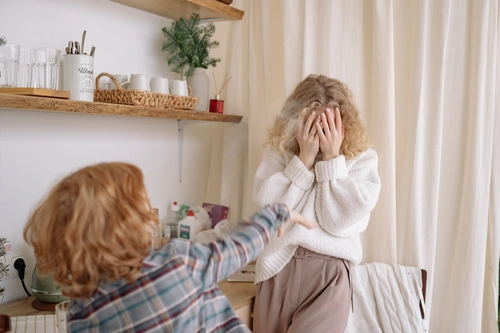
1. Yelling to Teach a Lesson
You’ve been there. You’ve tried asking nicely. You’ve tried explaining. Nothing works. So you raise your voice. You get louder. You think you’re getting your point across.
But here’s what’s really happening. When you yell, children don’t learn the lesson you’re trying to teach. They learn something else entirely: “When I’m overwhelmed, I should explode too.” They copy your reaction before they understand your words.
Think about it. If you want your child to learn to stay calm during difficult moments, they need to see someone staying calm during difficult moments. If they only see yelling, that’s what they’ll learn.
A friend of mine realized this after years of yelling at her kids. She’d get frustrated, shout, and then wonder why her kids were so reactive. It took her a long time to see the pattern. She was teaching them exactly what she didn’t want them to learn.
The solution isn’t to never get frustrated. It’s to model what to do when you’re frustrated. Take a breath. Speak calmly. Walk away if you need to. Show them what it looks like to stay in control.
2. Shutting Down When You’re Upset
You might not be yelling. You might be doing the opposite. The silence. The cold tone. The frustrated sighs.
You think you’re keeping it together. You think they can’t tell you’re upset. But they can. Children still feel those emotions even when nothing is being said. That tension often comes back later as anger.
A man I knew used to shut down after a hard day at work. He’d come home, be quiet, withdraw. He thought he was keeping the peace. But his kids could feel the tension. They’d start acting out. They’d get into fights with each other. They couldn’t explain why they were so irritable — but the energy in the room was telling them something was wrong.
It’s not your fault that you’re tired. It’s not your fault that you need space. But if you want to raise a child who can handle conflict calmly, you need to show them what healthy emotional processing looks like. “I’m feeling frustrated right now. I need a few minutes to myself, and then I can talk about this.”
3. Dismissing Their Feelings
“It’s not a big deal.” “Stop crying.” “You’re fine.”
To you, it might seem small. But to a child, what they’re feeling can feel huge. When you dismiss their feelings, you’re telling them that their emotions don’t matter. And unprocessed emotions often return as frustration or anger.
I’ve worked with many families who believed their child had “anger problems.” Often, that wasn’t the real issue. The home was filled with stress. As the adults became calmer, the meltdowns, yelling, and conflict began to decrease too.
One mother told me her daughter would have huge meltdowns over seemingly nothing. A broken toy, a spilled drink, a small disappointment. She thought her daughter was just difficult. But when she started acknowledging her daughter’s feelings instead of dismissing them — “I can see you’re really upset about that. That’s okay” — the meltdowns became less frequent. Her daughter felt heard instead of shut down.
Validating a feeling doesn’t mean agreeing with it. It just means acknowledging it. You can say “I understand you’re upset” without saying “yes, you should be upset.” And that validation can diffuse anger more effectively than telling them to calm down.

Children Learn by Watching
Children don’t learn emotional regulation from lectures. They learn it by watching how the adults around them handle stress, disappointment, and conflict.
If you yell, they learn to yell. If you shut down, they learn to shut down. If you dismiss their feelings, they learn to dismiss themselves.
What feels normal at home becomes their normal too. If anger and reactivity are the norm, your child will grow up thinking that’s how people deal with things. If calmness and regulation are the norm, they’ll grow up thinking that’s how people handle conflict.
The good news is, you can change the pattern. It’s never too late to start modeling the behavior you want to see. Start noticing how you handle stress. Start noticing how you respond to conflict. Start practicing calmness, even when it’s hard. Your child is watching. And what they see might just change everything.
FAQ
Q: How do I stop raising an angry, reactive child?
A: Start by looking at the environment you’re creating at home. Are you modeling calmness or reactivity? Children learn emotional responses from the adults around them. As the adults become calmer, the child’s reactivity often decreases too.
Q: Does yelling at my child really make a difference?
A: Yes. Children copy your reactions before they understand your words. When you yell, you’re teaching them that yelling is how you handle frustration. Even if they’re not ready to understand the lesson, they’ll remember the reaction.
Q: What should I do instead of yelling?
A: Take a breath. Speak calmly. Walk away if you need to. Model what you want them to learn — how to manage frustration without losing control.
Q: Can children tell when I’m upset even if I don’t say anything?
A: Yes. Children feel the tension in silence, cold tones, and frustrated sighs. Those emotions don’t disappear just because nothing was said. They often come back later as anger or acting out.
Q: Why is it important to validate my child’s feelings?
A: When you dismiss a child’s feelings, you teach them that their emotions don’t matter. Those unprocessed feelings often return as frustration or anger. Validation helps them feel understood and lowers the intensity of their emotional reaction.
