I read this book on a Tuesday night, alone in my kitchen, after a phone call with my mother that left me staring at the wall for twenty minutes. I couldn’t say what happened exactly. She asked about my job, I mentioned a promotion, and somehow I ended up apologizing for being selfish and hung up feeling like I’d done something wrong. I knew the feeling well. I just never had a name for it.
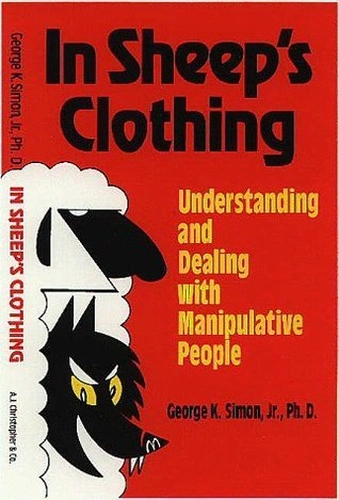
Dr. George K. Simon’s In Sheep’s Clothing gave me that name. The book’s central argument hit me like a cold splash: manipulative people aren’t confused, damaged souls who accidentally hurt others. They are covert-aggressive—meaning they pursue power and control while maintaining a facade of decency. They have two goals, Simon writes: to win and to look good doing it. I read that sentence three times.
The uncomfortable question this book forced me to ask was this: if I keep ending up in these dynamics, what part of me keeps showing up to play?
The Villain Is the One You Trust
There’s no protagonist in this book, not in the traditional sense. The main character is the covert-aggressive person, and Simon paints them with unsettling precision. These are the colleagues who smile while undermining your projects. The partners who apologize beautifully and repeat the same betrayal. The friends who make you feel grateful for their presence while slowly shrinking your sense of self.
Simon doesn’t call them monsters. He calls them what they are: people without functional consciences. That’s the hardest pill to swallow. Most of us assume everyone feels guilt, shame, or empathy. Simon argues some people simply don’t get the brain chemistry reward from loving and being loved. Instead, they get their dopamine from winning, controlling, and dominating.
The book’s structure follows a clear path. First, Simon explains the psychology of what he calls “disrupted characters.” Then he delivers the heart of the book—chapter nine—which lists 18 manipulation tactics. Reading them felt like flipping through a catalog of every confusing interaction I’d ever had. Minimization. Rationalization. Guilt-tripping. Playing the victim. I recognized each one immediately.
What struck me most was the chapter on why victims stay. Simon identifies four reasons, and each one made me squirm. We doubt ourselves. We believe the manipulator’s version of events. We hope they’ll change. We fear being alone. None of these are weaknesses, exactly. They’re normal human responses to abnormal behavior. But they keep us trapped.
The Wolf Doesn’t Know It’s a Wolf
The core theme of this book is that aggression hides in plain sight. Simon’s central image—the wolf in sheep’s clothing—is biblical in its simplicity. But the real insight goes deeper. The wolf doesn’t see itself as a wolf. The manipulator genuinely believes they’re the victim, the reasonable one, the person who’s been wronged.
That’s what makes them so effective. They’re not lying in the way we understand lying. They’ve constructed a reality where their aggression is justified. When they minimize your pain, they believe it. When they project blame onto you, they feel it. This is why confronting them feels like talking to a wall. It isn’t a wall. It’s a person who has convinced themselves they’re right.
Simon’s other powerful image is the “battle for control” that underlies all manipulation. Every tactic in chapter nine serves one purpose: to win. Not to resolve. Not to understand. To win. Once you see this pattern, it becomes almost comical in its predictability. The guilt trip comes when you press for accountability. The anger flares when you get too close to the truth. The charm returns when you threaten to leave.
I found myself thinking about a former boss who used diversion constantly. Whenever I raised a legitimate concern about a project, she’d pivot to something I’d done wrong months ago. I spent years feeling incompetent. Reading Simon’s description of diversion, I realized she wasn’t confused about the issue. She was winning by making sure I never got to finish my sentence.
What the Map Shows You
The book’s most valuable contribution is its insistence that you can change your side of the equation. Simon provides fourteen counter-strategies, and they’re remarkably practical. Judge actions, not intentions. Accept no excuses. Make direct requests. Stay focused on the here and now. These sound simple. In practice, they require a level of self-awareness that most of us avoid.
Some of this book made me uncomfortable. Simon’s tone can be harsh, and he draws sharp lines between “us” and “them” that feel reductive. He also spends considerable time on personality disorder categories that felt academic and unnecessary. But the discomfort was productive. It forced me to look at my own patterns—the ways I over-explain, justify, and apologize for my needs. The ways I teach people they can treat me poorly without consequence.
By the time I finished, I understood something I’d been circling for years. The problem wasn’t that I attracted manipulators. The problem was that I stayed in relationships where my reality was constantly being rewritten.
This book is not a cure. It won’t make manipulative people vanish, and it won’t make the pain of realizing someone you loved was using you any easier. What it does is give you a map. It names the territory. It shows you where the traps are and why you keep stepping into them.
Simon’s most radical claim is that not everyone shares your moral framework. Some people genuinely don’t care about fairness, kindness, or mutual respect. They care about winning. Once you accept this, your interactions change. You stop trying to make them understand. You stop hoping they’ll see your perspective. You start protecting yourself instead.
The book has been life-changing for many readers, and I believe it. It was for me, even though I didn’t want it to be. I didn’t want to accept that some people in my life would never change—that my mother would never see me clearly, that my former boss would never admit fault. But accepting that freed me. I stopped waiting for apologies that would never come. I started trusting my gut when something felt off.
If you’ve ever left a conversation feeling confused about what just happened, read this. If you’ve ever apologized for something you didn’t do, read this. If you’ve ever wondered why you feel small around certain people, read this. It’s not an easy read emotionally—you’ll see your own patterns reflected in its pages—but that’s exactly why it works.
You won’t become immune to manipulation after reading this. You’ll still get caught off guard, still doubt yourself sometimes. But you’ll have a framework. You’ll know the tactics when you see them. And you’ll understand that the confusion you feel isn’t a sign of your weakness. It’s the fog they create to hide what they’re doing.
Now that you can see it clearly, what are you willing to change about how you show up?

