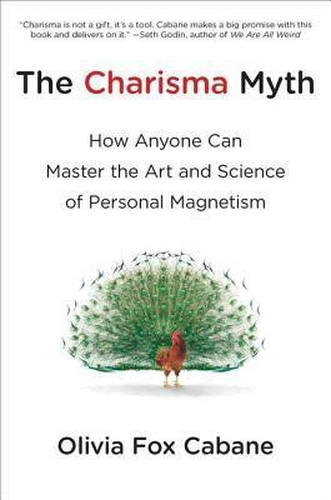
I picked up The Charisma Myth on a Tuesday night, after a work dinner where I’d said all the right things and felt completely invisible. I expected another self-help pep talk. Instead, Olivia Fox Cabane opened with Marilyn Monroe, and I was hooked.
Cabane’s central argument is simple and radical: charisma is not a mystical gift. It’s a learnable set of behaviors, built on three pillars—presence, power, and warmth. The book promises that anyone can master it, and she has the research to back it up. But here’s the question that kept nagging me as I read: if charisma is just a skill, why does it feel so much like a mask?
The Four Styles and Their Cost
Cabane breaks charisma into four distinct styles: focus, visionary, kindness, and authority. Each has its own toolkit. The focus charismatic listens like nothing else matters. The visionary paints futures you want to live in. The kindness charismatic radiates warmth that feels like sunlight. The authority charismatic commands rooms with a glance.
Her examples are vivid. Bill Clinton for focus, Steve Jobs for visionary, the Dalai Lama for kindness. She describes how Clinton made people feel like they were the only person in the room, how Jobs’s reality distortion field bent belief itself. But what struck me most was her honesty about the dark side. Charisma invites jealousy. It creates distance. People project onto you, and you lose the ability to be ordinary.
The Techniques That Work Too Well
The book’s practical techniques are deceptively simple: lower your intonation at the end of sentences; pause two seconds before speaking; slow down your nodding. I tried them at a coffee shop the next morning. The barista’s smile widened. The guy behind me in line asked for my opinion on his laptop choice. It worked, and it was unsettling.
Cabane’s deeper insight is that charisma starts internally. Your mental state leaks into your body language, your tone, your micro-expressions. You cannot fake warmth. The exercises, the visualizations, the responsibility transfers all point toward an uncomfortable truth: to be charismatic, you must first make peace with yourself.
This is where the book gets uncomfortable. Cabane doesn’t just teach you how to nod slowly. She asks you to examine why you’re anxious, why you compare yourself to others, why you need approval. The techniques are surface-level fixes for deep-seated patterns. She’d say that’s the point. The mind shows up in the body, and you can change both. But the effort required is real.
Her “responsibility transfer” technique asks you to mentally hand your anxieties to a higher power—the universe, your team, anything outside yourself. I tried it during a stressful phone call. It worked. I stayed calm. I listened better. But afterward I wondered: was that authentic? Or was I just managing my own discomfort?
What the Manual Can’t Give You
The book’s greatest strength is its practicality. Every chapter ends with exercises. Every technique comes with a rationale. She even addresses the ethics of charisma, warning that it’s a tool that can be used for good or manipulation. That self-awareness is rare in the genre.
Its weakness? The book assumes a certain context. Most examples come from executive coaching, boardrooms, and political campaigns. If you’re not climbing a corporate ladder, some advice feels irrelevant. And Cabane writes from a place of privilege; the advice on commanding presence might read differently for someone who’s constantly talked over in meetings.
Anyone who’s ever felt invisible in a conversation will find something here. Anyone who’s choked during presentations. Anyone who’s wondered why some people light up rooms and others dim them. It’s for the awkward, the anxious, the socially exhausted. If you believe authenticity means never adjusting your behavior for others, this book will annoy you. If you’re looking for a quick fix without practice, skip it. Cabane is clear: reading about charisma won’t make you charismatic. Doing the exercises will.
What I took away wasn’t a set of tricks. It was permission to be more present, to slow down, to listen like it matters. And a warning: the hardest person to be charismatic with is yourself. The book ends with a challenge to live charismatically, not just perform it. I’m still wrestling with that.
The Charisma Myth is a mirror disguised as a manual. Stare into it long enough, and you’ll see not just what you project, but what you’ve been hiding. That’s the real work. Cabane just gives you the tools to face it.

