You have done it. Convinced yourself that a small lie was harmless. Blamed circumstances instead of owning a mistake. Told yourself “everyone does it” to feel better about a questionable choice.
We all rationalize. It is not a character flaw—it is how the brain protects its self‑image. But understanding why we do it is the first step toward stopping it. If you loved Predictably Irrational, these three books take you deeper into the psychology of self‑justification.
| Book | Core Focus | Best For |
|---|---|---|
| Awakening to Human Nature by Owen Pierce | How self‑deception and hidden motives drive our justifications | Spotting your own blind spots and seeing through rationalizations |
| The Honest Truth About Dishonesty by Dan Ariely | Behavioral experiments on why we cheat and still feel honest | Understanding the “fudge factor” and how we stretch the truth |
| Mistakes Were Made (But Not by Me) by Carol Tavris & Elliot Aronson | The psychology of cognitive dissonance and self‑justification | Breaking the cycle of blame and learning to own mistakes |
Awakening to Human Nature by Owen Pierce
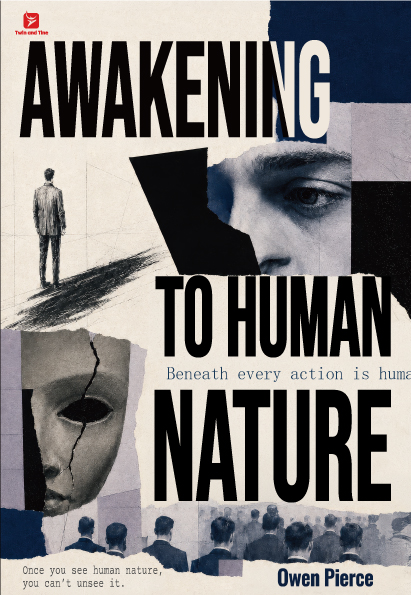
Why do we believe our own excuses so completely? Pierce argues that the most dangerous force in human life is self‑deception. We twist facts to protect our self‑image. We rewrite memories to make ourselves look good. We ignore the subtle emotional cues—that flash of guilt, that moment of hesitation—that tell us we are not being honest.
Pierce teaches you to catch your own internal signals. By reading your own emotional reactions and questioning your motives, you can spot the moment you start rationalizing. He shows that the first step to stopping bad behavior is recognizing how you justify it to yourself. The book does not offer easy answers. It offers a mirror.
For anyone who has ever believed their own excuse and wants to stop.
The Honest Truth About Dishonesty by Dan Ariely
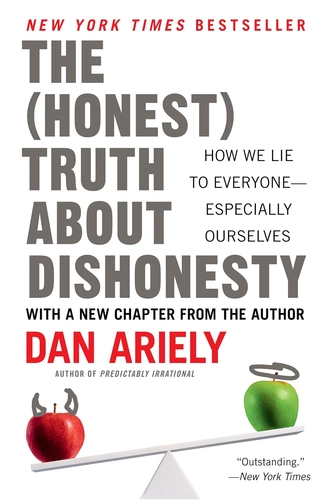
If you loved Predictably Irrational, this is the natural next step. Ariely turns his attention to why we cheat—and why we still think we are honest.
Through clever experiments, Ariely shows that we do not cheat as much as we could, but we cheat just enough to benefit while still feeling good about ourselves. We rationalize small dishonesties because we can tell ourselves “it is not a big deal” or “everyone does it.” He calls this the “fudge factor.”
Ariely reveals the mental gymnastics we perform: convincing ourselves that stealing a pen is not stealing, that padding an expense report is acceptable, that lying by omission is not really lying. He also shows how we can build systems to catch ourselves—by recognizing the triggers that make rationalization easier.
For anyone who wants to understand why honesty is so flexible and how to tighten your own moral compass.
Mistakes Were Made (But Not by Me) by Carol Tavris and Elliot Aronson
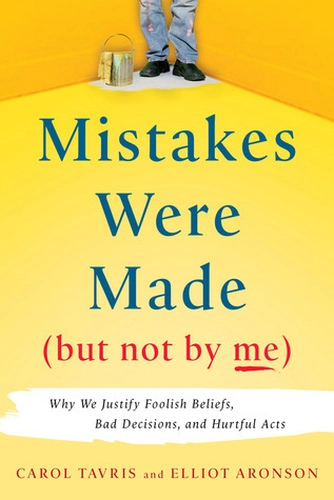
Two social psychologists wrote the definitive book on self‑justification. Their central insight: when people make mistakes, their brains rewrite the story to protect their self‑image. Blaming others, distorting facts, and rewriting history are all ways to reduce the discomfort of admitting “I was wrong.” They call this cognitive dissonance.
The book is full of examples—from everyday arguments to courtroom trials to political scandals. It shows how self‑justification escalates, how it destroys trust, and how to break the cycle by facing the discomfort of being wrong. The authors also offer practical strategies for recognizing dissonance and admitting mistakes before they spiral.
For anyone who has ever doubled down on a bad decision and wondered how they got so deep.
If you want to catch your own blind spots, start with Pierce. If you want the behavioral science experiments on rationalization, pick up Ariely. If you want to understand the deep psychology of self‑justification and break the cycle, go with Tavris and Aronson.
