You check your bank account. Your stomach tightens. You close the app and tell yourself you will look later. The number has not changed, but somehow it feels heavier every time.
It is not about how much you earn. People who make half your salary sleep better than you do. People who make twice as much are just as stressed.
Money stress is not a math problem. It is a psychology problem. These three books help you understand why you feel this way—and what to actually do about it.
| Book | Core Focus | Best For |
|---|---|---|
| From Debt to Wealth by Owen Pierce | Rewiring how you think about money, debt, and wealth | Anyone stuck in paycheck‑to‑paycheck anxiety |
| The Psychology of Money by Morgan Housel | The emotional and behavioral side of financial decisions | People who know the math but still make emotional choices |
| Your Money or Your Life by Vicki Robin & Joe Dominguez | Realigning spending with life energy and values | People who feel trapped by work and spending |
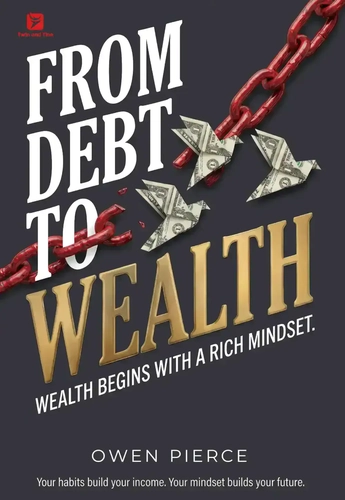
From Debt to Wealth by Owen Pierce
Why does money stress hit you so hard?
You got a raise. You felt relief—for about a month. Then the stress came back. Your spending crept up. You felt like you were running just to stay still.
Pierce explains why this happens. Wealth is not a reward for hard work—it is compensation for how you think. Most people stay stuck not because they do not earn enough, but because they keep thinking about money the same way.
What this book does differently:
· It names the hidden patterns. You buy luxury to feel successful. You reward every paycheck with spending. You treat houses and cars as assets when they are actually liabilities. These are not bad habits—they are cognitive traps.
· It changes the question. Instead of “how do I earn more?” it asks “how do I make what I have work for me?” This shift changes everything.
· It gives you a path. Not vague advice. Specific steps: how to stop living paycheck to paycheck, how to save $10k in 90 days, how to use debt as a tool instead of a trap.
For anyone who has ever gotten a raise and still felt broke.
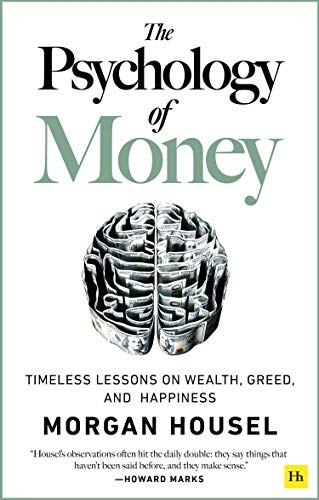
The Psychology of Money by Morgan Housel
Why do you know the right thing to do but keep doing the wrong thing?
Housel’s book is built on one insight: doing well with money has almost nothing to do with how smart you are and everything to do with how you behave. And behavior is emotional, personal, and shaped by your history.
You grew up in a certain financial environment. Your parents had a certain relationship with money. These experiences live in your body—they drive your spending, your saving, your panic, your avoidance. Understanding this changes everything.
· You stop comparing. Housel shows that wealth is invisible. The flashy car you see is not wealth—it is debt disguised as success.
· You understand luck and risk. So much of financial success is outside your control. This is not an excuse—it is a reason to focus on what you can control: your behavior.
· You learn patience. Compounding works slowly. The book helps you accept that.
For anyone who knows the math but keeps making the same emotional decisions.
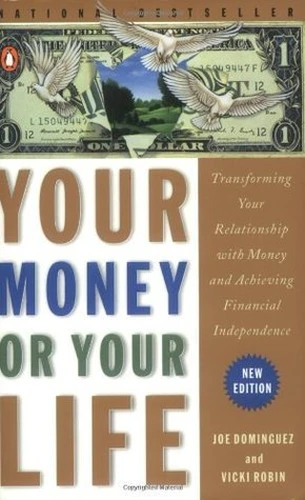
Your Money or Your Life by Vicki Robin and Joe Dominguez
Why does money stress feel so existential?
Because it is not about money. It is about your life.
Robin and Dominguez ask a simple but brutal question: what are you trading your life energy for? Every hour of work is time you never get back. Every purchase is a trade—you gave a piece of your life for that thing.
The book gives you a nine‑step program to transform your relationship with money. It starts with tracking every penny—not to guilt you, but to wake you up. To show you where your life energy is actually going. To help you align your spending with what you truly value.
· You see where your life is going. Most people have no idea. This book shows you.
· You stop buying what does not matter. Once you see the trade, you stop making bad ones.
· You find peace. Not because you have more money, but because you are spending it on things that actually matter.
For anyone who has ever felt like they are working harder but getting nowhere.
If you are stuck in paycheck anxiety and need to change how you think about money, start with Pierce. If you know the logic but keep making emotional decisions, read Housel. If you want to step off the treadmill and realign money with your values, go with Robin and Dominguez.
