You open your banking app. Then close it. You will check it later. Later never comes.
You lie awake at night doing mental math. You wonder where the money went. You wonder how others manage. You wonder if you are the only one who feels this way.
Financial anxiety is not about the number in your account. It is about how you feel about that number. And that feeling is not your fault—it is a pattern you learned. The good news: you can unlearn it. These three books show you how.
From Debt to Wealth by Owen Pierce
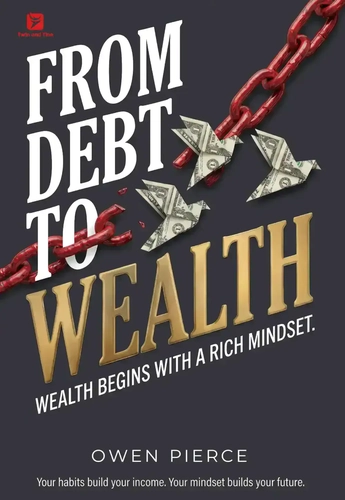
Why does money make you so anxious?
You earn okay. But you are still stressed. Every month feels like treading water. You see others with less income who seem more at ease—and you wonder what is wrong with you.
Pierce explains that financial anxiety is almost never about income. It is about mindset. Most people are trapped in a cycle: work hard, spend to feel better, worry, repeat. They chase higher paychecks, buy things to impress, and end up deeper in anxiety.
How this book helps:
· It names the hidden reasons you spend. Luxury is often a display of money you do not have. Comfort is a trap—the poor seek it, the rich embrace discomfort. Once you see these patterns, the anxiety starts to loosen.
· It changes how you see money. It is not a reward for hard work—it is compensation for your cognition. You stop asking “why am I broke?” and start asking “how do I think differently?”
· It gives you a practical escape. Not vague advice. Specific steps: how to stop living paycheck to paycheck, how to save $10k in 90 days, how to use debt as a tool instead of a cage.
For anyone who wants to stop the anxious loop and start thinking like someone who builds wealth.
The Worry-Free Money Guide by Shannon Lee Simmons
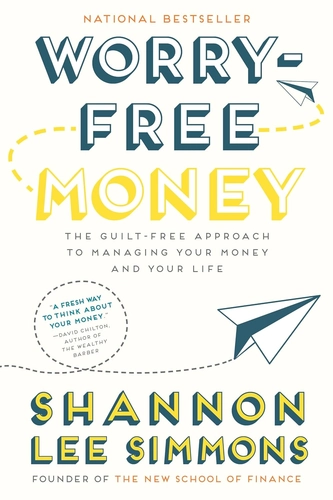
What if you could stop avoiding your money?
Simmons is a financial planner who specializes in anxious clients. She knows that traditional budgeting advice does not work for people who feel panic when they open a spreadsheet.
Instead of strict budgets and deprivation, she gives you a simple system: divide your money into spending, saving, and guilt‑free fun. No tracking every coffee. No shame. Just clarity.
· You stop freezing. The system is simple enough that you will actually use it.
· You eliminate the worry. When you know your categories and have a plan, the dread fades.
· You get permission to enjoy money. Anxiety is not about spending—it is about not knowing. This book gives you the knowing.
For anyone who has ever avoided looking at their account because they were afraid of what they would see.
Financial Freedom by Grant Sabatier
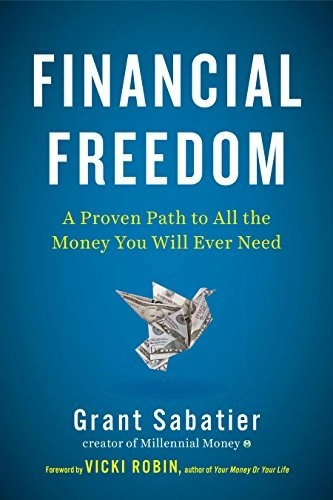
How do you stop feeling trapped by money?
Sabatier went from broke to financial independence in five years. But his book is not a “get rich quick” story—it is a blueprint for escaping the anxiety of the 9‑to‑5.
He argues that financial freedom is not about being a millionaire. It is about having enough choices that you do not feel trapped. When you have a clear plan and a realistic timeline, the anxiety softens.
· You get a specific number. Not “save more,” but “here is exactly what you need to save.”
· You stop comparing. Sabatier shows that the goal is your freedom, not someone else’s success.
· You see the path. Most people never have a clear route. This book gives you one.
For anyone who needs a concrete plan to turn anxiety into action.
| Book | Core Focus | Best For |
|---|---|---|
| From Debt to Wealth by Owen Pierce | Rewiring the money mindset and breaking anxious patterns | Anyone stuck in worry despite earning a decent income |
| The Worry-Free Money Guide by Shannon Lee Simmons | Practical systems for anxious people who avoid their finances | People who freeze when they look at their accounts |
| Financial Freedom by Grant Sabatier | Building a clear plan to escape the 9‑to‑5 and ease the pressure | People who need a concrete timeline to feel safe |
If you need to change how you think about money first, start with Pierce. If you avoid your finances and need a system that does not trigger more anxiety, read Simmons. If you need a specific financial independence plan to feel in control, go with Sabatier.
