Communication is about more than the words we say.
The same sentence can sound completely different depending on:
- Tone of voice
- Facial expression
- Timing
- Body language
- Emotional attitude
Sometimes people misunderstand each other not because the words are wrong, but because the message behind the words feels different.
Learning about nonverbal communication can help you become more aware of how you express yourself and how others receive your message.
The right books can help you develop stronger communication habits and create more meaningful interactions.
Say It Right Every Time
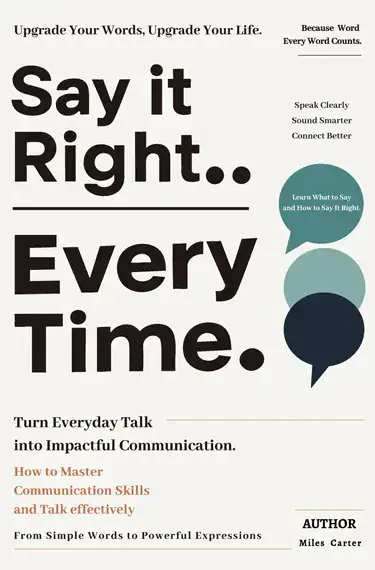
Say It Right Every Time focuses on improving the way people communicate in everyday situations.
Effective communication is not only about choosing the correct words.
It is also about understanding how your message is delivered.
The book helps readers become more intentional about:
- The way they express ideas
- The emotional tone behind their words
- How conversations are received by others
- Creating clearer and more positive interactions
For people who often feel misunderstood, improving awareness of communication style can make a significant difference.
The Definitive Book of Body Language by Allan Pease and Barbara Pease

The Definitive Book of Body Language by Allan Pease and Barbara Pease explores how body language influences human interaction.
The book explains how nonverbal signals can communicate:
- Confidence
- Interest
- Discomfort
- Emotional reactions
Understanding these signals can help readers become more aware of both their own communication style and the messages they receive from others.
Why Nonverbal Communication Matters
People often remember not only what was said, but also how they felt during a conversation.
Nonverbal communication influences:
- Trust
- Connection
- Understanding
- Emotional reactions
A message can become stronger when words and nonverbal signals match.
For example:
Saying “I’m listening” while looking at your phone sends a different message than making eye contact and being fully present.
How to Improve Your Nonverbal Communication
Pay Attention to Your Tone
The same words can create different feelings depending on how they are spoken.
A calm tone can make difficult conversations easier.
Be Aware of Your Expressions
Facial expressions often communicate emotions before words do.
Awareness helps create more consistent messages.
Match Your Actions With Your Words
Trust grows when people see consistency between what you say and how you behave.
Final Thoughts
Communication is not only about finding the right words.
It is about creating a complete message through language, tone, and expression.
Books like Say It Right Every Time and The Definitive Book of Body Language can help readers understand the deeper elements behind successful communication.
When words and actions work together, conversations become clearer and relationships become stronger.