You know the feeling. Someone asks for a favor. You want to say no. But you hear yourself say yes. Then comes the knot in your stomach. The resentment that builds while you do something you never wanted to do.
People-pleasing is not kindness. It is fear dressed up as generosity. Fear of conflict. Fear of being disliked. Fear that saying no will cost you the relationship.
This book gives you the tools to recognize what is really happening — and finally break the cycle.
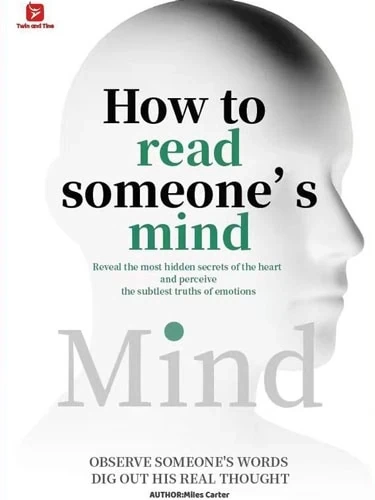
How to Read Someone’s Mind by Miles Carter
Why Do You Keep Saying Yes When You Want to Say No?
Here is the thing about people-pleasers: you are not bad at setting boundaries because you are weak. You are bad at it because you are good at reading people. You sense their disappointment before they even express it. You anticipate their frustration. You feel their unmet expectations as if they were your own.
That is the trap. You are so attuned to others that you lose sight of yourself.
Carter’s book teaches you to read people — not to serve them better, but to see them clearly. Here is what you will learn:
- The face: You will spot the micro-expressions — the flash of disappointment, the flicker of anger — that you have been misreading as catastrophes. Most of the time, people are not as upset as you imagine.
- The body: You will see the subtle postures that reveal whether someone is actually making a request or testing your limits. A lean-in that signals entitlement. A stiff posture that masks frustration. These cues tell you when someone is asking — and when they are taking.
- The voice: You will hear the difference between genuine need and manipulative pressure. A pleading tone. A sharp edge. A practiced guilt-tripping rhythm. Once you hear it, you cannot unhear it.
- The context: You will start to see the big picture — the patterns, the relationships, the unspoken rules that keep you trapped in a role you never chose.
Carter’s book does something most boundary-setting advice does not. It shows you that you are not bad at saying no. You are too good at reading others — and you have been using that skill to protect everyone except yourself.
Once you start reading people accurately, you realize something freeing: the consequences you fear are rarely as bad as you imagine. And even when they are, you can handle them.
For anyone who has ever said yes and immediately regretted it.
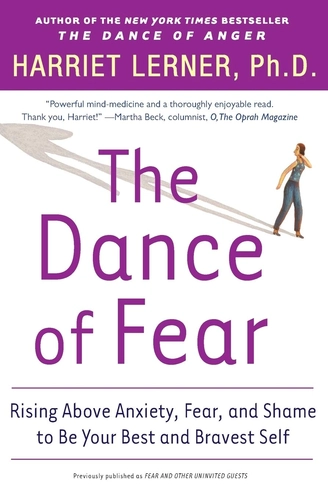
The Dance of Fear by Harriet Lerner
Why Is Saying No So Terrifying?
Lerner is a psychologist who wrote the classic The Dance of Anger. Her follow-up, The Dance of Fear, explains why we are so afraid of conflict — and why that fear keeps us stuck in people-pleasing patterns.
She argues that people-pleasing is not about being nice. It is about managing anxiety. You say yes because saying no triggers a cascade of fear: fear of rejection, fear of anger, fear of being seen as selfish. But here is the twist: every time you say yes to avoid fear, you reinforce the fear. You teach yourself that you cannot handle the consequences.
Lerner gives you a framework for understanding the source of the fear. For many people-pleasers, it is rooted in childhood — in families where love was conditional, where conflict was dangerous, where you learned to be the “good one” to survive.
But she does not leave you there. She gives you concrete strategies to tolerate the discomfort of saying no — and to recognize that the fear is almost always worse than the reality.
For anyone who knows they need to say no but feels paralyzed by the fear of what will happen.
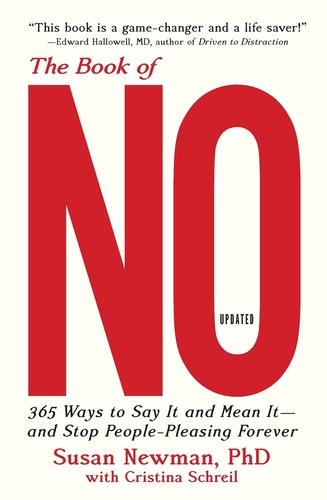
The Book of No by Susan Newman
How Do You Actually Say No in Real Situations?
Newman is a social psychologist who spent years studying people-pleasers. She wrote this book because she realized that most people do not need more reasons to say no. They need scripts.
The Book of No is exactly what it sounds like. It gives you 250 specific scenarios — everything from saying no to a boss to saying no to a friend who wants to borrow money — with simple, direct responses you can actually use.
The book is organized by situation: family, friends, work, and everyday life. Each chapter gives you:
- The situation: what is being asked
- The response: what you can say
- The rationale: why this response works
Newman also addresses the internal voice that keeps you stuck — the voice that says “I am being selfish” or “they will hate me.” She reframes these beliefs, showing you that saying no is actually a way of saying yes to your own time, energy, and wellbeing.
For anyone who knows what they should do but does not know how to say it.
Which Book Should You Start With?
If you want to understand why you keep saying yes — and learn to read the signals that keep you trapped — start with Carter. He gives you the clarity that makes boundary-setting feel less scary.
If you want to understand the fear that keeps you stuck, read Lerner. She gives you the psychology behind the pattern.
If you already know all of that and just want a script for what to say, read Newman. She gives you the words.
