I was standing in line at the grocery store, heart pounding. Nothing bad was happening. No danger. Just the hum of fluorescent lights and a cart full of cereal boxes. But my chest felt tight, my thoughts were racing, and I could feel that familiar spiral starting. I’d read about breathing techniques for anxiety before. I’d even tried a few. But in that moment, nothing seemed to stick. Then I remembered something I’d heard. Two quick inhales through the nose, one long exhale out the mouth. I did it. Twice. And something shifted. Not magic. Just a quiet click somewhere inside my nervous system.
Quick Breathing Techniques for Anxiety Today
If you feel the panic rising, try these:
- Try two short inhales through your nose, then one long exhale.
- Soften your gaze and notice what’s at the edges of your vision.
- Keep your shoulders dropped and your jaw unclenched.
- Do this the next time you feel anxiety creeping in — it takes under a minute.
- Combine both techniques — the breath and the softened gaze work even better together.
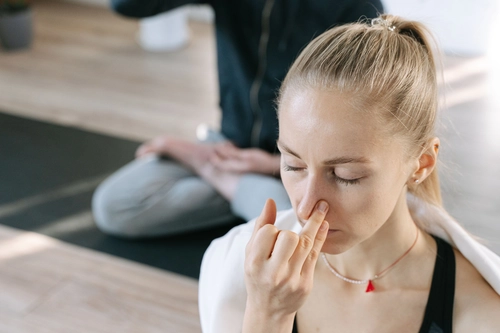
Why Do Breathing Techniques for Anxiety Work When Nothing Else Seems to Help?
I used to think calming down required willpower. But the more I read, the more I realized anxiety lives in the body, not just the mind. When your brain senses a threat (real or imagined), it flips a switch. Heart rate goes up. Breathing gets shallow. Muscles tense. You’re ready to run or fight. The trouble is, in modern life that “threat” is often just a work email or a crowded subway car. The switch gets stuck on.
Breathing techniques for anxiety work because they hack this system. They send a direct signal back to the brain: everything is okay now. You’re not trying to convince your thoughts. You’re speaking the language your nervous system actually understands. Research shows that some of the fastest ways to calm down are mechanical, not psychological. The body leads, and the brain follows.
Most people think they need to breathe slowly. But that’s not always enough. There’s a specific pattern — the double inhale, then a long exhale — that mimics what your body does naturally after a big cry. You’ve done this without realizing it. Have you ever noticed how, after a sobbing fit, you take those two quick breaths in and then sigh it all out? That’s your body’s built-in reset button. And you can trigger it on purpose, even when you’re standing in line at the grocery store.
What’s the Most Effective Breathing Technique for Anxiety I Can Use Right Now?
I’m not going to give you a complicated protocol. No counting to eight, no visualizing a beach. Just this: the double inhale. It’s the breathing technique for anxiety that actually changed things for me.
Here’s how to do it:
- Take a normal inhale through your nose.
- Before you exhale, sneak in one more tiny inhale. Like topping off a glass of water.
- Now let all the air out slowly through your mouth or nose. Let the exhale be longer than both inhales combined.
That’s it. Two sniffs in, one big sigh out.
I first tried this on a particularly tense Tuesday morning. My son had just knocked over an entire cup of coffee onto my laptop. I felt the rage and panic bubbling. I stepped into the bathroom, did three rounds of the double inhale, and by the third exhale, I felt my shoulders drop two inches. The situation didn’t change. But my reaction to it did. I came back out and cleaned up the mess without yelling. That’s the power of this little trick. It doesn’t fix your problems. It just turns down the volume on the alarm so you can think.
Why does it work? The tiny second inhale pops open the tiny air sacs in your lungs that have collapsed due to stress. The long exhale activates the parasympathetic nervous system. It’s like a physical override. And it’s so subtle that you can do it at your desk, in a meeting, or during a tense conversation without anyone noticing.
The Panoramic Vision Trick: A Companion to Breathing Techniques for Anxiety
Around the same time I learned the double inhale, I stumbled on something that blew my mind almost as much. We can also calm ourselves by changing how we see. When we’re stressed, our eyes lock onto whatever’s threatening us. Our vision narrows. It’s tunnel vision, literally and metaphorically. The brain shifts into high alert. But if you deliberately soften your gaze and let your peripheral vision expand, you send another signal of safety. This is what some call panoramic vision.
I tried it while driving once. Stuck in traffic, late for an appointment, gripping the steering wheel like it owed me money. Instead of staring at the bumper in front of me, I relaxed my eyes. I let my awareness stretch out to the edges of the windshield. The sky above the trees. The car in the next lane over. Without moving my eyes, I just noticed more. Within seconds, my jaw unclenched. My breathing slowed. The anxiety didn’t vanish, but it loosened its grip enough for me to think, this traffic will pass, I’ll be fine.
You can combine this with the double inhale. In fact, they work even better together. Do one round of the double inhale, then deliberately soften your gaze. Take in the broader room. The colors, the shapes at the periphery. It’s a quick, two-step reset you can do anywhere. And it costs nothing.
How Can I Remember to Use Breathing Techniques for Anxiety in the Moment?
This was my biggest hurdle. I’d learn a technique. I’d practice it while calm. Then anxiety hit, and I’d forget everything. Sound familiar?
What helped was building a tiny, repeatable ritual. I call it the 60-Second Pause. The moment I notice my heart racing or my thoughts spiraling, I silently say to myself: pause. Then I put my hand on my belly, do one double inhale, and let my eyes go wide and soft at the same time. That’s it. One breath, one shift in vision. I don’t wait until I’m on the verge of a panic attack. I use it the second I feel the first tingle of anxiety. Sometimes that means I do it six times a day. But each time, it works a little faster.
I also tied it to a physical object: my phone. Every time I unlock my screen, I try to check in. Are my shoulders up by my ears? Is my breathing shallow? If yes, I take one intentional double inhale before I open the app. It’s weird, but it creates a habit loop. The phone becomes a cue to breathe. And after a few weeks, my body started doing it automatically when stress showed up.
FAQ
Q: Do breathing techniques for anxiety really work during a panic attack?
A: Many people find the double inhale especially helpful because it doesn’t require counting or complex steps. The two short inhales followed by a long exhale can interrupt shallow breathing patterns that fuel panic. Try it the moment you notice early signs — it’s more effective than waiting until you’re in the thick of it.
Q: How often should I practice breathing techniques for anxiety to see results?
A: You don’t need a formal practice. Integrate the technique into everyday moments — while waiting for coffee, before a meeting, or after a stressful text. Even one intentional breath can retrain your nervous system over time. Consistency matters more than duration.
Q: Can I do breathing techniques for anxiety around other people without them noticing?
A: Absolutely. The double inhale is silent and subtle. You can do it while someone’s talking, in a crowded room, or on a Zoom call. Pair it with panoramic vision by simply relaxing your eyes and widening your focus — no one will know.
Q: What if breathing techniques for anxiety make me feel more anxious at first?
A: Some people feel lightheaded or more aware of their heart rate. If that happens, try the techniques with very gentle inhales, not full deep breaths. Focus on the long, slow exhale. And if it feels wrong, stop. The goal is to feel better, not to force anything.
Q: Can I combine breathing techniques with other anxiety management tools?
A: Yes. These techniques work alongside other tools like journaling, therapy, or medication. They’re not a replacement — they’re a supplement you can use anywhere, anytime. Many people find that having a physical tool they can access in the moment reduces overall anxiety over time.
One Last Thing
I still catch myself holding my breath when I’m stressed. I still forget sometimes. But now I have this tiny tool in my back pocket — a breath pattern I can use anywhere, no expertise required. And on that grocery store line, when my heart started to race, I remembered. I breathed. And the world didn’t get quieter. But I did.
References
- Brown, R. P., & Gerbarg, P. L. (2012). The Healing Power of the Breath: Simple Techniques to Reduce Stress and Anxiety, Enhance Concentration, and Balance Your Emotions. Shambhala.
- Seppälä, E. (2016). The Happiness Track: How to Apply the Science of Happiness to Accelerate Your Success. HarperOne.
- Huberman, A. (2021). Master Stress: Tools for Managing Stress & Anxiety. Huberman Lab Podcast.
