I started Daggermouth on a Tuesday night, thinking I would read one chapter and sleep. The tea went cold. The cat gave up on me around midnight. By 3 AM, I was sitting in the dark, gripping my Kindle like it owed me money, whispering “what the hell” at pages that felt less like a novel and more like a carefully aimed punch.
H.M. Wolfe’s instant bestseller is being called a dystopian romance, and that is true. It is also a warning, a love letter to feminine rage, and the first book in ages that made me understand why people annotate their paperbacks until the spines crack. The premise sounds simple. A mercenary named Shadera Kael botches the assassination of Greyson Serel, the president’s son and the city’s executioner. They are forced to marry. They want to kill each other. They probably should. But the real question this book asks is far more dangerous: what happens when the only honest thing left in a corrupt world is the person you were sent to destroy?
Two People, One Bullet, and a Marriage Neither Wanted
Shadera is the kind of heroine I have been starving for. She is not soft. She is not secretly yearning for a man to fix her. She is a weapon with a pulse, raised to kill, and she is furious about the world she was born into. When she puts a bullet in Greyson, she does not feel conflicted. She feels satisfied. That matters, because it makes everything that follows feel earned.
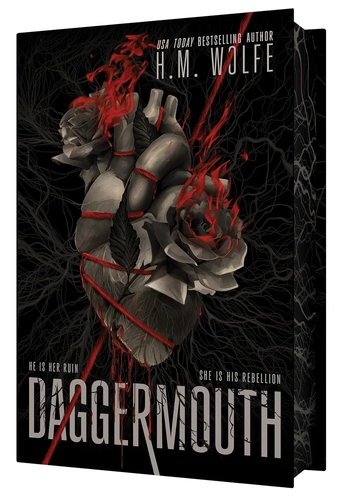
Greyson could have been a cardboard brooding heir, but Wolfe gives him something sharper. He is the executioner who hates what he does. He wears the mask of the regime while secretly wanting to burn it down. The dynamic between them is genuinely violent—they stab, shoot, and manipulate each other long before they touch. The transition from hatred to something else is slow, jagged, and believable. It is not a love story that happens to them. It is a war that they surrender to.
The supporting cast holds its own. Lira, Greyson’s sister, is the quiet strategic force who delivers some of the most devastating lines about what it means to be a woman in a system built by men. Callum, her estranged love, is the kind of devoted, dangerous man that romance readers will absolutely lose their minds over. Even Jameson, who I found annoying at first, earns his place by the final act. The multiple perspectives never felt like filler. Every voice added a piece to the puzzle. The pacing has some slow stretches, and there were moments I wanted Wolfe to just get on with it. But when the last fifty pages hit, I understood why she took her time. The ending is a gut punch followed by a rug pull. I sat in silence for a solid ten minutes after finishing. I am still not over it.
The Mask That Hides the Mirror
Here is where the book stops being just a story and becomes something else. Wolfe has written a dystopia that does not feel distant. The Heart, the glass tower city of privilege, and the Boundary, the windowless slums below, are not fantasy landscapes. They are mirrors.
The masked Veyra officers who brutalize citizens on command reminded me of things I have watched on the news and wished I could unsee. The way women are treated in this world—as property, as vessels, as threats to be controlled—is not exaggerated science fiction. It is uncomfortably close to current headlines. Esta, one of the early readers, called it “fiction not so far from fact,” and she is right. There is a line in the book that I had to read twice. “Women are the backbone, the foundation, the immovable force that still does not falter when men stand on our spines to grab power.” That is not just a quote. It is the thesis of the entire novel.
The imagery of masks and rings works on multiple levels. The city is carved into rings of privilege, and everyone wears a mask—the elite literally, the oppressed figuratively. Greyson and Shadera are both trapped in roles they did not choose. Their forced marriage is just another kind of mask. The genius of the book is how it uses romance to sharpen the political critique instead of softening it. Their love does not distract from the revolution. It fuels it.
What This Book Wants from You
I have read a lot of dystopian fiction. Most of it leaves me feeling hollow or depressed. Daggermouth left me feeling something closer to awake. Wolfe does not just want you to be entertained. She wants you to be angry. She wants you to question who you are complicit in, which systems you benefit from, and what you are willing to tolerate.
There are flaws. The middle sections lag in places. Some of the descriptive passages could have been trimmed. The cliffhanger ending is cruel, which will frustrate readers who hate waiting for sequels. But these are minor scratches on a surface that is otherwise razor sharp. The book has been compared to The Handmaid’s Tale, V for Vendetta, and The Hunger Games, and for once, the comparisons are earned. It is dark, graphic, and unflinching. Check the trigger warnings before you dive in. This is not a book for readers who want gentle escapism.
If you love romance with real stakes, read this. If you want your entertainment to also make you think, read this. If you have ever felt powerless and needed a reminder that rage can be a survival tool, read this. If you prefer your dystopias purely escapist or are sensitive to graphic violence and sexual assault themes, skip it. This book will not give you a comfortable reading experience. It will make you feel slightly less alone in moments of despair. It will make you want to go out and fight for something.
There is a moment late in the book where Greyson thinks about Shadera, the woman sent to kill him, and realizes she is the only person who has ever made him feel safe. That line stopped me cold. It captures everything the book is about. Safety in a world designed to hurt you. Trust in a place where everyone is lying. Love as the last honest rebellion. Daggermouth is not just a story. It is a reminder that even in places built to break people, they will still find ways to love each other anyway.
And that matters. That always matters.

