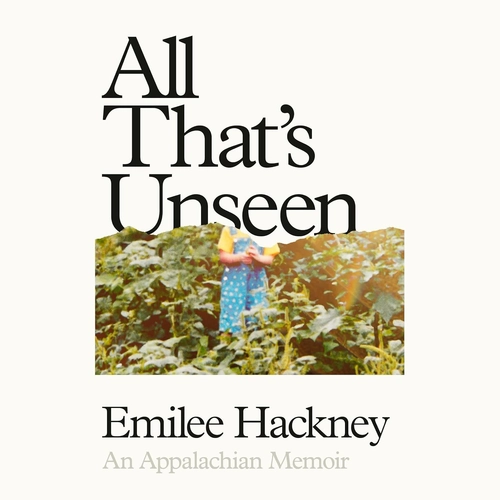
I finished All That’s Unseen at three in the morning, the house quiet, and I sat there with the book closed on my chest, staring at the ceiling. I don’t usually read memoirs that fast. But Emilee Hackney’s debut grabbed me somewhere around the throat and wouldn’t let go. She writes about growing up in the hollers of southwestern Virginia, about the coal mines that defined her family for eight generations, about falling into a Pentecostal church that demanded everything from her, and about the terrifying, improbable leap to Harvard. And through all of it, she’s asking a question that I think haunts anyone who has ever left a place they love: can you escape something without losing the parts of it that made you?
The book opens with Hackney as a teenager, meeting Sam, a senior who seems to offer her a way out, a future, a promise. She’s fourteen. He’s older. And when they start attending Deliverance Christian Church together, she steps into a world of speaking in tongues, of submission, of a God who demands absolute obedience.
She marries him at nineteen, eager to make it work, to be good, to repent for sins she isn’t sure she’s committed. But Sam, we slowly learn, is not who he claims to be. The details of what she discovers are chilling, and Hackney handles them with a restraint that makes them even more disturbing. She doesn’t linger on the worst of it. She shows you just enough, and then she moves on, because that’s what you do when you’re trapped. You survive.
The Mountains That Hold and Release
Hackney writes about Appalachia with real tenderness, and I think this is where the book shines brightest. She refuses to flatten her home into a stereotype of poverty and ignorance. She shows the beauty of the ridgelines, the fierce loyalty of the people, the way a community can hold you up and hold you back at the same time. But she also shows the economic devastation, the addiction, the politics that leave people feeling forgotten. She loves this place, and she’s angry at it, and she’s grateful to it, and she can’t quite live in it anymore.
It’s a complicated portrait, and she never lets you forget that. This is a memoir about religious trauma, absolutely, but it’s also about class, about education, about what it means to be the first person in your family to leave. I kept thinking about my own complicated relationship with the small town I grew up in, the way I can’t fully return to it, the way I don’t fully belong anywhere else.
There’s one line that I keep coming back to, and it sums up the whole book: “You’re never quite happy in them and you’re never quite happy beyond them.” That’s the whole book in one sentence, really. It’s not a story about triumphing over adversity, exactly. It’s a story about learning to live with the contradiction. Hackney doesn’t pretend to have all the answers. She doesn’t offer a neat resolution where she finds peace and never looks back. Instead, she ends with a sense of ongoing negotiation, a life built between two worlds, and the quiet acknowledgment that she will always be pulled in both directions.
The In-Between
There are moments, especially in the middle, where the pacing slows, and I found myself wanting more urgency. And some readers might find her narrator a bit too measured, too even-keeled, especially given the extremes of what she survived. But I think that restraint is actually a strength. She’s not performing her pain for the reader. She’s telling you what happened, and she’s trusting you to feel it.
If you’ve ever experienced religious trauma, or if you’ve ever felt like you didn’t belong anywhere, this book will find you. If you’re looking for a sensationalized story of escape from a cult, this isn’t that. It’s something quieter and more honest. It’s a book about learning to carry your home with you, even when you can’t live there anymore. It won’t fix anything for you. But it might make you feel slightly less alone in the in-between.

