I met this book on a Tuesday night, standing in my kitchen with a box of mac and cheese in one hand and a receipt that made me wince in the other. My grocery bill had crept up forty dollars in two months. Nothing changed. Same family, same meals. Just inflation nibbling away. I bought this cookbook hoping for a solution. What I got was a system that worked, and a conversation about processed food I wasn’t entirely ready to have.
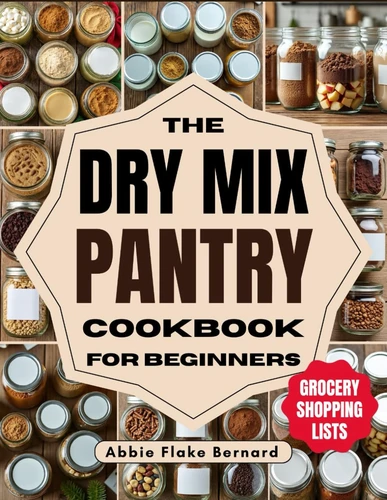
The core argument here is simple: you don’t save money by cooking from scratch nightly. You save money by building a library of dry mixes in bulk, once a month, then assembling meals in minutes. Bernard, a mom of two, claims she cut her family’s grocery bill by over $150 monthly. I tracked my own spending for six weeks. The first month I saved $140. The second month, $155. The math holds up, mostly because you stop buying the overpriced mixes that cost four times what the raw ingredients do.
A Functional Pantry in One Weekend
The book opens with a familiar scene for anyone who has ever stood in a grocery aisle, dazed. Bernard describes her own kitchen chaos, the impulse buys, the half-used bags of flour, the expired seasoning jars. Her solution is methodical. You buy bulk staples once, portion them into labeled jars, and create what she calls a functional pantry. The recipes themselves range from pancake mixes to taco seasoning to cake bases. Each one lists prep time, servings, and shelf life.
What struck me most was the shopping lists. They are not vague suggestions. They are itemized, with quantities, and they assume you will buy a twenty-five pound bag of flour at a warehouse store. That felt intimidating at first. I don’t own that many jars. I don’t have a dedicated pantry. I have two shelves and a basket that rolls.
Bernard anticipated my objection. Her system includes instructions for small-batch prep, for apartment dwellers, for people who do not own a stand mixer. That level of thought is rare in this genre. Most cookbook authors assume space and equipment. She assumes you have a counter and a measuring cup, and she builds from there.
The Sugar Problem Nobody Warns You About
Here is where I need to be honest. The book’s subtitle promises to eliminate processed food. Bernard’s recipes do remove artificial additives, preservatives, and the mysterious chemicals listed on boxed mix labels. I appreciate that. My kids eat fewer stabilizers now. But the recipes lean heavily on sugar, white flour, and salt.
The dessert mixes are where my skepticism grew. A homemade brownie mix still contains two cups of sugar. A pancake mix still asks for a quarter cup of maple syrup on top. Bernard’s argument is that homemade versions are cleaner, which is true, but they are not healthier in the calorie sense. I had to adjust. I started halving the sugar in her baking mixes, and they still worked. I wish she had included those adjustments herself, rather than leaving them to guesswork.
The other uncomfortable part is the upfront cost. Buying bulk ingredients for the first time meant a $180 trip to a warehouse store. That stung. Bernard acknowledges this in the book, but the packaging makes it sound like a small hurdle. It is not small. It is a real barrier for families living paycheck to paycheck. The system saves money over time, but it requires capital to start.
What This Book Does Better Than the Rest
The sixty-day meal plan is the hidden gem. Bernard provides a printable calendar, and each day references a specific mix and a fresh ingredient pairing. I printed it, taped it to my fridge, and stopped asking “what’s for dinner” forever. That alone changed my evenings. The stress reduction is real. The nightly decision fatigue, the last-minute store runs, the ordering takeout because you forgot to thaw something—all of it vanished.
Her seasoning blends deserve special mention. The taco seasoning mix costs about forty cents to make the equivalent of a two dollar packet, and it tastes better. The ranch dip mix is dangerously good. These small victories build momentum. You start with one mix, then another, and suddenly the pantry is organized and the grocery bill is down.
I also have to credit her storage guidance. Bernard explains which containers work, which don’t, and how long each mix actually lasts. Most are shelf-stable for six to twelve months. That knowledge prevented me from wasting food, which is another hidden cost I had not tracked.
The Confidence Beyond the Savings
This book is for busy parents, beginner cooks, and anyone who has looked at a pantry and felt overwhelmed. If you have ever bought a spice for one recipe and never used it again, this system will save you money. If you enjoy cooking from scratch every night, you do not need this book. If your family has specific dietary restrictions beyond gluten-free or low-carb, the customization sections are thin. Bernard offers substitutions, but she does not test every recipe in those variations. I made a gluten-free pancake mix that turned out dense and rubbery. The standard version worked perfectly.
The book also assumes you have storage space. A cabinet, a shelf, a closet corner. If you live in a tiny apartment with no storage, the bulk system will feel like a burden rather than a relief.
The biggest shift was mental. Bernard’s system forced me to see my kitchen as a resource, not a place where food happens to me. I now plan, stock, and execute with intention. I cook more, I waste less, and I feel competent in a way I did not before. The savings are nice. The confidence is better.
This book will not turn you into a gourmet chef. It will not solve every dietary need. It will not make the first bulk shopping trip feel affordable. But it will give you a repeatable method to feed your family clean food in minutes, and it might just cut your grocery bill by a hundred dollars a month. That is not a promise. It is a system, and it works.

