You have probably looked at the world and wondered: why are we like this?
Why do people lie to themselves? Why do we form tribes and hate outsiders? Why do we cooperate with strangers but betray those closest to us? Why do we seek meaning, crave status, and fear death?
Humanity is a paradox. We are capable of extraordinary kindness and unimaginable cruelty. We build civilizations and destroy them. We love deeply and hurt deeply. The three books below each explore a different facet of this paradox. One exposes the hidden rules that govern human behavior. One tells the story of our species from the beginning. One argues that our capacity for goodness is more powerful than we think.
The Book That Shows You What You Are Missing
Most people go through life assuming they understand other people. They do not. They understand the version of people that is presented to them—not the version that actually drives their behavior.
The first book below strips away the politeness. It does not soften the truth. It shows you why people do what they do, even when they do not understand it themselves.
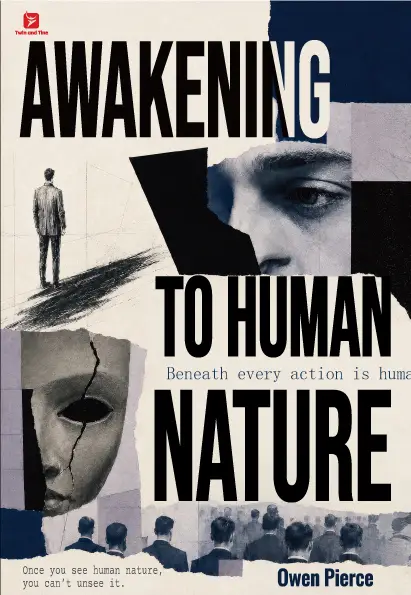
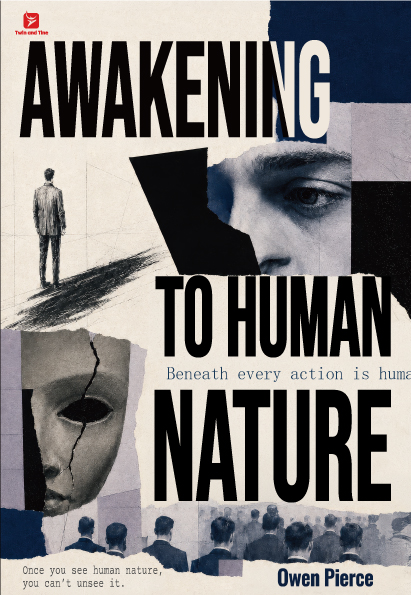
Awakening to Human Nature by Owen Pierce
Understand the hidden rules that govern human behavior.
This book is about the gap between what people say and what they actually do. It covers why loyalty expires when needs change, why honesty is often punished, why people crave validation over truth, and why kindness is sometimes read as permission to take.
Pierce organizes the book around seven sections: cognitive laws, emotional patterns, desire and interest rules, social dynamics, workplace realities, manipulation tactics, and survival wisdom. Each section exposes a different layer of human nature that most people prefer to ignore.
Understanding human nature is not about becoming cynical. It is about becoming clear.
What makes this book essential is the practical application. You learn to recognize manipulation before it costs you. You learn to stop being blindsided by people who do not have your best interests at heart. You learn to see through appearances and understand what people are really communicating.
For anyone who has ever been confused by why people do what they do.
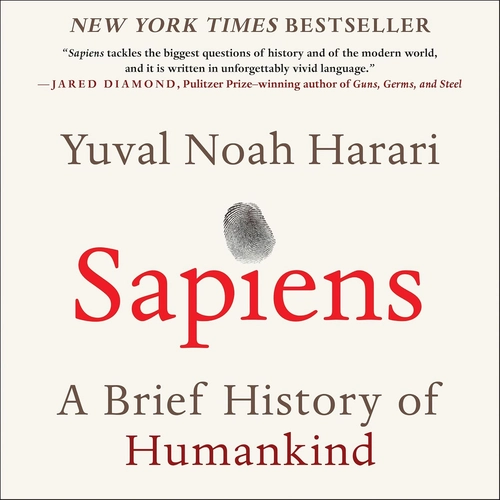
Sapiens by Yuval Noah Harari
How did we get here—and why are we like this?
Harari’s book is a history of the human species. But it is not a history of dates and events. It is a history of ideas. How did we develop language? Why did we form large societies? How did money, religion, and nations become real? And why do we believe in things that do not exist?
The book traces human history from the Stone Age to the present day. It explores how our evolutionary history shaped our psychology. Why we crave status. Why we form tribes. Why we tell stories and believe them.
The things we take for granted—money, religion, nations, laws—are all inventions. We agreed to believe in them. And that agreement is what makes civilization possible.
What makes this book essential is the perspective. You see humanity from a distance. You understand the patterns that have shaped our species. And you stop taking for granted the things that make us who we are.
For anyone who wants to understand the bigger picture of human history.
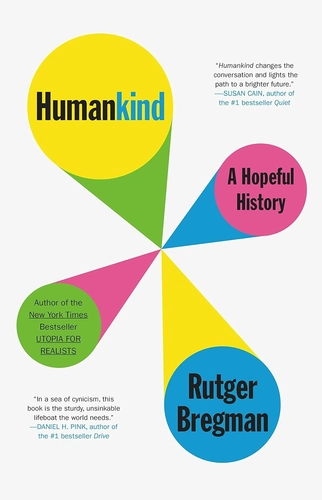
Humankind by Rutger Bregman
What if human nature is more good than bad?
Most books about humanity focus on the dark side. War. Greed. Selfishness. Betrayal. Bregman takes the opposite approach. He argues that people are fundamentally decent—and that the evidence for this is overwhelming.
He draws on history, psychology, and evolutionary biology to make his case. He revisits famous studies and finds that the conclusions were often wrong. He shows that kindness, cooperation, and empathy are not exceptions to human nature—they are the rule.
The problem is not that people are bad. It is that we tell ourselves they are.
What makes this book essential is the balance. It does not deny the existence of evil. It argues that we have underestimated goodness. And that changing our assumptions about human nature can change how we build our societies, institutions, and relationships.
For anyone who needs to believe that people are capable of more than what they see on the news.
These three books each approach humanity from a different angle.
Pierce shows you the hidden rules that govern everyday behavior. Harari traces the evolutionary history that shaped our psychology. Bregman reminds you that our capacity for goodness is just as real as our capacity for cruelty.
If you want to understand why we are the way we are, start with the one that matches where you are stuck. Need to understand people in your daily life? Start with Pierce. Need the big picture? Start with Harari. Need to believe that people are capable of more? Start with Bregman.