Communication is something everyone does every day.
However, not everyone communicates in the same way.
Some people can express their thoughts clearly, handle difficult conversations calmly, and make others feel understood.
Others may struggle with misunderstandings, unclear messages, or conversations that quickly become frustrating.
The difference is usually not about intelligence or personality.
It is often about communication habits.
Understanding what separates effective communicators from ineffective ones can help anyone improve the way they connect with others.
Most articles are read once and forgotten.
Some ideas are worth coming back to.
What Makes a Good Communicator?
Good communicators understand that communication is more than simply talking.
They focus on creating understanding.
Some common habits of effective communicators include:
- Expressing ideas clearly
- Choosing words carefully
- Listening to feedback
- Managing emotions during conversations
- Considering the other person’s perspective
A good communicator thinks about both the message and the impact of the message.
What Makes a Poor Communicator?
Poor communication does not always come from bad intentions.
Many people develop ineffective habits without realizing it.
Common communication problems include:
- Explaining ideas in unclear ways
- Reacting emotionally
- Avoiding important conversations
- Making assumptions
- Not considering how words are received
These habits can create unnecessary conflict and misunderstandings.
Good Communicators vs Poor Communicators: Key Differences
| Good Communicators | Poor Communicators |
|---|---|
| Focus on understanding | Focus only on expressing their own thoughts |
| Choose words carefully | Speak without considering the impact |
| Stay calm during disagreements | React emotionally |
| Ask questions when unclear | Make assumptions |
| Adjust communication style | Expect others to understand automatically |
The difference is not about speaking more.
It is about communicating with more awareness.
Good Communicators Explain Instead of Assuming
One major difference between strong and weak communication is the ability to avoid assumptions.
Poor communication often sounds like:
“You should know what I mean.”
“You always understand this wrong.”
Good communicators understand that clarity is their responsibility.
They explain their thoughts and make sure their message is understood.
Good Communicators Manage Emotions During Conversations
Emotions naturally influence communication.
However, effective communicators learn how to respond instead of immediately reacting.
They understand that:
- Anger can change the meaning of words
- Frustration can create unnecessary conflict
- Calm communication creates better outcomes
Emotional awareness is a key part of strong communication.
Good Communicators Adapt to Different People
Not everyone communicates in the same way.
Strong communicators recognize differences in:
- Personality
- Communication preferences
- Emotional responses
- Background experiences
They adjust their approach to create better understanding.
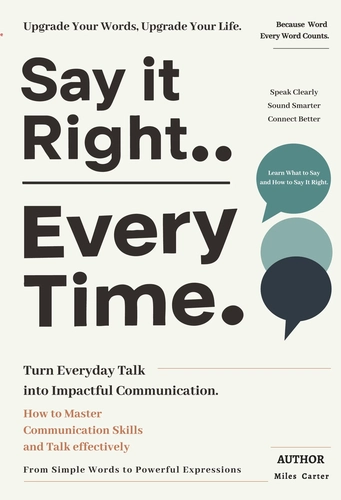
How Say It Right Every Time by Miles Carter Helps Improve Communication
Understanding the difference between good and poor communication habits is the first step.
The next step is developing better habits.
Say It Right Every Time by Miles Carter explores how people can communicate more effectively by becoming more intentional with their words and expressions.
The book focuses on:
- Improving clarity
- Reducing misunderstandings
- Expressing ideas more effectively
- Creating stronger conversations
It helps readers understand that successful communication is not only about what you say, but also how your message is delivered and understood.
Who Can Benefit From Say It Right Every Time by Miles Carter?
This book may be helpful for:
- People who want better conversations
- Professionals improving workplace communication
- Anyone who feels misunderstood
- People who want stronger relationships
- Those looking to develop better communication habits
Final Thoughts
The difference between good communicators and poor communicators often comes down to awareness.
Strong communicators think about their words, emotions, and the person receiving the message.
Communication is not a fixed ability.
It is a skill that can improve with practice and understanding.
For readers who want to develop stronger communication habits and create more meaningful conversations, Say It Right Every Time by Miles Carter offers valuable insights into becoming a more effective communicator.