When people experience anxiety, they are often told to “think positively.”
While a positive mindset can be helpful, simply forcing yourself to ignore negative thoughts does not always solve the deeper problem.
Many anxious thoughts are not caused by a lack of positivity.
They often come from:
- Repeated worry patterns
- Fear of uncertainty
- Negative assumptions
- Overestimating possible problems
This is where realistic thinking can become a more practical approach.
Instead of trying to replace every negative thought with a positive one, realistic thinking focuses on understanding situations more accurately.
By learning the difference between positive thinking and realistic thinking, people can develop healthier ways to respond to anxiety.
What Is Positive Thinking?
Positive thinking means focusing on hopeful outcomes and maintaining an optimistic perspective.
It can help people:
- Stay motivated during challenges
- Notice opportunities
- Build confidence
- Maintain emotional balance
For example:
“I failed this time, but I can learn and improve.”
This type of thinking can create encouragement and resilience.
However, positive thinking becomes less helpful when it turns into avoiding reality.
When Positive Thinking Does Not Help
Sometimes people use positivity to avoid uncomfortable emotions.
Examples include:
“Everything is fine, I should not feel worried.”
“I just need to stop thinking negatively.”
“This problem will disappear if I ignore it.”
Although these thoughts may seem encouraging, they do not always address the actual source of anxiety.
Ignoring difficult emotions does not make them disappear.
In some cases, it can make people feel more frustrated because they believe they are failing at being positive.
What Is Realistic Thinking?
Realistic thinking focuses on seeing situations clearly.
It does not mean expecting the worst.
It means looking at a situation based on facts instead of fear.
For example:
Anxious thought:
“What if everything goes wrong?”
Realistic thought:
“What evidence do I have that this will happen? What can I do if a challenge appears?”
Realistic thinking creates a balanced perspective between unnecessary fear and unrealistic optimism.
Positive Thinking vs Realistic Thinking: Key Differences
| Positive Thinking | Realistic Thinking |
|---|---|
| Focuses on hopeful possibilities | Focuses on accurate understanding |
| Encourages optimism | Encourages balanced thinking |
| Can improve motivation | Helps manage uncertainty |
| May ignore negative possibilities when overused | Recognizes challenges while staying calm |
| Focuses on feeling better | Focuses on thinking more clearly |
Both approaches can be useful.
The difference is that realistic thinking often provides a stronger foundation for managing anxious thoughts.
How Realistic Thinking Can Help With Anxiety
Anxiety often grows when the mind treats possibilities as facts.
For example:
A person thinks:
“What if I make a mistake?”
The mind responds:
“Everyone will judge me.”
Then:
“I will never recover from it.”
This creates a chain of increasingly negative thoughts.
Realistic thinking helps interrupt this process by asking:
- Is this thought based on facts?
- Am I assuming the worst?
- Is there another possible explanation?
- What can I actually control?
These questions help create distance from anxious thinking.
Does this sound like you? There’s more to explore.
Explore the Collection →Awakening to Human Nature

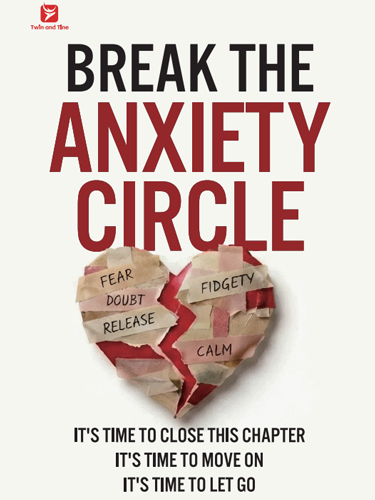
Break the Anxiety Circle
Say it Right..Every Time.
The Parent You Aspire to Be

Common Thinking Patterns That Increase Anxiety
Many anxious thought patterns involve cognitive habits such as:
Expecting the Worst
Assuming the most negative outcome will happen.
Example:
“If this conversation goes badly, everything will fall apart.”
Overgeneralizing
Turning one experience into a permanent belief.
Example:
“I made a mistake, so I always fail.”
Trying to Control Everything
Believing you must predict every possible outcome.
Example:
“If I cannot prepare for everything, something bad will happen.”
Recognizing these patterns is an important step toward changing them.
A Book That Helps You Break Unhealthy Thought Cycles

Changing anxious thinking requires more than simply telling yourself to stay positive.
It requires understanding why certain thoughts repeat and how those patterns influence emotions.
Break the Anxiety Circle by Miles Carter explores how anxiety cycles develop and why people often become trapped in repetitive worry.
The book focuses on helping readers:
- Recognize unhealthy thinking patterns
- Understand the connection between thoughts and emotions
- Break repeated anxiety cycles
- Develop healthier responses to stressful situations
Rather than encouraging people to ignore negative thoughts, the book helps readers understand and reshape the patterns behind them.
Why Read Break the Anxiety Circle by Miles Carter?
This book may be helpful for people who:
- Frequently overthink situations
- Struggle with negative thought patterns
- Feel controlled by anxious thinking
- Want to understand why worries repeat
- Hope to develop better emotional habits
Learning how your mind creates anxiety is an important step toward changing your relationship with worry.
Final Thoughts
Positive thinking can provide encouragement, but realistic thinking helps create a clearer understanding of difficult situations.
Managing anxiety is not about pretending everything is perfect.
It is about learning how to recognize thoughts, question assumptions, and respond in healthier ways.
By developing more balanced thinking patterns, people can reduce unnecessary worry and build greater emotional awareness.
For readers who want to understand anxiety cycles and develop healthier ways of responding to anxious thoughts, Break the Anxiety Circle by Miles Carter offers practical insights into creating a calmer and more balanced mindset.